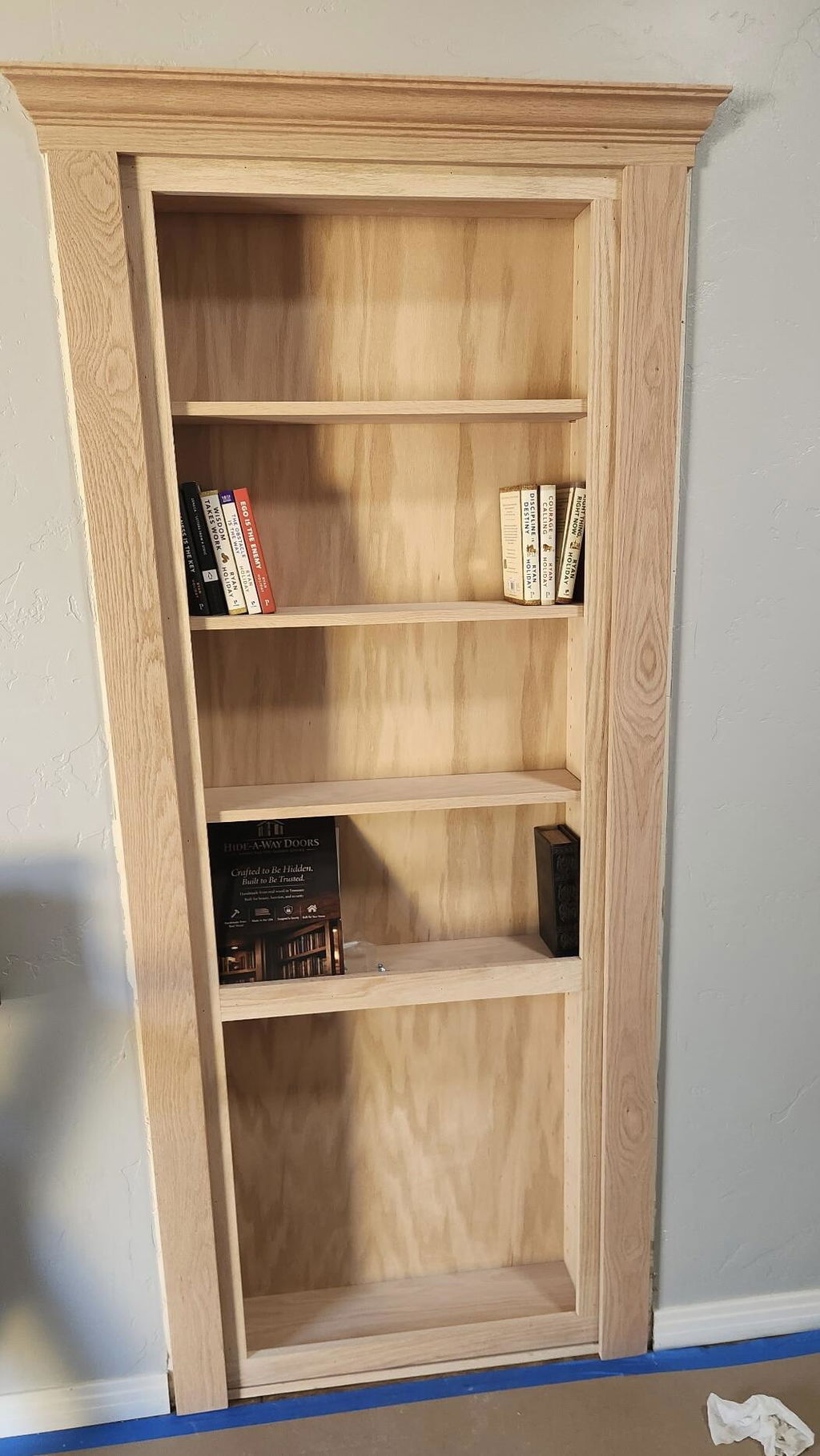
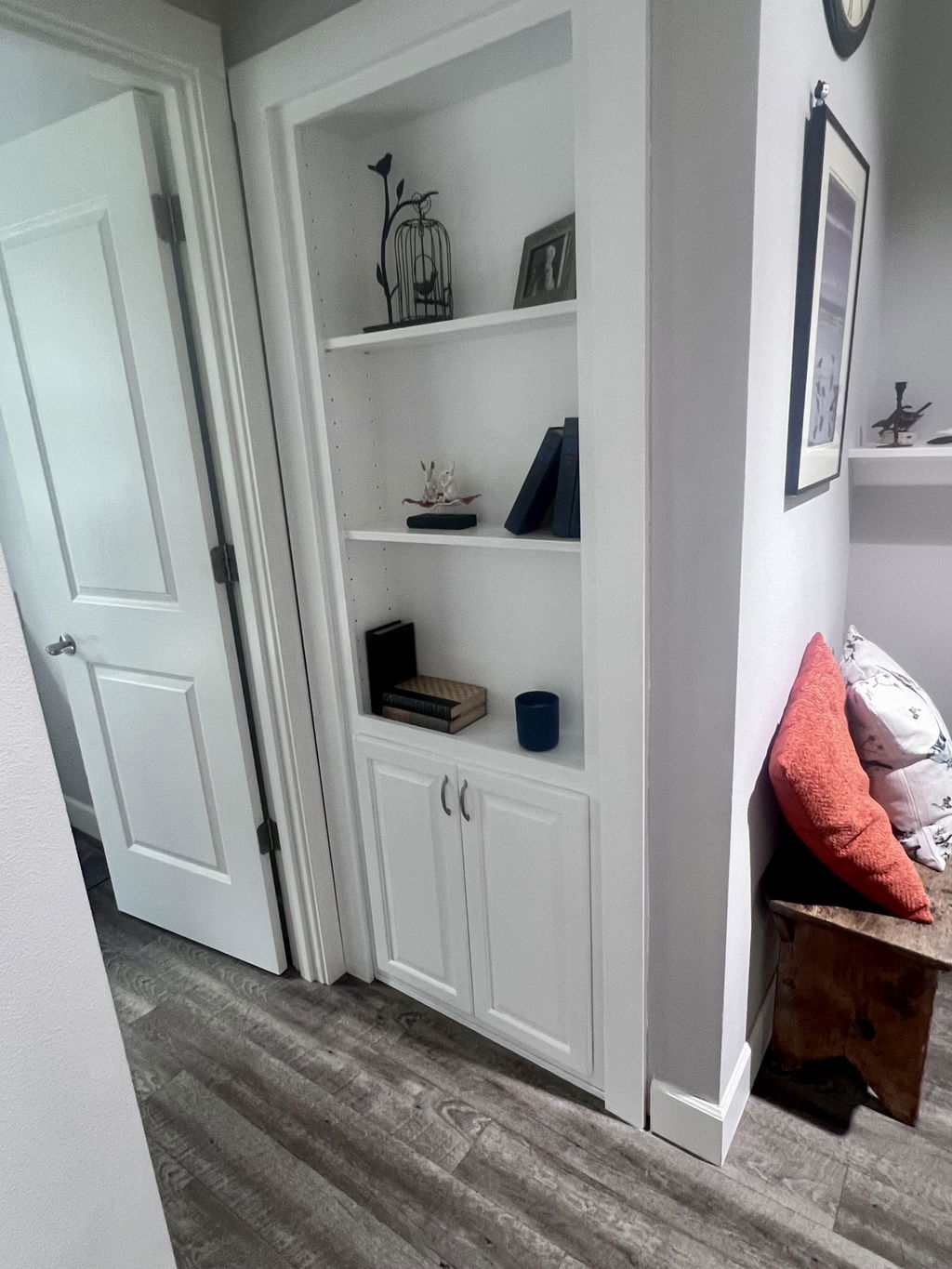
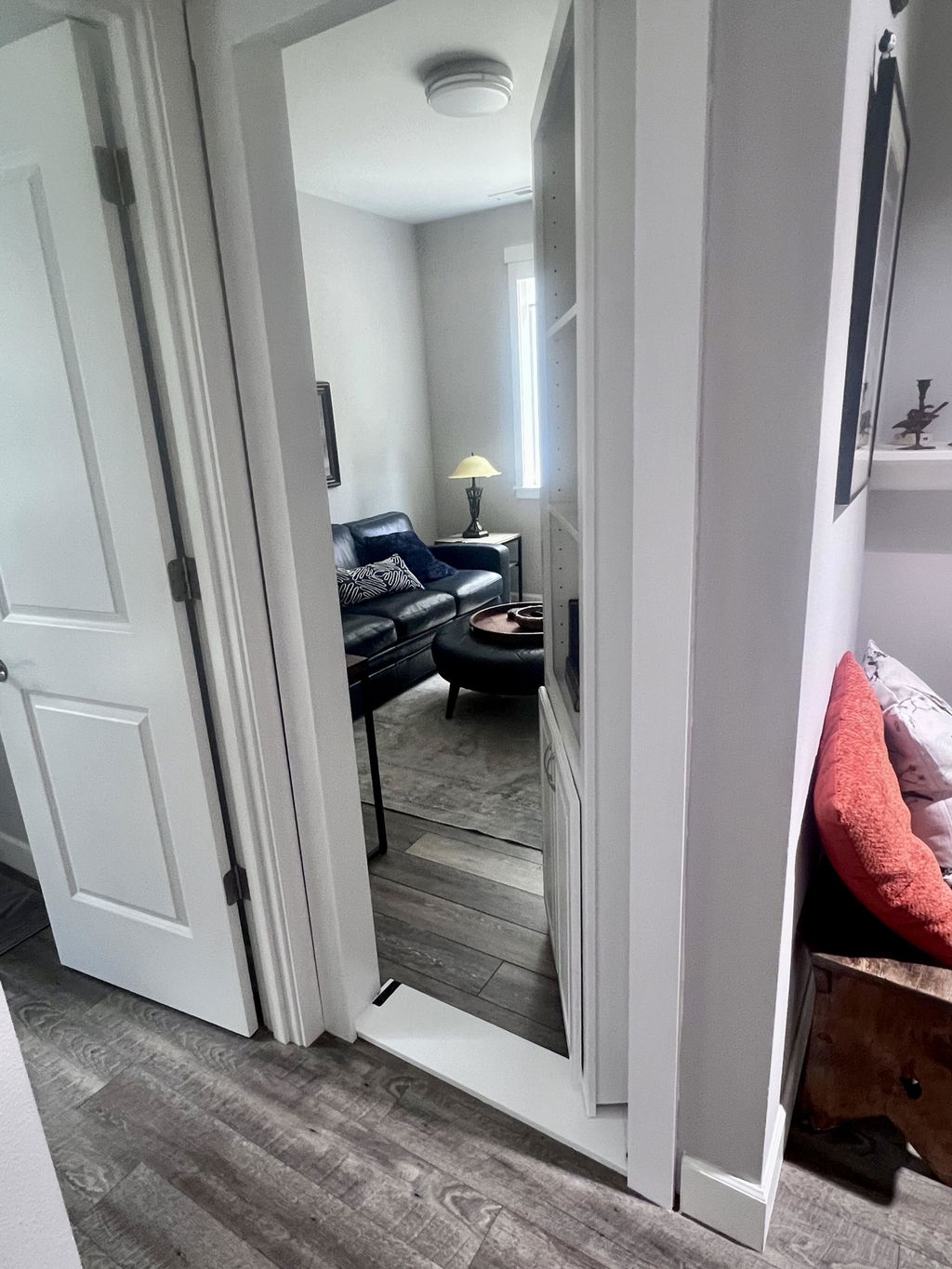
In-Swing or Out-Swing
Evaluate floor space, approach direction, wall depth, passage, and the complete operating arc. The correct choice is based on the actual room—not personal preference alone.
Review swing directionHidden doors function differently from conventional doors. Before placing a made-to-order purchase, confirm the opening, swing, wall depth, passage, product limitations, installation plan, and current production schedule.
The purchaser, builder, and installer are responsible for confirming the product is appropriate for the intended interior location and that all measurements, swing directions, clearances, site conditions, accessibility, egress, and code requirements have been reviewed before ordering. If anything is uncertain, stop and ask before checkout.
A rough opening that accepts the frame does not automatically guarantee the desired swing path, passage, concealment, or jobsite suitability.
Hide-A-Way Doors are interior products intended for finished, climate-controlled spaces unless a specific product page expressly states otherwise. They are not exterior, weather-sealed, insulated, or fire-rated doors.
Confirm width, height, wall/jamb depth, wall construction, floor elevation, trim obstructions, and available space on both sides. Include the thickness of flooring that will be present at installation.
Use the finished bookcase or mirror face as the viewpoint. Push away is in-swing; pull toward you is out-swing. Changing swing after manufacturing generally requires remade components.
In-swing bookcase doors 8-1/4 inches deep or greater require special attention when the wall/jamb exceeds 6-1/2 inches. Review the deep-wall section below before choosing a product.
The open bookcase occupies part of the doorway. Deeper, out-swing, and Double Door configurations reduce the usable passage more.
Alpha, BiFold, Double-Sided, organizer, and other specialized products have requirements that differ from a Standard Single Bookcase Door.
The opening must be framed, plumb, level, square, and structurally suitable. The installer is responsible for field conditions, correct installation, adjustment, and code compliance.
Doors are made to order rather than mass-produced. Website estimates should be reviewed immediately before ordering and are separate from freight transit time.

On a flush-mounted in-swing bookcase, the rear corner of the cabinet must travel past the jamb as the door opens. A deep wall can obstruct that movement.

If an out-swing door cannot be used, a wall deeper than 6-1/2 inches may require the opening to be narrowed with new framing so the bookcase can clear the obstruction.

The Alpha Series is designed for maximum concealment, including an inset appearance and additional coverage of common swing gaps. That specialized design also introduces limitations that are not suitable for every doorway.

An out-swing bookcase needs operating clearance above the moving door. The Hide-A-Way Doors TopSeal is designed to close that visible top gap after the unit has been installed and adjusted.

When open, a bookcase occupies part of the doorway. Out-swing doors reduce clearance more than in-swing doors, and the reduction becomes greater with Double Doors and deeper bookcase configurations.
Evaluate floor space, approach direction, wall depth, passage, and the complete operating arc. The correct choice is based on the actual room—not personal preference alone.
Review swing directionDo not interchange the two. Product selections show the corresponding rough opening. Confirm the actual framed opening, floor height, and finished dimensions before placing the order.
Review measuringFeatures such as deeper shelving, double-sided construction, organizers, locks, and concealment upgrades can change clearance and installation requirements.
Explore hidden doorsConfirm the product is appropriate for the room and that the planned installation satisfies local structural, accessibility, energy, fire-separation, and egress requirements.
Ask before ordering
Hide-A-Way Doors are built to the submitted specifications rather than mass-produced from finished inventory. The number and complexity of orders already in production affect the current estimate.
Your order is built from the dimensions and options submitted. The purchaser, builder, and installer remain responsible for verifying the opening and jobsite. Contact the company before ordering if a measurement or configuration is uncertain.
Generally, no. Swing direction affects the frame, trim, hardware locations, and construction. Changing it after production may require components to be remade.
No. Pass-through clearance is the smaller usable opening remaining when the bookcase is open. Calculate it separately for the exact door type, swing, depth, and finished width.
The 6-1/4-inch shallow bookcase is not affected in the same way. In-swing bookcases 8-1/4 inches deep or greater require an out-swing alternative or an appropriate opening modification when the wall/jamb exceeds 6-1/2 inches.
No. Standard Hide-A-Way Doors are interior doors. They are not weather-sealed, insulated, exterior-rated, or fire-rated. Confirm the intended location and code requirements before ordering.
No. The posted lead time estimates manufacturing time. Freight transit begins after the completed order ships and is a separate period.
Send photos and the opening width, height, wall depth, flooring plan, swing preference, and intended use. Our specialists can help identify the information you need to verify before placing the order.
Product selection, measurements, jobsite preparation, installation, code compliance, accessibility, and intended-use suitability remain the responsibility of the purchaser, builder, and installer.