The Ultimate Guide to Choosing a Secret Door to a Safe Room
A safe room is only as secure as its entry is invisible and structurally unyielding. You likely believe that true security should be felt, not seen. It's a common concern that a standard vault door attracts the very attention you're trying to avoid, or that a hidden entrance might fail mechanically after a few years of use. Choosing the right secret door to safe room requires a precise balance of master craftsmanship and tactical engineering to ensure your sanctuary remains truly private.
Discover how to blend elite security with seamless home design by selecting an entrance that functions as a piece of fine furniture. This guide provides a clear path from inspiration to execution, covering the durable materials and sophisticated hardware necessary for a permanent solution. We'll explore the psychology of concealment, the importance of material integrity, and the technical details that prevent sagging over time. By the end, you'll have the knowledge to create a secure, invisible entrance that offers lasting peace of mind and the quiet confidence of a perfectly executed project.
Key Takeaways
Understand why tactical concealment offers a superior security layer by preventing intruders from identifying your safe room as a target.
Learn why solid wood construction is non-negotiable for maintaining the structural integrity and weight capacity of a heavy security entrance.
Discover how to choose the ideal secret door to safe room, whether you prefer the utility of a bookcase or the sophistication of a mirror door.
Identify the critical differences between fail-secure and fail-safe locking mechanisms to ensure your sanctuary remains both accessible and impenetrable.
Gain professional insights into the installation process, from precise measurements to the technical execution of a seamless, invisible fit.
The Psychology of Concealment: Why a Secret Door to a Safe Room Beats a Vault
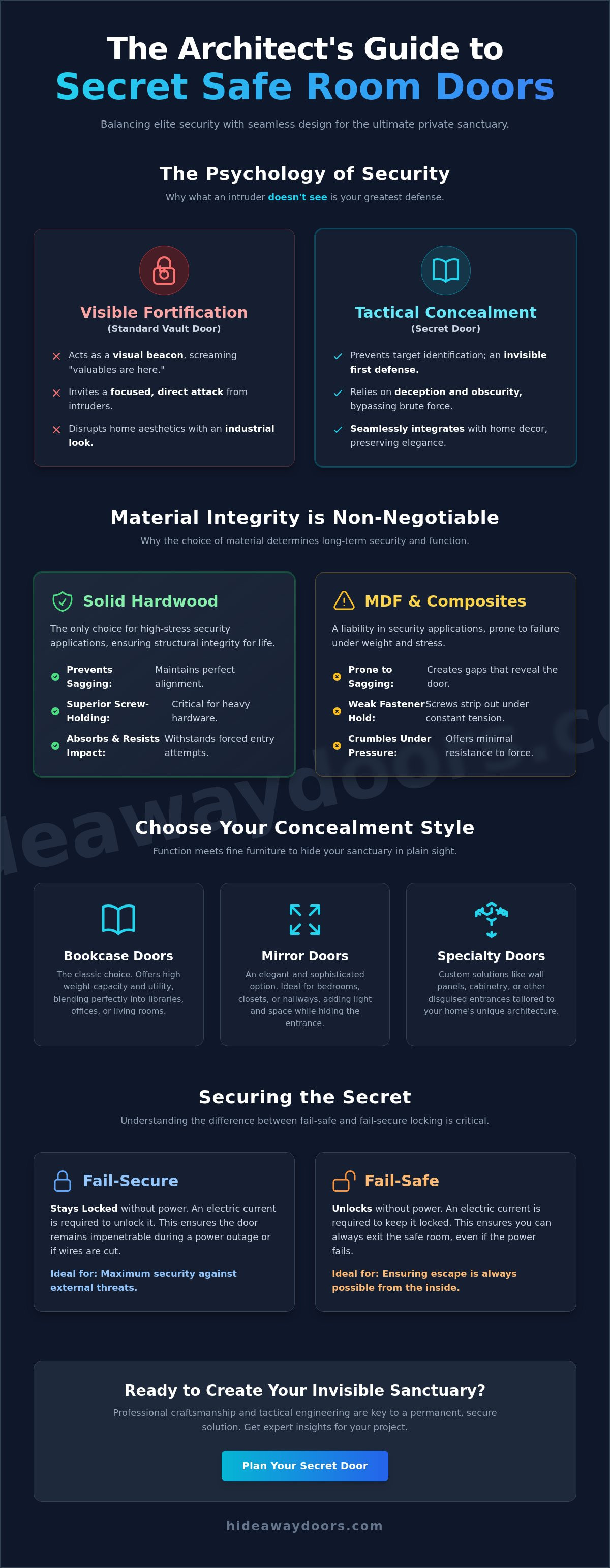
True security isn't always about how much steel you put between yourself and a threat. It's often about what an intruder doesn't know exists. While a traditional vault door is a formidable barrier, it acts as a visual beacon that screams "valuables are here." A secret door to safe room, however, functions as a tactical security layer designed to prevent target identification entirely. This approach relies on the principle of security through obscurity. If a person with ill intent cannot find the entrance to your sanctuary, they simply cannot begin the process of breaching it.
The history of secret passages shows us that concealment has long been a preferred strategy for those who value both privacy and protection. When you contrast the visual profile of an industrial steel vault with a high-end, handcrafted bookcase, the psychological difference is clear. A vault door is a challenge that invites a focused attack. A bookcase is a piece of furniture that effectively removes the safe room from an intruder's mental map. This significantly reduces the threat of discovery during a home invasion, as most burglars prioritize speed and will overlook anything that doesn't look like a typical point of entry.
Concealment vs. Fortification: Finding the Balance
Visible fortification can sometimes backfire. A heavy, exposed safe door may actually attract unwanted attention to high-value assets or family members. In a panic room scenario, every second counts. It's often faster and more intuitive to slip behind a familiar object like a mirror or a shelf than to navigate the complex locking hardware of a visible safe door under extreme stress. By choosing a secret door to safe room, you establish a first line of defense that relies on deception, which is often more effective than raw strength alone in a multi-layered security plan.
The Aesthetic Advantage of Hidden Entrances
Professional-grade security shouldn't force you to compromise on your home's interior design. High-end secret doors allow a safe room to hide in plain sight by utilizing custom wood finishes that match your existing cabinetry and trim. This seamless integration preserves the elegance of your living space while providing a hidden sanctuary. Unlike industrial safes, which can feel cold and out of place, a well-crafted secret door adds a unique "wow factor" that can even enhance home resale appeal. It transforms a necessary security feature into a sophisticated architectural element that respects the heritage of your home's construction.
Material Integrity: Why Real Wood is Essential for Safe Room Security
A secret door to safe room is a mechanical feat as much as an aesthetic one. While the previous section detailed why invisibility is your first line of defense, the physical integrity of the door determines if that defense holds up over years of use. For a safe room to remain truly secure, it must be constructed from materials that can support both the weight of the shelving and the specialized security hardware required for protection. Solid wood stands as the only viable choice for these high-stress applications.
Unlike composite materials, natural hardwoods possess the structural density to prevent the "sagging" that plagues cheaper, mass-produced alternatives. When a door sags even a fraction of an inch, it creates uneven gaps or floor scrapes that immediately signal the presence of a hidden entrance to anyone observing the room. Handcrafted joinery, such as mortise and tenon or dovetail joints, provides the rigidity needed to keep the unit perfectly square, even when it's loaded with hundreds of pounds of equipment.
The Problem with MDF in High-Security Applications
Medium-Density Fibreboard (MDF) is common in budget furniture, but it's a liability in security. MDF fasteners often fail under the constant tension of a fully loaded bookcase door. Because it's essentially compressed fibers and resin, it lacks the internal grain structure needed for long-term screw-holding power. When planning a secret door to safe room, the material choice determines if the unit will stay functional during an emergency. Composite materials are significantly more vulnerable to forced entry; they can crumble or split when subjected to pressure, whereas solid wood absorbs and resists impact. Following FEMA safe room construction standards ensures that your sanctuary is built to withstand extreme forces, and that starts with the foundation of the door itself.
Furniture-Grade Craftsmanship as a Security Feature
Precision is the hallmark of a master artisan. When tolerances are measured in thirty-seconds of an inch, the door remains invisible to the naked eye. Handcrafted options like The Alpha Concealment Door utilize traditional construction techniques to ensure the unit remains perfectly plumb and square for decades. Selecting dense wood species such as Oak or Cherry provides the necessary weight and durability for heavy-duty hinges. If you want to see how these materials come together, you can browse our full collection of solid wood designs to find the right fit for your home's architecture.
Choosing Your Style: Bookcases, Mirrors, and Specialty Doors
Style is the final veil of invisibility. Once you've committed to the structural density of solid wood, the aesthetic form of your secret door to safe room becomes the primary factor in its success. The goal is to choose a design that matches the natural "rhythm" of your home's architecture. An out-of-place object, no matter how well-built, can trigger suspicion. By selecting a style that serves a dual purpose, you ensure the entrance remains hidden in plain sight.
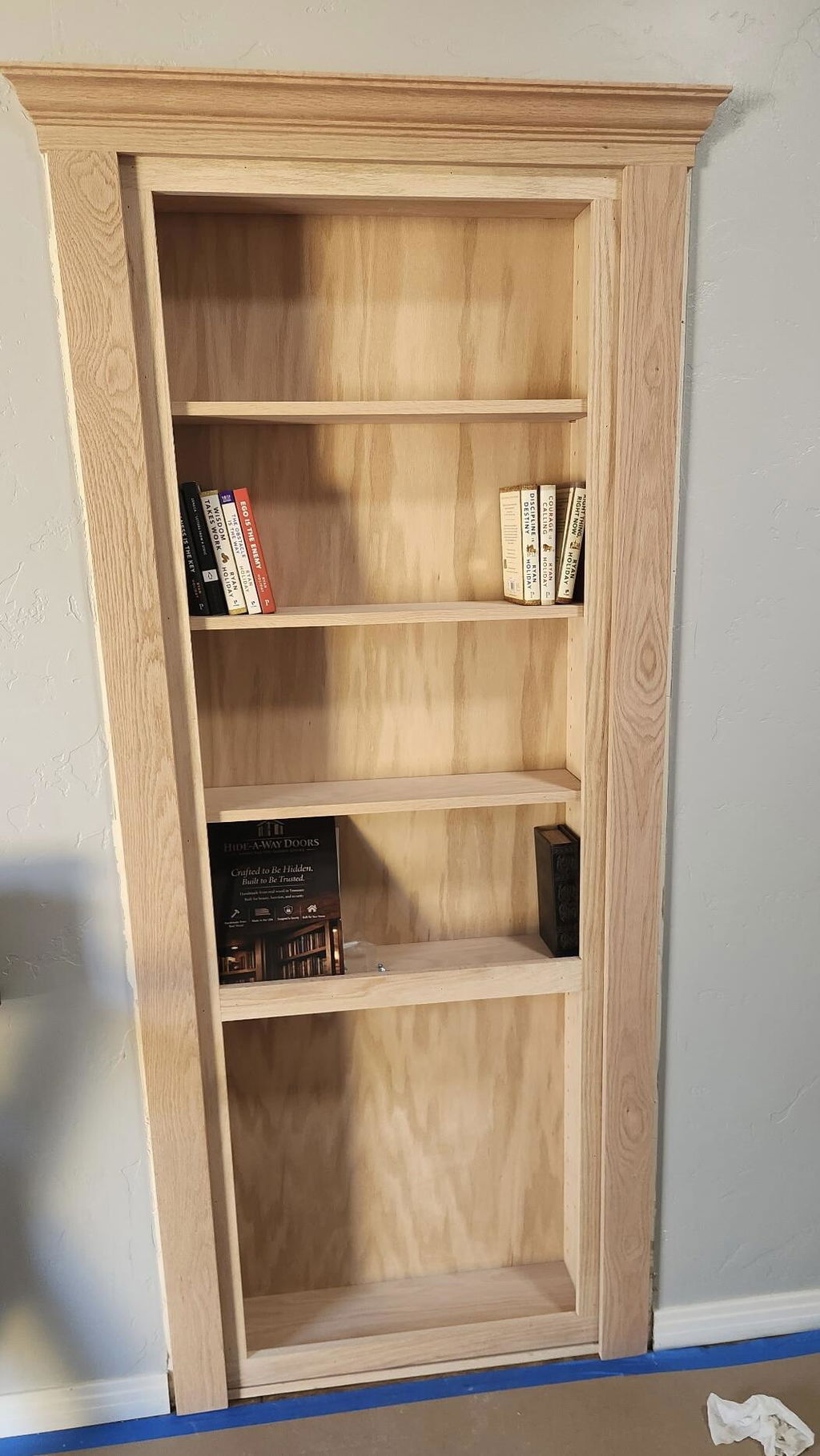
The Single Bookcase Door remains the benchmark for home concealment. It provides deep, functional storage while completely obscuring the door frame and hinges. For wider entryways, a Double Bookcase Door offers a grander presence, allowing you to span large openings without sacrificing the stealth required for a secure sanctuary. In game rooms or dens, specialty options like a Pool Cue Door provide a clever, niche-specific solution that blends perfectly with recreational decor. These designs capitalize on the intruder's expectation of finding mundane objects in specific rooms.
The Alpha Door: The Ultimate Safe Room Entrance
Engineered for high-use security environments, the Alpha Door represents the pinnacle of our craftsmanship. It's not just a shelf; it's a reinforced security portal designed to withstand the rigors of daily operation while maintaining its alignment. You can customize this unit with various wood species and finishes to match your existing cabinetry. We offer adjustable shelving depths to accommodate everything from standard novels to larger collectibles, ensuring the door integrates seamlessly into a room-wide library wall. This level of customization allows the door to disappear into the room's existing architectural lines.
Mirror and Panel Doors for Low-Profile Security
In spaces where a bulky bookcase might feel intrusive, the Mirror Door provides a sleek, modern alternative. These are particularly effective for master suites and walk-in closets, where a full-length mirror is a logical and expected feature. Our pivoting mirror doors utilize the same heavy-duty hardware as our larger units, providing smooth, reliable operation. For homeowners who wish to match highly specific existing trim or paint colors, our DIY Door Kits provide the mechanical foundation while allowing for total aesthetic control. This ensures that your secret door to safe room remains a bespoke addition that respects the heritage of your home's design. Whether you're installing a gun cabinet door or a wine rack door, the focus remains on enduring quality and the wow factor of a perfectly hidden entrance.
Securing the Secret: Locking Mechanisms and Hidden Triggers
Concealment is your primary defense, but a high-security entrance requires a physical fail-safe to prevent unauthorized access. Once the aesthetic of your secret door to safe room is perfected, the focus must shift to the mechanical or electronic "teeth" that hold the door fast against pressure. Choosing the right hardware is a balance of rugged reliability and modern convenience. It's not just about keeping the door closed; it's about ensuring the locking system remains entirely invisible to the casual observer. You can explore a technical breakdown of these systems in our guide to hidden door locking mechanisms.
In a safe room context, the distinction between "fail-secure" and "fail-safe" is critical. A fail-safe system unlocks when power is lost, which is unacceptable for a security sanctuary. A fail-secure mechanism remains locked during a power outage, ensuring that your room stays protected even if the home's electrical grid is compromised. This choice is the foundation of a dependable security plan, providing the quiet confidence that your sanctuary is impenetrable regardless of external circumstances.
Electromagnetic Locks and Biometric Access
Electromagnetic locks, or maglocks, offer immense holding force, typically ranging from 600lb to 1200lb. This makes the door nearly impossible to force open without specialized equipment. Integrating biometric scanners or keypad entries within the secret door frame adds a layer of sophisticated control. These systems often include remote release triggers, allowing you to secure the room from a distance or grant quick entry during an emergency. The digital door lock market is projected to grow at a CAGR of 11.5% from 2026 to 2033, reflecting a steady shift toward these technologically advanced and highly secure solutions.
Mechanical Stealth: Hidden Latches and Triggers
Mechanical systems offer a sense of traditional craftsmanship and permanent reliability. The classic "secret book" trigger remains highly effective because it uses a familiar, mundane object as the key. For homeowners seeking a more modern approach to mechanical security, magnetic "totem" keys provide a clever alternative. These require a specific magnetic object to be placed on a precise, unmarked spot on the shelving to engage the internal latch. This ensures that even if an intruder suspects a secret door to safe room exists, they lack the specific tool needed to operate the mechanism. It's essential that these triggers are installed with master-level precision so they don't create visible gaps or mechanical "tells" in the door's alignment.
Planning Your Safe Room: Installation and Custom Fabrication
A secret door to safe room is a precision instrument, not just a piece of furniture. While the design and locking mechanisms provide the foundation, the technical execution of the installation determines whether the entrance remains truly invisible. Professional installation is often a necessity for these high-security units. They carry significant weight and require perfect alignment to function without floor scrapes or tell-tale gaps. If a door is off by even a fraction of an inch, the illusion of a solid wall is instantly shattered.
Measuring for a retrofitted hidden entrance requires a meticulous approach. You've got to account for the swing of the door, the depth of the wall, and the surrounding trim. We recommend measuring the width at the top, middle, and bottom of the opening to account for any slight bowing in the existing framing. This level of detail ensures that when your custom-fabricated door arrives, it slides into place with the precision of a master artisan's work. To reduce the friction of this process, we utilize a national network of professional installers across the US who understand the unique structural requirements of home concealment.
Custom Engineering for Specialized Security
Standard shelving often fails when tasked with the extreme weight of ammunition or heavy security gear. When designing secret doors for ammunition storage, reinforced shelving and heavy-duty pivot points are essential. This isn't just about storage capacity; it's about making sure the door remains easy to operate under a full load. Working with master artisans allows you to solve these complex structural challenges, creating a bespoke solution that fits your specific security needs without compromising the door’s integrity.
From Design to Delivery: The Hide-A-Way Doors Process
Our commitment to quality begins in our Tennessee workshop, where every door is handcrafted from real wood. This traditional approach offers a superior finish and structural density that mass-market kits simply cannot match. Once your secret door to safe room is completed, we navigate the logistics of shipping and professional installation throughout the United States. Our goal is to move you seamlessly from initial inspiration to a fully executed security solution.
Before finalizing your project, consider this checklist to ensure total concealment:
Light Leaks: Ensure the door seal prevents light from the safe room from being visible in the main area.
Sound Dampening: Confirm the door's density prevents acoustic "hollow" spots when someone taps the wall.
Mechanical Clearance: Verify the door opens and closes without any audible friction or floor contact.
Hardware Concealment: Double-check that no hinges or latches are visible from the exterior, even at odd angles.
Secure Your Sanctuary with Master Craftsmanship
True protection doesn't need to be loud or industrial. By integrating a hidden entrance into your home, you choose a tactical advantage that prioritizes invisibility and structural integrity. Throughout this guide, we've highlighted why solid wood is the only viable choice for a security entrance that must remain functional for decades. Precision engineering and high-end materials ensure your sanctuary remains hidden, far removed from the sight and reach of intruders.
As a family-owned business with over a decade of experience, we take pride in our traditional construction techniques. Every door is handcrafted from real wood in Tennessee; we never use MDF or particle board. Our national installation network ensures that your transition from inspiration to ownership is handled with professional care. Build your custom secret door to a safe room today and invest in a security solution that offers both aesthetic beauty and rugged, dependable protection. You've worked hard to build your home; let us help you protect it with the quiet confidence it deserves.
Frequently Asked Questions
Can a secret bookcase door hold the weight of real books and still function as a safe room entrance?
Yes, a properly engineered secret door to safe room built from solid wood can support a full load of books without compromising its function. The Alpha Door, for instance, utilizes heavy-duty pivot hinges and a reinforced frame specifically designed to handle significant weight. This structural density ensures the door remains perfectly square over years of use, maintaining the illusion of a static wall while providing the utility of a functional library.
What is the best wood for a high-security secret door?
Hardwoods like Oak, Maple, and Cherry are the premier choices for high-security applications due to their superior density and structural integrity. These species provide the necessary screw-holding power for heavy security hardware and resist the warping common in cheaper, mass-produced materials. Choosing a dense hardwood ensures that your hidden entrance remains structurally sound and maintains its furniture-grade appearance, allowing it to hide in plain sight for decades without showing signs of wear.
Is it possible to install a secret door in an existing doorway leading to a safe room?
Retrofitted installations are entirely possible for most existing safe room doorways. This process requires precise measurements of the width, height, and wall depth to ensure the unit fits flush within the frame. While we offer DIY Door Kits for those with construction experience, professional installation is often preferred for safe room applications. This ensures the heavy solid-wood unit is perfectly balanced to prevent any mechanical tells like floor scrapes or uneven gaps that might reveal the entrance.
How do you lock a secret door to a safe room from the inside?
Locking a secret door from the inside is typically achieved through mechanical thumb-turns or electronic release buttons. Many high-security setups utilize electromagnetic locks that are controlled by an internal switch, allowing for immediate lockdown during an emergency. This ensures that once you’ve entered your sanctuary, the door remains a solid, unyielding barrier that can only be opened by those with the correct authorization or specific knowledge of the hidden internal release mechanism.
Are secret doors fire-rated or ballistic resistant?
Standard wood secret doors are built for elite concealment and tactical security rather than ballistic resistance. While solid wood offers more protection than hollow-core doors, it is not inherently fire-rated or bulletproof. For safe rooms requiring FEMA-level protection, the door serves as an invisible facade that prevents an intruder from identifying the room as a target. If your project requires ballistic shielding, it must be integrated as a separate layer within the wall and door structure during fabrication.
What happens if the power goes out and I have an electronic lock on my secret door?
If the power fails, an electronic lock configured as fail-secure will remain engaged to keep the door locked. This is the standard configuration for safe rooms, as it prevents external entry during a blackout or intentional power cut. Most systems include a manual override or a battery backup to ensure you can still exit the room from the inside, providing continuous security and peace of mind regardless of the home's electrical status.
How do you hide the hinges on a secret door so it stays invisible?
We hide hinges by utilizing heavy-duty pivot hardware mounted at the top and bottom of the frame rather than the side. This orientation allows the door to rotate smoothly without any visible metal on the exterior face. When paired with precision-cut trim and master-level joinery, the hardware is completely obscured. The result is a seamless finish that matches the surrounding cabinetry, ensuring your secret door to safe room remains undetectable even under close inspection.
Do secret doors require special maintenance to prevent sagging?
Solid wood doors are naturally resistant to sagging because of their internal grain strength and rigid construction. Unlike mass-market MDF doors that lose their shape over time, our handcrafted units stay square within the frame. Maintenance is minimal; we recommend an annual inspection of the pivot hardware and a light application of lubricant to ensure silent operation. This simple care preserves the wow factor of the discovery and ensures the door functions perfectly for a lifetime of dependable use.