The Ultimate Buying Guide for Gun Concealment Doors in 2026
A massive steel safe bolted to your floor isn't a deterrent; it's a roadmap for an intruder. While traditional vaults announce their presence, true security is found in the art of invisibility. If you're looking to protect your collection without sacrificing the aesthetic of your home, a professional grade gun concealment door is the only solution that bridges the gap between high-end cabinetry and a tactical safe room. You deserve a sanctuary that remains hidden in plain sight, far from the prying eyes of those who shouldn't know it exists.
We understand the frustration of choosing between industrial steel eyesores and cheap, sagging MDF alternatives that fail under pressure. You want a hidden entrance that functions as a masterwork of craftsmanship, capable of supporting the weight of real books and decor while maintaining a seamless profile. This guide will walk you through the essential features of elite concealment systems in 2026. You'll discover how to select high-capacity storage that integrates perfectly with your existing cabinetry, ensuring your home remains both a beautiful living space and a fortress of quiet confidence.
Key Takeaways
Master the "Security through Obscurity" principle to protect your valuables by making them impossible for intruders to locate.
Identify why high-grade materials like solid Oak and Alder are essential for a gun concealment door to support significant weight without sagging.
Compare professional styles such as the Alpha Door and Mirror Door to find the perfect match for your home’s architectural layout.
Learn the technical requirements for a flawless installation, including rough opening measurements and the choice between inswing or outswing configurations.
Understand the lasting benefits of choosing handcrafted, American-made furniture that prioritizes durability and custom security over generic solutions.
Beyond the Safe: Why a Gun Concealment Door is Your First Line of Defense
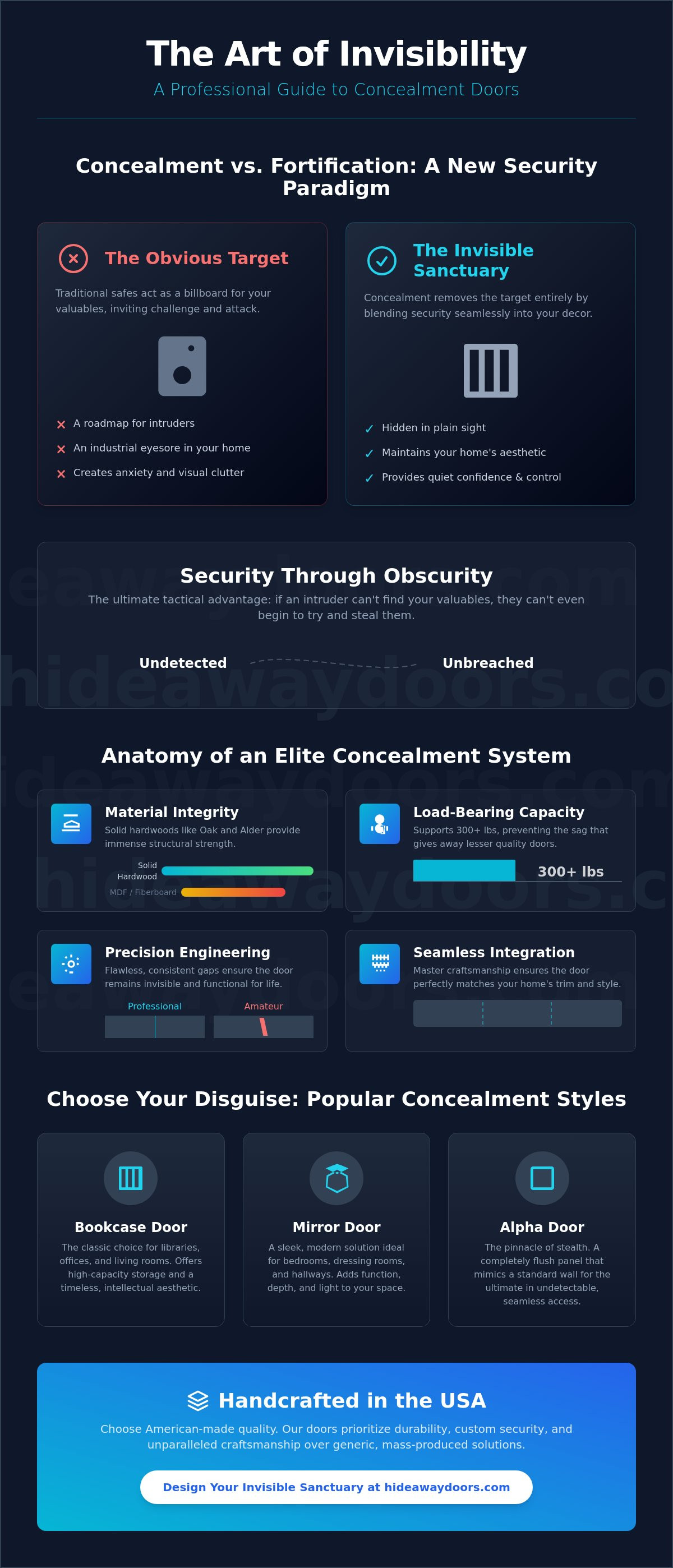
A gun concealment door is a master of disguise. It is a functional piece of high-end furniture that serves a secondary, silent purpose. While a standard safe sits in a corner like a billboard for your most valuable assets, a concealment door hides in plain sight. It utilizes the principle of "Security through Obscurity." This isn't about hiding behind a weak barrier; it's about removing the incentive for an attack by making the entrance invisible. If a thief can't find the door, they can't even begin to bypass the security layers behind it.
Traditional security often relies on the visual promise of brute force. We often picture a heavy gun safe with thick steel walls and complex dial locks. While these units offer excellent protection against fire and theft once they are discovered, they have a distinct disadvantage: they announce that there is something worth stealing. A professional grade concealment door removes the target entirely. It transforms a standard entryway into a seamless part of your home's architecture, whether it's a robust bookcase, a full-length mirror, or a wine rack. You gain the dual benefit of specialized storage and a hidden tactical advantage.
Concealment vs. Fortification: Choosing the Right Strategy
Fortification is about resisting an attack. Concealment is about preventing one. A vault door is an impressive display of strength, but it ruins the flow of a room and invites unwanted curiosity from guests or service workers. A handcrafted bookcase door provides restricted access without the visual clutter of industrial security. Choosing a secret door to a safe room is the ultimate upgrade for modern home defense. It allows you to maintain a high-end interior design while keeping your primary defense strategy a complete mystery to anyone outside your inner circle. Consider these advantages of a concealment-first approach:
Visual Integration: The door matches your existing trim and cabinetry perfectly, leaving no gaps or tells.
Structural Integrity: Built from solid wood like Oak or Cherry to handle the weight of real books and equipment.
Tactical Advantage: Keeps your firearms accessible to you in seconds but undetectable to others during a crisis.
The Psychology of a Hidden Entrance
There's a profound psychological difference between living in a fortress and living in a home. Traditional security can feel cold or even anxiety-inducing. Hidden doors offer a sense of quiet confidence. You know the protection is there, but you don't have to be reminded of potential threats every time you walk down the hall. For the homeowner, it's a "wow factor" that provides immense satisfaction and pride in ownership. For an intruder, it's an invisible barrier that they simply walk past. In 2026, home trends are shifting toward multi-functional spaces that maximize every square foot. A secret entrance that doubles as a library or a dressing mirror is the pinnacle of modern, intelligent home design.
Essential Features: What to Look for in a Professional Concealment Door
A premium gun concealment door is more than a clever trick; it’s a high-performance machine. To the untrained eye, it’s a beautiful bookcase or a full-length mirror. Beneath the surface, it must function with the precision of a bank vault. When you move beyond basic concealment furniture, you start to see the difference between a novelty item and a professional security asset. True quality is found in the details that ensure the door remains secret for decades, not just the first few weeks after installation.
Many homeowners make the mistake of choosing price over permanence. Cheap doors made from fiberboard or standard interior door cores are common in the market, but they are fundamentally flawed for firearm storage. A professional door must sustain a heavy load-bearing capacity, often exceeding 300 lbs, to accommodate real books and gear without sagging. If the frame warps by even a fraction of an inch, the secret is out. The gaps will become uneven, and the hidden door will eventually stick or rattle, giving away its location to anyone who walks by.
Real Wood vs. MDF: The Structural Security Debate
MDF is essentially compressed sawdust and glue. While it’s fine for a standard cabinet, it lacks the structural memory of real wood. We use solid Alder, Oak, and Cherry because these hardwoods allow for furniture-grade joinery. This precision ensures tight tolerances, meaning the seams are so thin they disappear into the surrounding trim. Solid wood construction also handles changes in humidity much better than composite materials. A door that sags isn't just an eyesore; it’s a security risk that could fail when you need it most. If you want to ensure your investment lasts, you can explore our handcrafted collections to see the difference real wood makes.
Locking Mechanisms: From Magnets to Biometrics
A magnetic key is a fine start, but serious security requires more sophisticated hidden door locking mechanism options. Whether you prefer RFID, wireless remotes, or biometric scanners, the choice depends on your specific needs. You must also consider the difference between fail-secure and fail-safe concepts. For gun storage, fail-secure is the gold standard. It ensures the door stays locked during a power failure, keeping your collection inaccessible to unauthorized users while still allowing you to use a manual override if necessary.
The final touch is the trim. A professional installation should match your home's existing crown molding and baseboards perfectly. When the trim is seamless, there are no visual cues to suggest the wall is anything other than a permanent part of the room's architecture. This level of detail is what separates a masterwork of cabinetry from a simple DIY project.
Comparing Styles: Bookcases, Mirrors, and the Alpha Door
Selecting the right style for your home is a balance of architectural flow and tactical necessity. While some retail options offer small floating shelves that only hide a single pistol, a professional gun concealment door provides the structural depth required to protect a complete inventory. You aren't just buying a door; you're choosing a piece of heirloom furniture that defines the room. The goal is to select a style that feels so natural in its environment that the thought of a hidden room never crosses a visitor's mind.
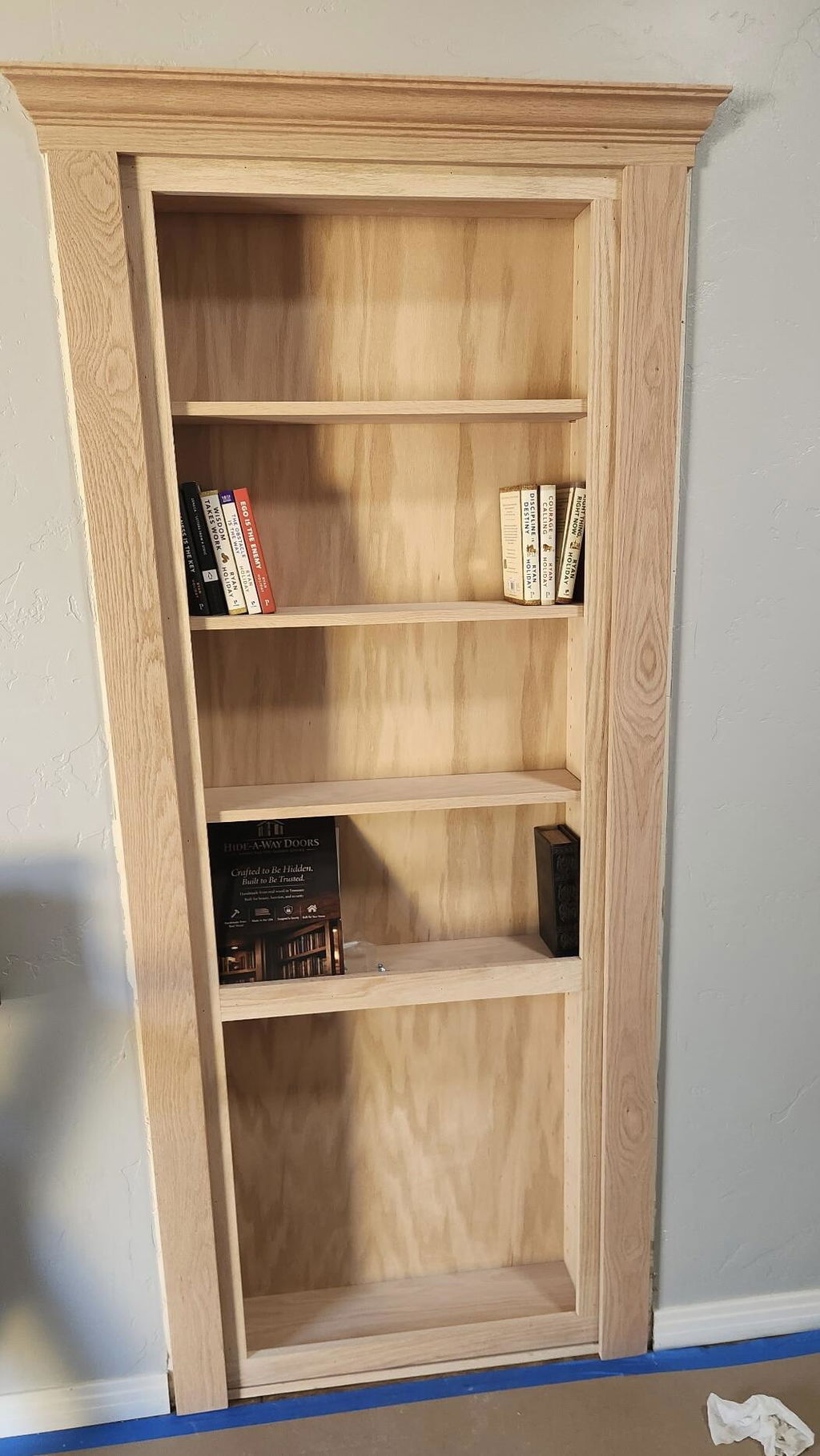
The Double Bookcase Door remains the classic choice for libraries and dens. It offers the most storage volume and provides a natural, unsuspicious presence in a hallway or study. For those with more specific hobbies, a Pool Cue Door or Wine Rack Door turns a recreational space into a secure zone without altering the room's purpose. These designs capitalize on existing home elements, making the entrance completely invisible to the casual observer. Each unit is built with the same attention to detail, ensuring that the shelves stay level and the seams stay tight.
The Alpha Door: Engineering Meets Elegance
The Alpha Door represents the pinnacle of our craftsmanship. Unlike standard hidden doors that might struggle with heavy use, the Alpha is engineered for high-traffic areas. Its unique structural design handles the weight of a full library while maintaining a whisper-quiet swing. You can customize this model with various wood species and stains to match your home’s existing woodwork perfectly. It is frequently the preferred choice for a secret door for ammunition storage because it provides the depth and strength needed for heavy gear. Whether you require specific shelving configurations or a particular grain pattern, the Alpha is built to your exact specifications.
Mirror and Specialty Doors for Tight Spaces
Not every room has the footprint for a deep bookcase. In master suites or walk-in closets, the Mirror Door is an ideal solution. It provides the full-length utility you need for daily use while hiding a wall safe or a small collection behind a sleek, pivoting frame. These systems are designed to sit flush against the wall, utilizing high-quality glass that won't rattle or shift. The pivoting mirror system allows for a smooth opening even in narrow corridors where a swinging bookcase might be impractical.
Specialty doors prove that security doesn't have to be bulky or obvious. For example, converting a pool cue rack into a secret rifle cabinet is a clever way to utilize wall space in a basement or game room. By integrating your safe room into the items you already use, you ensure that your gun concealment door remains a secret known only to those you trust. Professional-grade hardware ensures that even these thinner profiles operate with a smooth, heavy feel that reflects their internal strength.
Planning Your Installation: Measurements and Structural Requirements
Precision is the silent partner of security. Even the most beautifully crafted gun concealment door will fail to protect your home if the installation is neglected. This stage of the process is where dreaming meets technical execution. You aren't just hanging a door; you're calibrating a mechanical system that must remain perfectly plumb and level while supporting hundreds of pounds of gear. A slight misalignment can cause the door to rub, rattle, or show visible gaps that reveal the secret entrance to anyone paying attention.
Before you finalize your order, you must evaluate your subfloor. As discussed in previous sections, a professional unit is built from solid wood to handle significant weight. A fully loaded bookcase can easily exceed 300 lbs. If your floor is uneven or lacks structural support, the frame will eventually shift. This leads to the door sticking or sagging over time. Ensure your installation site is on a solid, level surface that can handle the long-term stress of a high-capacity storage unit. To get started with the right specifications for your space, you can browse our sizing and installation resources.
Measuring for a Flawless Concealment
Accuracy starts at the rough opening. You'll need to measure the width, height, and depth of the wall cavity in at least three different spots. Squareness is the most critical factor for a successful project. In a standard doorway, trim can hide a lot of construction mistakes. With a hidden door, the tolerances are so tight that a frame even slightly out of square will cause "light leaks." These are small slivers of light that escape from the room behind the door, immediately ruining the illusion. You must ensure the opening is perfectly rectangular to maintain a seamless, invisible profile.
Swing Direction and Clearance
You must choose between an Inswing (push) or Outswing (pull) configuration based on your room's traffic flow. An Inswing door is often the most discrete because it doesn't require a handle on the exterior, but it does consume floor space inside the secret room. Outswing doors are excellent for narrow safe rooms where internal space is at a premium. Consider the "pivot point" of your gun concealment door. As the unit swings, it requires a specific clearance radius. You'll need to ensure that nearby furniture, rugs, or light fixtures don't interfere with the movement, especially when the shelves are fully loaded with heavy equipment.
Professional installation is the final layer of your security strategy. While many homeowners find success with our DIY kits, having an expert handle the final shimming and trim work ensures the door operates with a whisper-quiet, heavy feel. This level of precision is what keeps your sanctuary hidden and your collection truly safe.
Handcrafted in the USA: The Hide-A-Way Doors Difference
True security is not a mass-produced commodity. It is the result of dedicated craftsmanship and a deep understanding of the materials that protect your home. At Hide-A-Way Doors, we take immense pride in our roots as a family-owned manufacturer based in Morristown, Tennessee. Every gun concealment door that leaves our shop carries with it the heritage of Appalachian woodworking and the precision of modern engineering. This local focus ensures that we maintain total control over quality, from the first cut of the lumber to the final coat of hand-applied finish.
A "one size fits all" approach is fundamentally incompatible with elite home defense. Your home has unique dimensions, and your collection has specific needs. Custom fabrication allows us to build a solution that fits your rough opening perfectly, eliminating the gaps that plague generic alternatives. Investing in real wood provides a long-term return on investment that disposable MDF simply cannot match. While cheaper alternatives may save money upfront, they lack the structural memory to stay square. A solid wood door won't sag or fail, meaning your security remains as effective in ten years as it is on the day of installation.
Bespoke Engineering for Your Collection
Designing a door for specific firearm dimensions requires more than just basic carpentry. It requires an engineering mindset. Our custom design fees cover the meticulous planning needed to integrate unique functional requests, such as specialized racking for suppressors or reinforced shelving for heavy ammunition storage. This master artisan approach ensures that every inch of your concealment system is optimized for utility. We don't just build furniture; we create a tailored security environment that reflects your lifestyle and respects the value of your collection.
From Our Shop to Your Home: The Path to Ownership
We serve customers across all 50 states, bringing Tennessee craftsmanship to homes from coast to coast. Our national shipping process is designed to protect these heavy, furniture-grade pieces during transit, using specialized crating to ensure they arrive in pristine condition. Once your door arrives, our national installer network can take over. These professionals understand the technical requirements we covered earlier, ensuring that the final fit is seamless and the secret remains secure. You aren't just buying a product; you're entering a partnership with experts who value your peace of mind.
Your security strategy deserves a master's touch. When you choose a handcrafted gun concealment door, you're choosing a legacy of strength and beauty. Design your custom gun concealment door today and discover the difference that American-made quality brings to your home defense plan.
Secure Your Legacy with Invisible Defense
True home security in 2026 isn't about thicker steel; it's about staying one step ahead through intelligent design. By choosing a professional gun concealment door, you transition from merely storing firearms to creating a tactical sanctuary. You now understand that real wood construction and precise measurements are the foundation of a door that never sags or reveals its location. This investment protects your collection while enhancing your home's architectural beauty.
We take the guesswork out of high-end security. Every unit is handcrafted in the USA using traditional skills and furniture-grade materials. Our national installation network ensures that your custom project is executed with the precision it deserves. There is a unique peace of mind that comes from owning a masterwork of cabinetry that doubles as a silent guardian. It's time to build a home that is as secure as it is sophisticated.
Standard wood concealment doors aren't typically fire-rated in the same way as a heavy steel vault. While the door provides excellent security through obscurity, it doesn't offer the thermal protection found in specialized fire safes. If fire protection is your primary concern, we recommend installing a fire-rated safe inside the room hidden by the door. This creates a layered defense strategy that addresses both theft and environmental hazards.
How much weight can a hidden bookcase door actually hold?
A professional grade gun concealment door, such as the Alpha Door, is engineered to support upwards of 300 lbs of static weight. This high capacity allows you to fill the shelves with real books and heavy gear without compromising the swing mechanism. It's essential to use solid wood construction to ensure the unit doesn't warp under this load. Lower quality MDF alternatives will often fail well below this weight threshold.
What is the best locking mechanism for a secret door?
The best mechanism depends on your balance of speed and security, but RFID and biometric locks are the current industry leaders. RFID locks allow for a clean, hardware-free exterior while providing nearly instant access with a card or fob. Biometric systems offer the highest level of personalized security, ensuring that only authorized users can trigger the release. Both options maintain the door's invisible profile by remaining completely hidden from view.
Do I need to reinforce my wall to install a concealment door?
Yes, reinforcing the rough opening is a standard requirement for a successful installation. Because these doors are significantly heavier than standard interior doors, the king studs and jack studs must be doubled to prevent the wall from shifting. Proper structural support ensures the frame stays square over time. This prevents the door from rubbing or showing the uneven gaps that would otherwise give away the secret entrance.
Can these doors be retrofitted into an existing doorway?
Most professional hidden doors can be retrofitted into an existing doorway with minor modifications to the rough opening. You'll need to remove the existing door frame and trim to assess the structural integrity of the opening. It's often necessary to widen or reinforce the space to accommodate the deeper profile of a bookcase or mirror unit. Once the opening is prepped, the new unit installs as a complete pre-hung system.
Is it possible to hide a large rifle collection behind a mirror door?
Mirror doors are typically designed with a shallower profile, making them better suited for handguns or wall-mounted gear. If you intend to hide a large rifle collection, a Double Bookcase Door or an Alpha Door is a much better choice. These models provide the internal depth required for long guns and ammunition. While mirrors offer excellent utility in tight spaces, they lack the cubic volume found in our deeper furniture-grade units.
How do you prevent the door from sagging over time?
We prevent sagging by utilizing furniture-grade joinery and heavy-duty, adjustable pivot hinges. Unlike standard butt hinges, pivot hinges distribute the weight vertically into the floor rather than pulling on the door frame. When combined with solid wood materials like Oak or Alder, the gun concealment door maintains its structural integrity for decades. This precision engineering ensures the seams remain tight and the operation stays whisper-quiet throughout the life of the product.
What wood species is most durable for a heavy-duty secret door?
Oak and Cherry are the most durable hardwoods for a heavy-duty secret door. These species offer high density and excellent screw-holding power, which is vital for maintaining the alignment of a heavy unit. Alder is also a popular choice for its beautiful grain and consistent strength. We avoid softwoods and composite materials because they lack the long-term structural memory required to support the weight of a professional security system.