The Master Artisan’s Guide to Handcrafted Hidden Doors for 2026
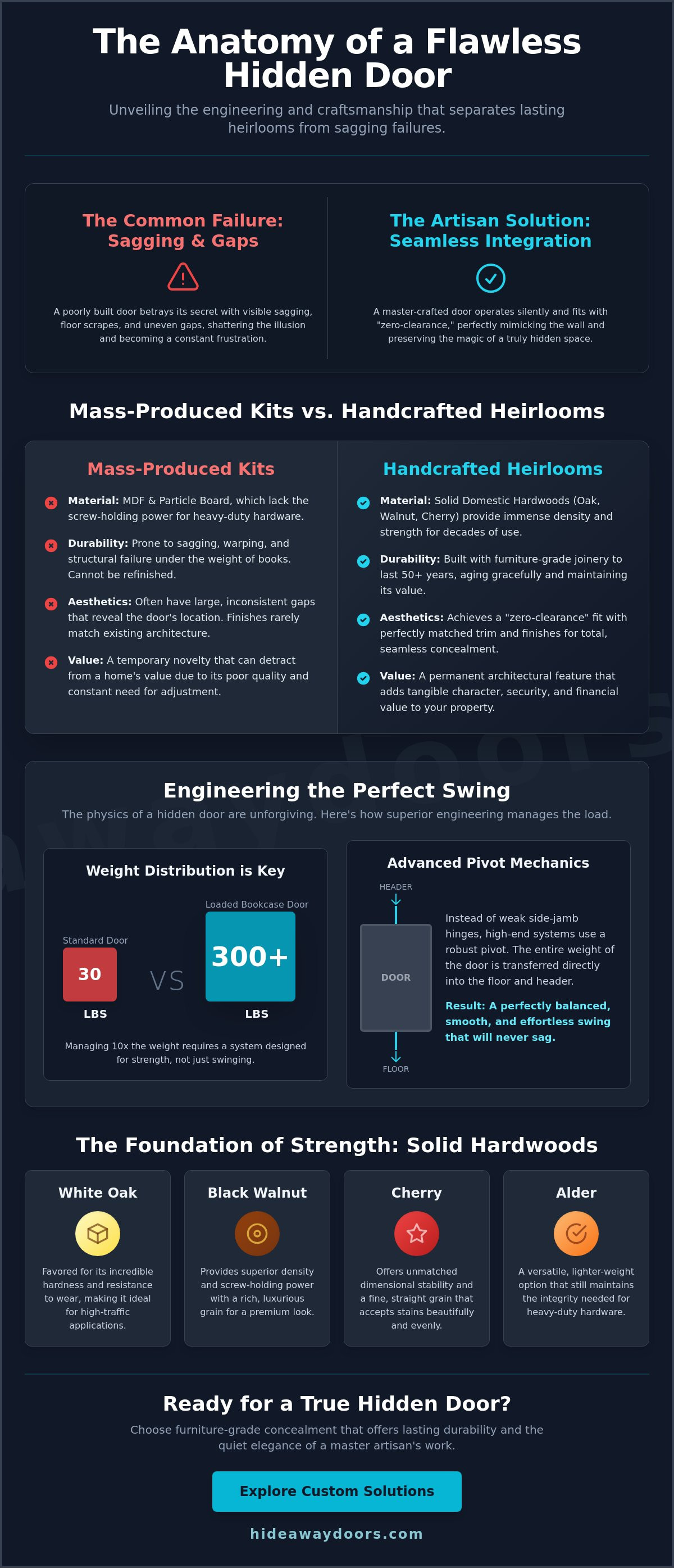
A secret door that sags isn't a mystery; it's a structural failure. You likely imagine the thrill of a hidden passage, yet you worry that the weight of a fully loaded bookcase will eventually cause the frame to drag across your floor. This fear often prevents people from investing in handcrafted hidden doors that truly vanish into the wall. It's a valid concern, as a poorly constructed unit often looks like a cheap add-on that betrays its location through sagging or mismatched finishes.
True security and aesthetic seamlessness require more than just a hidden hinge. They require the precision of furniture-grade construction built from solid, domestic hardwoods. In this 2026 guide, you'll discover the engineering secrets that prevent structural fatigue and the material science behind choosing species like White Oak or Black Walnut. We'll walk through the load-bearing requirements of these installations and help you select finishes that blend with your home's architecture. You will gain the confidence to choose a solution that offers both lasting durability and the quiet elegance of a master artisan's work.
Key Takeaways
Learn the fundamental differences between heirloom-quality joinery and mass-produced kits that fail under real-world use.
Understand the engineering principles necessary to manage heavy loads and prevent the common pitfalls of door sag.
Discover how to match handcrafted hidden doors to your home’s unique aesthetic through precise wood selection and stain-grade finishes.
Explore specialized design options for securing valuables, ranging from integrated wine racks to discreet gun cabinets.
Identify the essential measurements and installation requirements needed to achieve a flush, architectural fit.
What Defines Handcrafted Hidden Doors in a Mass-Produced World?
Quality isn't a buzzword; it's a structural requirement. In a market flooded with flat-pack kits and commodity materials, the distinction of true craftsmanship lies in the intersection of precision engineering and traditional woodworking. While a standard interior door only needs to swing on a lightweight frame, handcrafted hidden doors must function as both a piece of heavy-duty machinery and a fine furniture installation. The history of secret passages shows that the most successful designs have always relied on the builder's ability to manipulate space and weight without leaving a visual trace. Today, a master artisan ensures that every pivot point and swing is silent, smooth, and perfectly balanced, regardless of the load it carries.
The "wow factor" of a secret room depends entirely on the seamless fit of the unit. If the door sits unevenly or leaves a wide gap in the trim, the illusion is shattered instantly. Mass-produced alternatives often prioritize shipping convenience over structural integrity, leading to units that feel flimsy or fail to align with your existing walls. A furniture-grade door, however, is built to the same standards as a high-end heirloom cabinet. It’s designed to be a permanent architectural feature that adds tangible value to your property rather than a novelty add-on that requires constant adjustment.
The Artisan Difference: Real Wood vs. MDF
Durability begins with the substrate. We don't use MDF or particle board because these materials lack the screw-holding power necessary for the heavy-duty hinges used in secret doors. When you load a bookcase with fifty pounds of books, the stress on the hardware is immense. Solid hardwoods like White Oak or Black Walnut provide the density needed to keep hinges seated firmly for decades. Beyond strength, real wood offers a tactile depth and grain pattern that synthetic materials simply cannot replicate. These doors maintain their value because they age gracefully, allowing for refinishing and repairs that are impossible with cheap, laminated alternatives.
Concealment as a Fine Art
Total invisibility requires a "zero-clearance" look. This means the gaps between the door and the frame are so tight that they mimic the natural seams of your home's trim and molding. Achieving this level of precision requires a master's eye for detail; every piece of casing must be matched perfectly to your room's existing architecture. If the wood species or the finish is even slightly off, the secret is revealed to anyone walking by. Furniture-grade concealment is the standard for 2026 luxury homes.
Engineering the Perfect Swing: Strength and Durability
The physics of a bookcase door are unforgiving. Unlike a standard interior door that might weigh thirty pounds, a fully loaded hidden bookcase can easily exceed three hundred pounds once you add books, collectibles, or safe-room supplies. Managing this weight requires more than just a strong arm; it requires a deep understanding of load-bearing mechanics. Structural integrity is the primary factor in preventing door sag, which is the leading cause of secret doors becoming stuck or revealing their location through unsightly floor scrapes. By 2026, the evolution of heavy-duty pivot hardware has reached a point where these massive units can operate with the same ease as a lightweight pantry door. The Alpha Door system represents the pinnacle of this concealment engineering, utilizing a proprietary design that anchors the weight into the floor and header rather than the side jambs.
Material Science: Why Real Wood Wins
Density and tensile strength aren't just technical specs. They're the difference between a door that lasts five years and one that lasts fifty. When building handcrafted hidden doors, we prioritize species based on their structural performance. White Oak is favored for its incredible hardness and resistance to wear, while Cherry offers unmatched dimensional stability and a fine grain that takes stains beautifully. Alder provides a versatile, lighter-weight option that still maintains the screw-holding power necessary for heavy hinges. Solid wood construction prevents warping in varied climates because the natural fibers are more resilient to moisture changes than glued composites. For a deeper look at why we avoid synthetic materials in our builds, read our Solid Wood vs MDF guide.
The Anatomy of a Non-Sagging Bookcase
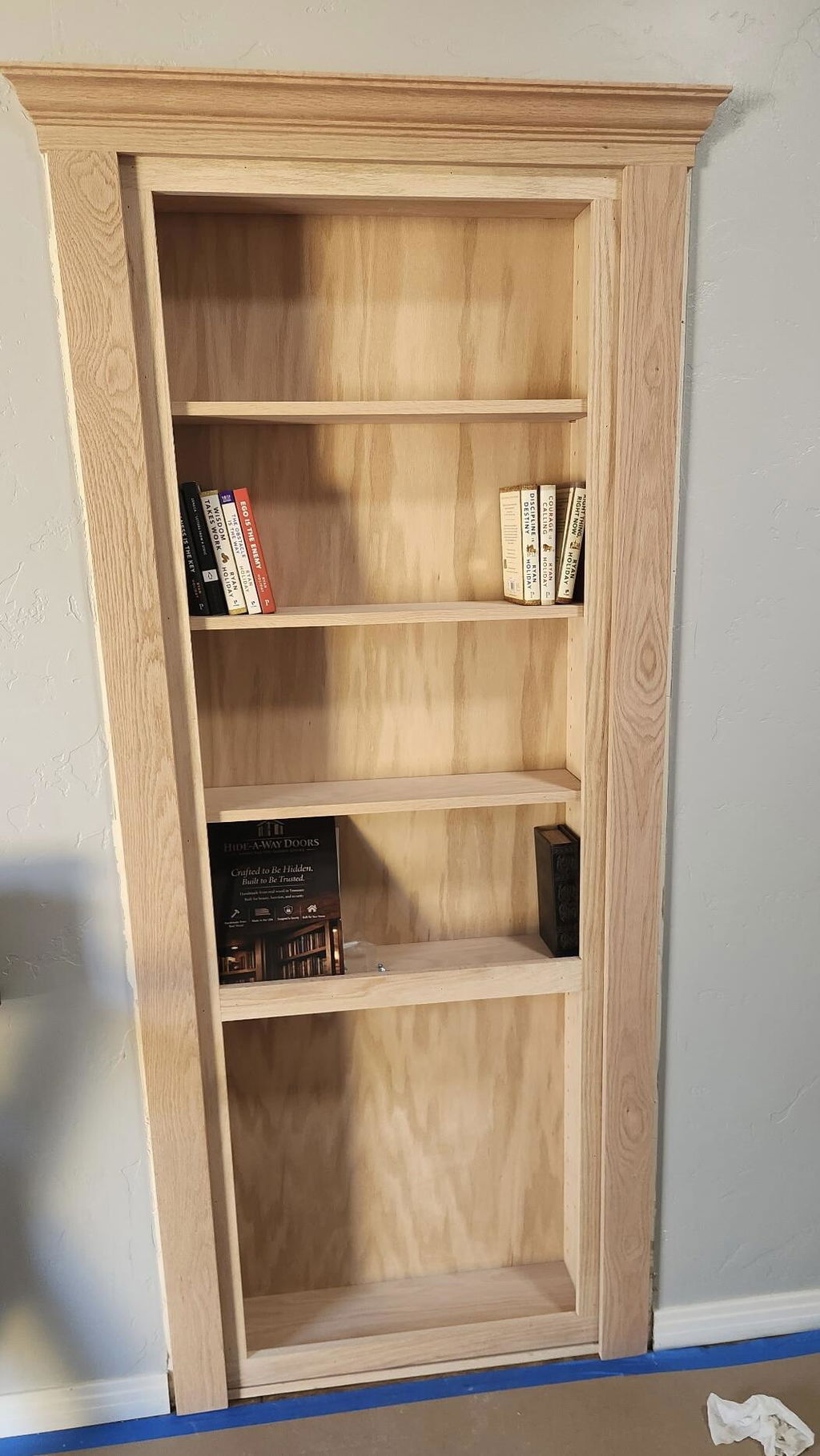
The secret to a non-sagging bookcase lies in what you can't see. At Hide-A-Way Doors, we use reinforced backing and specialized shelf-joinery techniques that turn the entire unit into a rigid, structural box. This prevents the frame from racking under the stress of heavy loads over time. The threshold and header play a vital role here, distributing the weight evenly across the architectural opening to ensure the frame stays perfectly plumb. A properly engineered door should swing with a single finger. If you're ready to add this level of precision to your home, consider browsing our handcrafted inventory for a solution that balances beauty with brute strength.
Selecting the Right Wood Species for Your Secret Entrance
Visual deception is the cornerstone of a successful hidden passage. If the wood grain or texture of your door doesn't perfectly mirror the surrounding cabinetry or trim, the secret is lost before the door even moves. Choosing the right species for handcrafted hidden doors involves more than just picking a color; it requires matching the architectural DNA of your home. Whether you're aiming for a seamless integration into a painted wall or a standout furniture piece, the wood you select dictates the door's longevity and its ability to remain invisible to the naked eye. In 2026, we see a shift toward species that offer both high-density structural support and intricate grain patterns that naturally camouflage the vertical seams of the installation.
The first decision is often between paint-grade and stain-grade selections. Paint-grade options are ideal for modern homes where the goal is to make the door vanish into a flat wall or a run of built-in shelving. Stain-grade wood, however, is where the artisan's skill truly shines. Elite finishes like Black Walnut or Quarter-Sawn White Oak provide a sophisticated look that elevates a room's aesthetic. Quarter-sawn lumber is particularly effective for concealment because the straight, vertical grain patterns help break up the visual line where the door meets the frame, making it nearly impossible to spot the opening from a distance.
Traditional Strength: Oak and Cherry
Oak remains a staple in American craftsmanship for its rugged durability and prominent grain. It's the ideal choice for high-traffic areas where the door will be handled frequently. For those looking for detailed technical specifications on this species, our Oak Hidden Bookcase Door guide explores why this wood is a structural powerhouse. Cherry, by contrast, offers a smoother texture and a rich, reddish hue that darkens beautifully with age. It's the preferred choice for formal libraries and executive offices where a sense of heritage and luxury is paramount. You can learn more about these premium aesthetics in our Cherry Wood Secret Doors guide.
Versatile Elegance: Alder and Pine
Alder is often called the "chameleon of woods" because its uniform pore structure allows it to mimic more expensive species like Cherry or Walnut when stained correctly. It offers a sophisticated look without the premium price tag of exotic hardwoods. Our Handcrafted Alder Bookcase Doors guide highlights its versatility for custom home projects. For homeowners pursuing a rustic or farmhouse aesthetic, Pine is a classic choice. Its natural knots and lighter color palette provide a rugged, dependable feel that complements casual living spaces or mountain retreats.
Functional Design: Beyond the Standard Bookshelf
The "wow factor" of a secret passage is undeniable, but the practical applications are what make it a lasting investment. In master suites and narrow hallways, a Mirror Door provides dual-purpose utility. It offers a full-length reflection that brightens the room while masking the entrance to a walk-in closet or ensuite. This level of furniture-grade concealment ensures that even the most functional parts of your home maintain an air of intrigue and elegance.
Security and Peace of Mind
Protecting what matters requires a blend of discretion and strength. For many homeowners, a secure gun concealment door offers the ultimate peace of mind by removing high-value items from plain sight. The psychological benefit of "out of sight, out of mind" is a powerful deterrent against theft. By integrating modern, high-security locking mechanisms into traditional solid wood frames, we ensure that your valuables remain inaccessible to unauthorized eyes without signaling their presence. This approach transforms a standard hallway into a secure perimeter for a vault or safe room.
Entertainment and Lifestyle
Secret passages also offer a unique opportunity to inject personality into your home's entertainment zones. You can create a private speakeasy atmosphere with a hidden wine rack door that looks like a permanent cellar feature until it swings open. For the dedicated billiards room, a hidden pool cue rack door provides a clever way to store equipment while surprising guests with a hidden lounge or bar area. These specialized designs prove that a secret entrance is more than a novelty; it's a functional upgrade to your lifestyle. If you're ready to explore these possibilities, browse our full collection of specialized doors to find the perfect fit for your home's unique layout.
Planning Your Project: Measuring and Professional Installation
Precision is the prerequisite for invisibility. For handcrafted hidden doors to remain truly secret, there's zero margin for error during the initial planning phase. A standard interior door might hide a slight tilt in the frame behind wide trim, but a hidden unit must be perfectly plumb and level to maintain the tight tolerances required for concealment. If the floor is uneven or the wall isn't square, the door will bind or reveal its location through uneven shadows. We recommend measuring your opening at three different points for both width and height to ensure the unit fits the smallest dimension of the space.
Choosing between a fully assembled unit and our DIY Door Kits depends largely on your comfort level with structural carpentry. While a kit offers a hands-on approach for the experienced builder, our pre-assembled Alpha Door or Mirror Door units arrive with the heavy-duty pivot hardware already calibrated. This is a critical distinction because managing the weight of a 300-pound solid wood bookcase requires more than just standard hinges; it requires a structural anchor that most homeowners find easier to manage with a factory-assembled frame. Professional installation doesn't just save time. It ensures the lifetime warranty of your door remains intact by verifying that the weight is distributed correctly across the header and threshold.
The Measurement Checklist
Before placing an order, distinguish between your rough opening and the finished opening. The rough opening is the framed space before drywall, while the finished opening includes all final materials. Check for floor levelness across the entire swing path of the door. An outswing door requires a clear floor radius, whereas an inswing door needs sufficient depth behind the wall to accommodate the bookcase's thickness. Accounting for these clearances early prevents costly structural modifications once the door arrives at your job site.
National Shipping and Installation Support
Shipping heavy, oversized furniture isn't like a standard parcel delivery. Hide-A-Way Doors coordinates nationwide delivery to all 50 states, using specialized freight carriers to ensure your project arrives in pristine condition. We maintain a national network of professional installers who understand the specific requirements of our hardware. This support system simplifies the transition from the workshop to your home. The final steps involve staining and finishing your door to match your home's specific lighting and existing millwork, ensuring the final product is a seamless architectural feature that stands the test of time.
Elevate Your Home with Masterful Concealment
Investing in a secret entrance is about more than just novelty; it's about the intersection of security and fine furniture. You've learned that the longevity of handcrafted hidden doors depends on solid wood construction and precision engineering that prevents sagging over time. Whether you choose a specialized wine rack or a classic bookcase, the result should be a seamless architectural feature that adds lasting value to your property. By prioritizing structural integrity and selecting the right wood species, you ensure that your hidden passage remains a functional asset for decades.
We're a family-owned business where every unit is handcrafted in the USA using only real wood. We never use MDF or particle board because your home deserves materials that endure. With our nationwide shipping and professional installation network, the path from initial measurement to final installation is handled with expert care. Browse our collection of handcrafted Alpha Concealment Doors to find the solution that fits your vision. Your home's most intriguing feature is just one project away.
Frequently Asked Questions
Do handcrafted hidden doors sag over time?
Handcrafted hidden doors do not sag if they utilize a structural box design and floor-anchored pivot hardware. While mass-produced kits often fail under pressure, our units distribute the weight of books and decor through the floor and header rather than the side jambs. This engineering ensures the door remains plumb and operates silently for the life of your home. It's the difference between furniture-grade joinery and temporary solutions.
What is the best wood species for a secret bookcase door?
White Oak is widely considered the best wood species for handcrafted hidden doors due to its high density and exceptional screw-holding power. It provides the structural rigidity needed for heavy units while offering a grain pattern that camouflages vertical seams. For those seeking a more formal aesthetic, Black Walnut and Cherry offer similar durability with a more sophisticated finish that ages beautifully over time.
Can I install a hidden door in an existing doorway?
You can install a secret door into an existing doorway by removing the old trim and door slab. Most of our units are designed to fit standard rough openings, though you'll need to verify that your floor is level and your walls are plumb. This allows you to transform a standard closet or office entrance into a discreet passage without requiring major structural remodeling or new construction.
How much weight can a real wood bookcase door hold?
A furniture-grade unit can typically support between 300 and 500 pounds depending on the specific model and wood species selected. This capacity allows you to fill your shelves with heavy hardcover books or safe room essentials without compromising the swing. The secret lies in the reinforced backing and the heavy-duty pivot system that prevents the frame from racking or dragging under a full load.
Are hidden doors actually secure for safe rooms?
Hidden doors provide an elite layer of security by removing the target from plain sight entirely. For a safe room or vault, the primary goal is to prevent an intruder from locating the entrance in the first place. When combined with a solid wood frame and a secure locking system, these doors offer a formidable barrier that standard interior doors simply can't match for total home protection.
How do you lock a hidden bookcase door?
Locking mechanisms for these units are usually concealed to maintain the illusion of a standard wall or bookcase. Options include magnetic locks, hidden mechanical triggers, or digital keypads tucked behind a secret panel. These systems ensure that the door stays firmly shut and secure without any visible hardware on the exterior to betray its purpose to guests or intruders.
Do I need a professional to install my hidden door?
While we offer DIY Door Kits for experienced builders, professional installation is the best way to ensure a flush, architectural fit. A professional installer understands how to level a heavy unit and shim the frame for a zero-clearance look. This expertise is especially valuable when working with heavy-duty hardware that requires precise alignment to function correctly and maintain your lifetime warranty.
What is the difference between an Alpha Door and a standard bookcase door?
The Alpha Door is a proprietary system engineered specifically for maximum weight capacity and total concealment. Unlike standard bookcase doors that might use basic hinges or lightweight materials, the Alpha Door utilizes a specialized pivot system that anchors into the floor. This design allows for a much tighter fit against the wall and prevents the sagging issues common with entry-level alternatives.