The Master Artisan’s Guide to the Oak Hidden Bookcase Door
A secret door is only a secret as long as it operates in silence and stays perfectly level. While the initial appeal of an oak hidden bookcase door is the "wow factor" of a concealed room, the reality of engineering a 300-pound moving library can be daunting. You've likely worried about the structural integrity of your frame or whether a new installation will look like a clumsy addition rather than a natural part of your home's architecture. These aren't just minor details. They're the difference between a frustrating project and a piece of functional art that lasts for generations.
We believe that true security comes from superior craftsmanship and the right materials. This guide will show you why solid oak is the undisputed gold standard for secret doors, offering the density required to prevent sagging and the grain quality to match your existing trim. We'll walk through the technical requirements of load-bearing hinges and the secrets to achieving a seamless, flush-mount finish. You'll gain the confidence to move from the dreaming phase to the execution of a durable, heirloom-quality entryway that works every single time.
Key Takeaways
Understand why solid oak’s superior Janka hardness is essential for maintaining screw-holding power and preventing the structural fatigue common in composite materials.
Learn the "1/8-inch rule" for rough opening measurements to ensure your oak hidden bookcase door operates with the precision of a fine timepiece.
Discover the aesthetic nuances between Red and White Oak grain patterns to achieve a seamless, high-end match with your home’s existing architectural trim.
Identify the critical structural reinforcements required for your floor and header to safely support a fully loaded, heirloom-quality secret door.
Explore how the Alpha Door system utilizes low-profile engineering to provide maximum concealment without sacrificing the beauty of handcrafted Tennessee hardwoods.
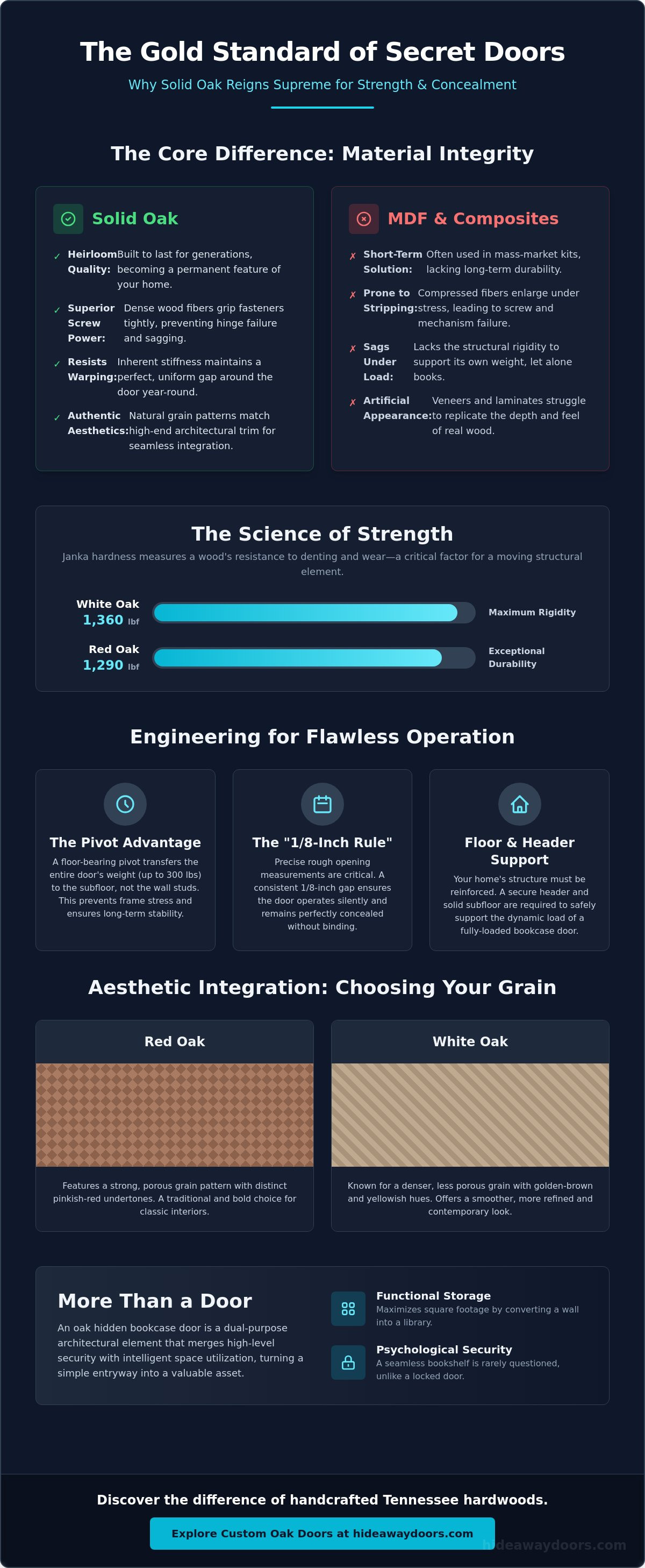
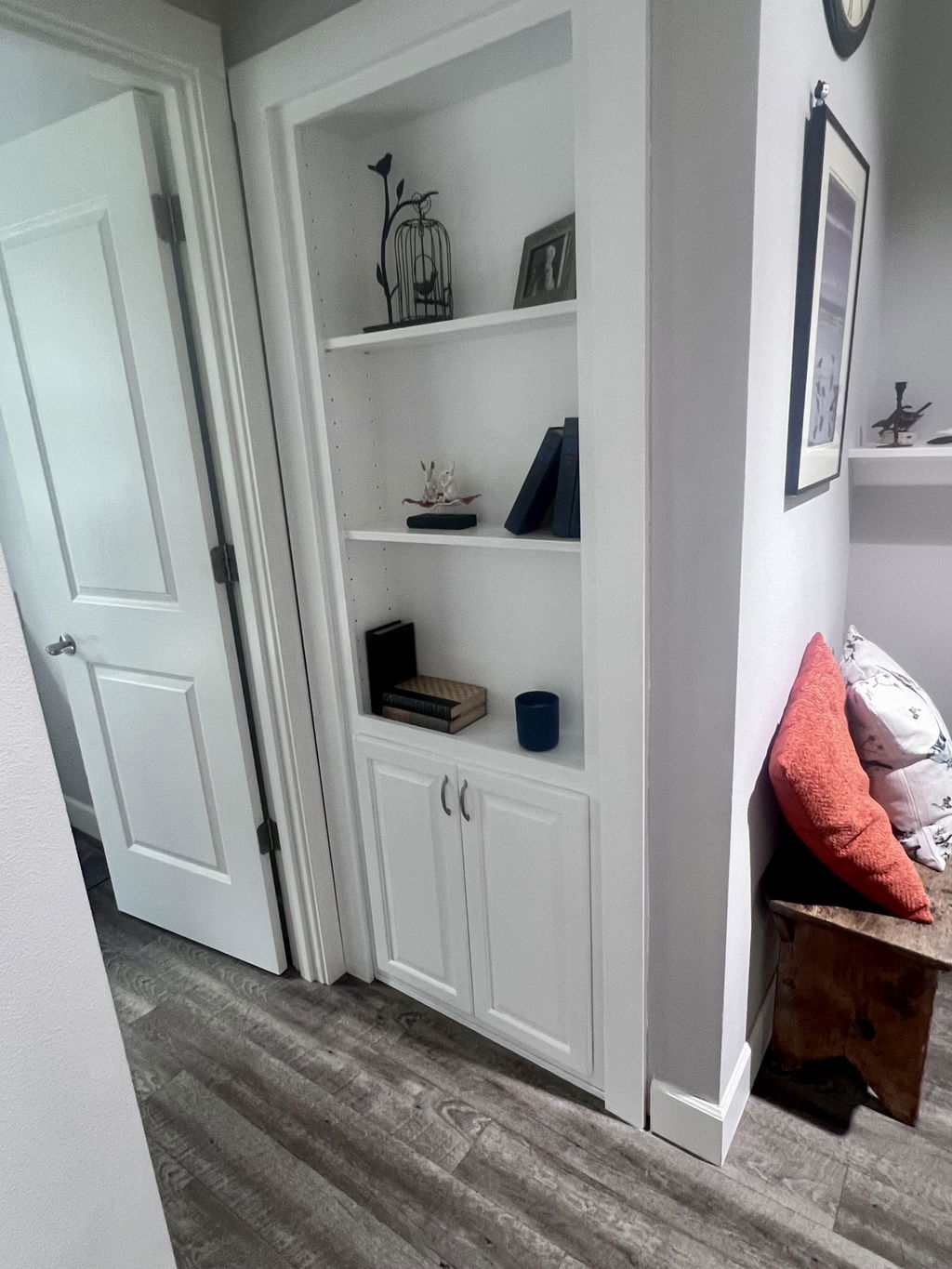
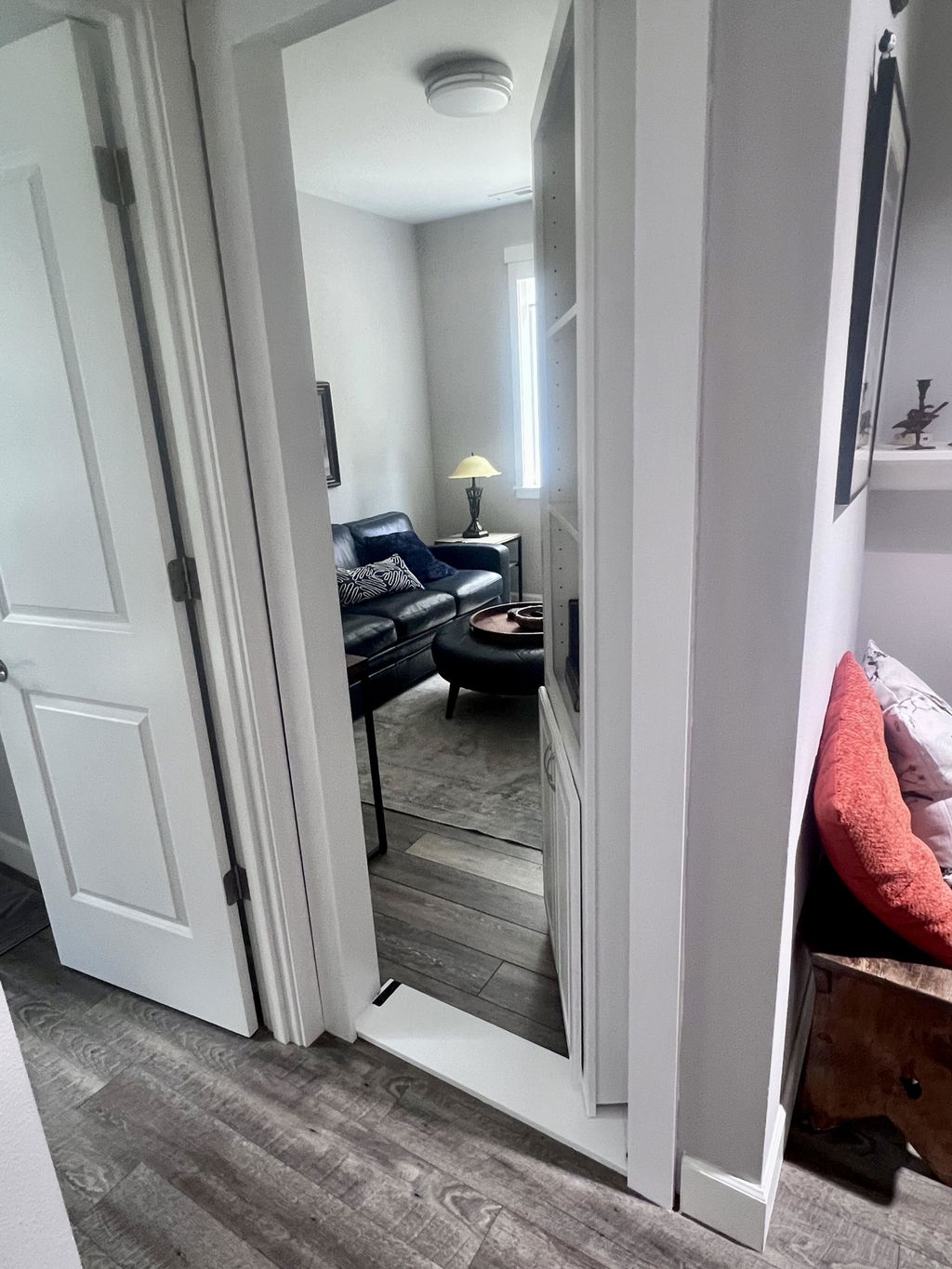
An oak hidden bookcase door is a precision-engineered furniture piece that serves as a functional doorway while maintaining the facade of a permanent library fixture. It sits at the intersection of high-security concealment and traditional cabinetry. Unlike a standard door that announces the presence of a room, this system is designed to vanish. It requires a level of craftsmanship that balances the weight of solid timber with the delicate physics of a hidden hinge. This is not a simple piece of decor; it's a heavy-duty mechanical assembly designed for daily use.
Oak has been the preferred wood for secret passages for centuries. Its reputation for strength is well-earned. The history of hidden bookcase doors shows that early artisans valued oak for its ability to resist the warping and bowing that would otherwise expose a hidden seam. When you choose oak, you aren't just choosing a grain pattern. You're choosing a material with the structural integrity to support hundreds of pounds of books without sagging over time. Oak provides the necessary rigidity to ensure the mechanism remains silent and the gap remains uniform over decades of operation.
There's a clear distinction between a custom-built unit and a mass-market assembly kit. Many generic kits utilize MDF or thin veneers to keep costs down, but these materials often fail under the mechanical stress of a pivoting bookcase. A true artisan door is built from solid hardwood. This ensures that the door remains plumb and level for the life of the home. While standard DIY kits can offer a path for the capable home builder, the professional standard remains a fully assembled, solid-wood unit that can withstand the rigors of a high-traffic entryway.
The Dual Purpose: Storage Meets Concealment
Modern homes often struggle with wasted space. A hidden bookcase door solves this by turning an entry point into several cubic feet of functional storage. It maximizes square footage by turning a static wall into a library. It also creates a powerful psychological barrier. While a locked standard door invites curiosity, a seamless bookshelf is rarely questioned. This creates a sense of privacy for home offices, wine cellars, or safe rooms. The wow factor of the discovery is simply a byproduct of smart, built-in engineering.
Defining the Artisan Standard in 2026
As we move through 2026, the standard for luxury home concealment has shifted toward enduring quality. Homeowners now expect furniture-grade finishes that complement existing high-end millwork. This means moving away from mass-produced composites and returning to the tactile quality of solid wood. Whether you are installing a low-profile concealment system or a double-wide library entrance, an oak hidden bookcase door is a structural architectural element that bridges the gap between secure utility and elegant cabinetry. It's a permanent investment in the heritage and functionality of your property.
The Engineering of Strength: Why Solid Oak Matters
The Janka hardness scale is the definitive measure of a wood's resistance to wear and denting. For an oak hidden bookcase door, these numbers represent more than just durability; they represent the mechanical life of the door. Red Oak sits at approximately 1,290 lbf on the scale, while White Oak reaches 1,360 lbf. This density is what creates the superior screw-holding power necessary for a moving wall. When you drive a fastener into solid oak, the wood fibers compress and grip the threads with a tenacity that composite materials can't match. In softer woods or MDF, those same screw holes will eventually enlarge under the constant leverage of a pivoting bookcase, leading to mechanical failure.
Structural sagging is the primary enemy of any secret door. If a unit drops even a sixteenth of an inch, the visual reveals become uneven and the concealment is compromised. Solid oak prevents this through its inherent stiffness. While particle board is essentially compressed sawdust that yields under its own weight, oak's long-grain structure maintains its shape over decades. This rigidity is what keeps the door plumb and level through the shift of the seasons. Even as humidity levels fluctuate, a properly seasoned oak door resists the bowing that would otherwise cause the unit to bind against the jamb.
The physics of a secret entrance relies on a pivot mechanism rather than traditional side hinges. By utilizing a floor-bearing design, the weight of the library is transferred directly into the subfloor rather than pulling on the wall studs. This distribution is vital for long-term stability. It ensures that the door remains a silent, effortless portal rather than a heavy, dragging burden. If you're planning a high-traffic entry, starting with a solid foundation is the only way to guarantee the door's "secret" remains safe. You can view our range of professionally engineered options at Hide-A-Way Doors.
Oak vs. MDF: A Structural Comparison
MDF cores often fail at the hinge point because the material lacks the cellular structure to handle rotational stress. Over time, the weight of the books causes the fasteners to "tear" through the composite. Oak fibers, however, are designed by nature to withstand tension and compression. While Red Oak offers a classic, open-grain look, White Oak provides a slightly tighter cellular structure that is even more resistant to moisture and decay. Both species offer a weight-to-strength ratio that makes them the elite choice for secret cabinetry.
Pivot Hardware and Load Capacities
Standard door hardware isn't built for the 300-pound load of a fully stocked bookcase. We utilize heavy-duty steel pins that act as the central axis for the entire assembly. When you calculate your "real world" load, you have to account for the weight of the timber plus at least 20 pounds per shelf for a standard library. Our hardware is engineered to handle these loads without the friction that causes squeaks or sticking. For a deeper look at how we manage these stresses, read our guide on The Engineering of Alpha Doors: Strength and Durability.
Aesthetic Integration: Customizing Your Oak Bookcase
True concealment is a visual game of misdirection. While the structural integrity of an oak hidden bookcase door ensures it functions for decades, the aesthetic integration determines if it actually stays a secret. A secret door shouldn't just fit the hole in the wall; it must belong to the room. This requires a deep understanding of wood species, grain patterns, and how they interact with the existing millwork in your home. It's about creating a piece of furniture that looks like it was installed when the house was built.
Selecting the right variety of oak is your first design decision. Red Oak is famous for its open grain and warm, porous texture. It's the classic choice for traditional American homes where a prominent grain is desired. White Oak, conversely, offers a tighter grain and a more linear aesthetic that suits contemporary or "mountain modern" designs. Oak’s medullary rays, often called silver grain, create a striking visual pattern when quartersawn. These rays don't take stain as deeply as the surrounding wood, creating a shimmering contrast that adds depth to your library facade.
Matching existing millwork is where the amateur project fails and the artisan project succeeds. You must extend your crown molding and baseboards across the face of the door. This breaks up the vertical lines of the jamb and anchors the unit to the room. When the trim is continuous, the eye doesn't stop at the door frame. Instead, it follows the architectural lines of the room, completely bypassing the hidden entrance. Beyond the trim, you can elevate the piece with adjustable shelving or integrated LED lighting to highlight your collection.
Stain Grade Oak: Accentuating the Natural Grain
Oak is a porous hardwood, which means it takes stain differently than tighter woods like maple or alder. The open pores drink in the pigment, highlighting the complexity of the grain. If you're aiming for a dark, moody library feel, a deep espresso or walnut stain will settle into those pores while leaving the harder ridges slightly lighter. For a more detailed breakdown of these finishes, consult Stain Grade Bookcase Doors: The Ultimate Guide. Whether you choose a clear coat to celebrate the natural honey hues or a dark stain for a formal look, the result is a furniture-grade finish that no paint-grade composite can replicate.
Hardware and Concealment Specs
The secret to a perfect "Alpha" reveal is minimizing the gap between the door and the frame. We design our systems to maintain a tight, consistent margin that mimics the natural shadows of a built-in cabinet. To keep the face of the bookcase clean, we utilize magnetic triggers or discreet mechanical latches that don't require external handles. We also strategically place "fixed" shelves at the pivot points. These permanent shelves provide the necessary structural bracing while simultaneously hiding the heavy-duty steel pins from view, ensuring the mechanical soul of your oak hidden bookcase door remains completely invisible to the naked eye.
Planning and Installation for a Secret Oak Door
Precision is the difference between a door that sticks and one that disappears. When you're installing an oak hidden bookcase door, your rough opening must be perfectly plumb, level, and square. We follow the 1/8-inch rule: your opening should be exactly 1/8-inch larger than the door frame on all sides. This tight tolerance ensures that the reveal, which is the gap between the door and the wall, remains consistent and narrow enough to escape notice. You can find detailed instructions in our guide on How to Measure Your Opening for a Hidden Bookcase Door.
Reinforcement is non-negotiable. As established in previous sections, a solid oak unit can weigh up to 300 lbs before you even add a single book. This mass requires a double-king stud on either side of the opening and a solid, structural header. The floor must also be perfectly level. If the subfloor has any dip, the pivot point will eventually bind. We recommend checking your floor with a six-foot level. If it's not dead-on, you'll need to shim the threshold or level the floor before the cabinet is set in place.
Final balancing is the mark of a master installation. A well-installed door should stay in whatever position you leave it. If it swings open or shut on its own, the frame is out of plumb. Once the unit is balanced, the final step is aligning the trim. By overlapping the casing slightly over the door's edge, you achieve a "zero-reveal" look. This shadow line is what makes the bookcase look like a permanent, built-in feature rather than a movable portal.
Inswing vs. Outswing: Which Is Right for You?
Space requirements often dictate your choice. An outswing bookcase requires a wide radius in a hallway, which can be cumbersome in tight quarters. Inswing doors are generally preferred for maximum concealment because they pull away from the casing, allowing for a tighter fit. You must also determine the "handing" of the door. A right-hand in-swing door is the most intuitive for right-handed users, making the transition into your secret room feel natural and effortless.
Retrofitting vs. New Construction
Installing a heavy oak door in an older home presents unique challenges. Existing studs often twist over time, meaning you'll likely need to strip the opening back to the framing and reinforce it with new, kiln-dried timber. In new construction, you have the luxury of planning the load-bearing requirements from the start. Regardless of the home's age, the goal is to prevent the door-jamb from twisting under the rotational stress of the bookcase. If you're ready to secure your home's secret entrance, browse our Alpha Door and DIY options to find the right engineering for your space.
The Hide-A-Way Difference: Handcrafted Oak Excellence
At Hide-A-Way Doors, we don't believe in shortcuts or temporary fixes. Our Tennessee-based family business was founded on the principle that a secret door should be as sturdy and permanent as the wall it inhabits. This is why we strictly reject MDF and particle board in our manufacturing process. While many competitors favor these materials to facilitate mass production and lower shipping costs, we know they lack the structural integrity to support a true, moving library. Every oak hidden bookcase door we build is a testament to traditional cabinetry and modern engineering, ensuring that your investment remains functional for decades.
We ship our handcrafted units across all 50 states and maintain a dedicated network of professional installers to ensure your project is completed with artisan precision. Our "pre-hung" system is a major differentiator in the industry. By building the door and frame as a single, calibrated unit in our Tennessee shop, we eliminate the common headaches of field assembly. You won't have to worry about complex hinge alignments or structural failures. Instead, you receive a portal that is already balanced, plumb, and ready for a seamless installation.
The Alpha Concealment Series
The Alpha Door represents our most sophisticated approach to home security and architectural design. It features a signature low-profile reveal that minimizes the tell-tale shadows that often give away a hidden entrance. While standard doors might have gaps that draw the eye, our precision engineering allows the Alpha Door to disappear into the wall with a flush-mount finish. For a deeper look at the craftsmanship behind this model, read The Alpha Door: Why Real Wood Defines Secret Bookcases. It's the ideal choice for homeowners who prioritize high-security concealment without sacrificing the beauty of a custom library.
Investing in a Lifetime Heirloom
Choosing a solid oak system is a decision that pays dividends in both home value and daily peace of mind. The long-term ROI of an oak hidden bookcase door far exceeds that of cheaper alternatives that will eventually sag, bind, or require replacement. You're not just buying a doorway; you're investing in a piece of American-made heritage that can be passed down through generations. There's a profound sense of satisfaction that comes from the tactile weight and silent operation of a perfectly executed project. If you're ready to transform your home with a blend of mystery and master-level craftsmanship, contact our design consultants today to discuss a custom oak solution tailored to your specific architectural needs.
Secure Your Home’s Legacy with Artisan Engineering
Choosing an oak hidden bookcase door is more than a design upgrade; it's a commitment to enduring quality and structural security. You now understand that the secret to a silent, sagging-free entrance lies in the density of solid timber and the precision of a floor-bearing pivot. By prioritizing real wood over flimsy composites, you ensure your secret remains safe for a lifetime. Our team in Morristown, Tennessee, takes pride in rejecting MDF to focus on the rugged, dependable craftsmanship your home deserves. With a national installation network and a pre-hung system designed for a perfect fit, the path from inspiration to execution is clear.
Your library should be a place of discovery and peace of mind. Whether you're concealing a private office or a safe room, we're here to provide the expertise and materials that stand the test of time. Every project we touch is built with the same manual skill and attention to detail that defines the master artisan standard. Take the final step toward a more secure and elegant home today.
Is an oak hidden bookcase door too heavy for a standard wall?
An oak door is not too heavy for a standard wall provided the framing is properly reinforced. While solid wood is substantial, our floor-bearing pivot hardware transfers the weight directly into the subfloor rather than pulling on the wall studs. You'll need to ensure your opening has a double-king stud and a structural header to manage the lateral load during operation.
Does a secret bookshelf door come with a locking mechanism?
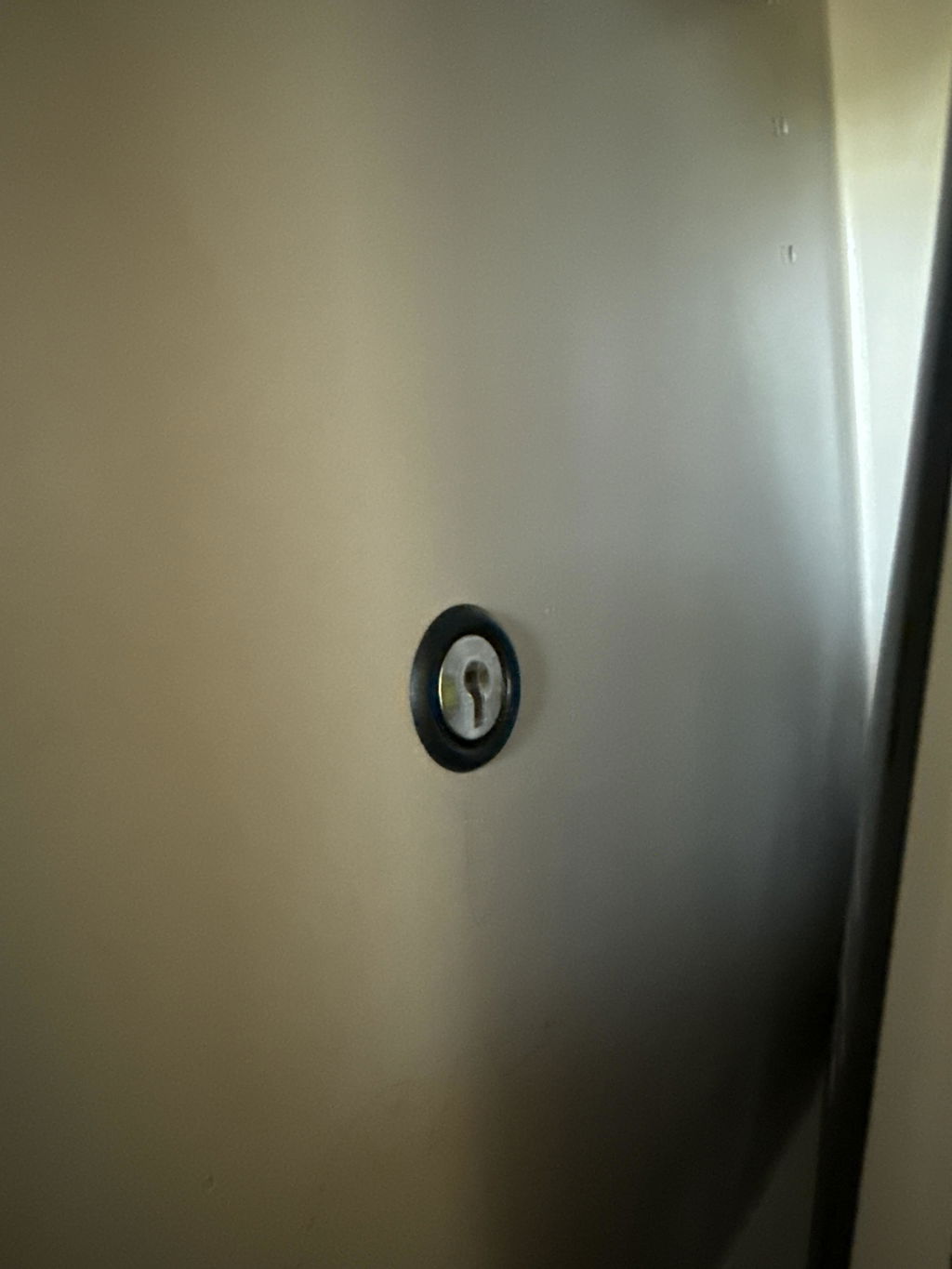
We provide several discreet locking options to maintain the security of your hidden room. You can choose between invisible magnetic triggers or mechanical latches that don't require external handles. These systems ensure the door remains firmly closed and flush with the wall until you intentionally engage the release mechanism.
Can I install a hidden oak door in an existing doorway?
You can certainly retrofit an oak hidden bookcase door into an existing opening, though it requires more than just a simple swap. You must remove the existing door, jamb, and casing to expose the rough framing. Once the opening is cleared and reinforced, our pre-hung system can be installed to ensure the unit remains plumb and operates smoothly.
How much weight can an oak bookcase door actually hold?
Our standard single doors are engineered to support a total load of up to 300 lbs. This rating includes the weight of the handcrafted oak unit itself plus the books and decor you place on the shelves. For wider openings, our Double Bookcase Door utilizes a dual pivot system to distribute even heavier loads across the structural floor plate.
What is the difference between Red Oak and White Oak for these doors?
Red Oak is known for its warm tones and open, porous grain that captures stain with high contrast. White Oak offers a tighter cellular structure and a more linear, contemporary grain pattern. While both provide the Janka hardness required for durability, White Oak is naturally more resistant to moisture, making it an excellent choice for basement entries or humid climates.
Do you ship solid oak hidden doors to Canada?
We currently focus our logistics and professional installation network on the 50 United States. Shipping a fully assembled, solid wood bookcase internationally involves complex handling requirements to prevent damage to the precision-aligned frame. We recommend contacting our design consultants to discuss the specific logistics and availability for your region.
How do I hide the gap around the secret bookcase door?
The gap is concealed by utilizing a "zero-reveal" trim technique where the casing overlaps the door's edge. By extending your room's existing crown molding and baseboards across the face of the bookcase, you break up the vertical lines of the jamb. This architectural continuity ensures the eye follows the trim rather than the seam of the door.
Is it better to get an inswing or outswing oak hidden door?
Inswing doors offer the highest level of concealment because the bookcase pulls into the room, allowing the exterior trim to remain static. This configuration creates a tighter visual seal and is generally preferred for safe rooms. Outswing doors are a practical alternative when the interior space is too small to accommodate the door's radius, though they require more careful trim planning in the hallway.