Stacked real wood prepared for hidden door construction
Real Wood Construction

Choose the right wood for your hidden door.

Compare grain, durability, paint and stain performance, and overall character before selecting the material that will define your finished door.

Real wood stock used by Hide-A-Way Doors
What “Real Wood” Means Here

Furniture-grade construction—not an MDF box.

We do not use MDF in the construction of our hidden doors. We combine solid wood where strength, joinery, and finished appearance matter with cabinet-grade plywood where dimensional stability matters.

Solid wood componentsFace frames, jambs, threshold, header, crown, and case molding.
Cabinet-grade plywoodBookcase sides, fixed shelves, adjustable shelves, and backing components where specified.
Material Guide

Six looks. Six different strengths.

No wood is best for every project. A painted opening, rustic stained library, and high-traffic family room call for different materials. Use the recommendations below as a practical starting point.

Primed finger-jointed pine paint-grade materialMost economical

Paint Grade

Best for: Budget-conscious painted doors

Finger-jointed pine intended specifically for an opaque painted finish. It is our most cost-effective material, but it is softer and more susceptible to dents and scratches than the upgraded woods.

  • PaintExcellent intended finish
  • StainNot suitable
  • GrainHidden beneath paint
  • DurabilitySofter material
Important: Unfinished units may need additional primer after assembly sanding. Not available on mirror doors.
Clear select pine wood sampleClean, natural look

Pine Select

Best for: Affordable natural wood character

Clear or Select Pine has few, if any, knots. It can be painted or stained, although stain should be applied with a softwood conditioner to help control uneven absorption.

  • PaintAccepts paint
  • StainUse wood conditioner
  • GrainLight and understated
  • DurabilitySoft; dents easily
Availability: Not available on mirror doors.
Poplar board showing natural color variationExcellent for paint

Poplar

Best for: A smoother, upgraded painted finish

Poplar is denser than pine and accepts paint very well. Its natural color can vary from cream to green, brown, or purple, which makes a consistent stained appearance more difficult.

  • PaintExcellent
  • StainPossible, but color varies
  • GrainFine and relatively subtle
  • DurabilityDenser than pine
Construction note: Poplar plywood is not available; plywood portions are supplemented with birch or maple while trim and face-frame components are Poplar.
Knotty Alder wood showing rustic knots and checksRustic character

Knotty Alder

Best for: Rustic stained or clear-coated doors

Alder has a warm reddish-brown tone and generally straight grain. Knots, checks, and natural variation are expected features—not defects—and give each door its rustic character.

  • PaintNot recommended
  • StainVery attractive
  • GrainStraight with visible knots
  • DurabilityModerate
Construction note: Alder plywood is not available without using MDF, which we do not use. Plywood portions are supplemented with birch, so slight variation is expected—especially with a clear coat.
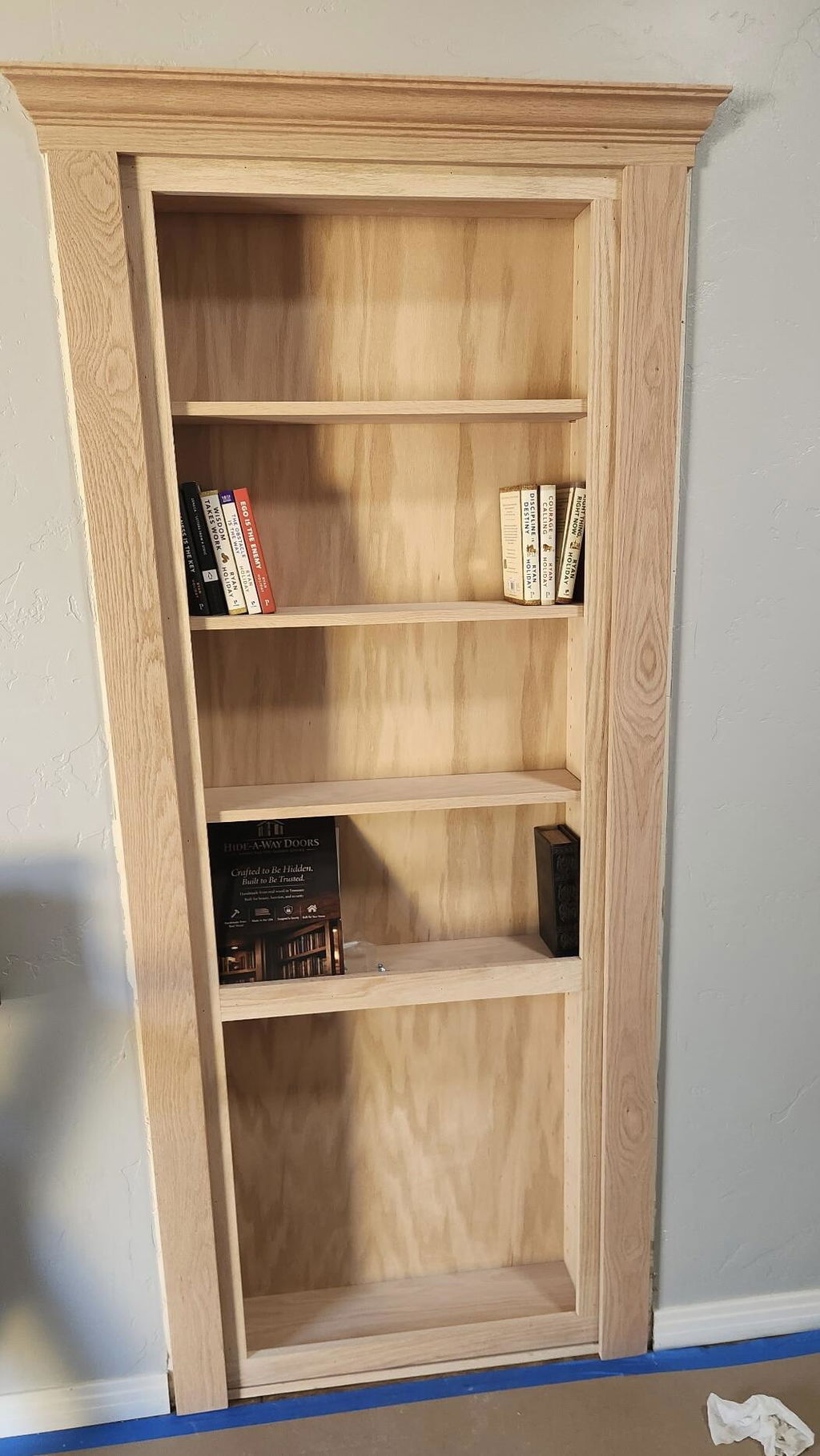
Red Oak board showing open grain patternBold grain

Red Oak

Best for: Durable doors with visible stained grain

Red Oak is a hard, dense wood with a strong, uniform, open grain pattern. It accepts stain extremely well and is an excellent choice when the wood itself should be a major part of the finished look.

  • PaintNot recommended
  • StainExcellent
  • GrainBold and open
  • DurabilityHigh
Finish recommendation: Choose stain or clear coat. Paint does not hide Oak's wide, porous grain well.
Soft Maple wood showing smooth tight grainMost versatile

Soft Maple

Best for: Premium painted or stained projects

Soft Maple is strong, fairly dense, and has a smooth, tight grain. Its even color and fine grain make it a premium cabinet wood that works beautifully with both paint and stain.

  • PaintExcellent
  • StainExcellent
  • GrainFine, smooth, and even
  • DurabilityHigh
Versatile appearance: Maple can be stained to create looks associated with woods such as walnut, cherry, or hickory.
At a Glance

Material comparison chart

Use this as a quick guide, then consider the natural character you want to see after finishing. Every piece of real wood varies.

MaterialBest finishPaintStainRelative durabilityVisual character
Paint GradePaintRecommendedNoEntry levelSmooth painted surface
Pine SelectPaint or conditioned stainYesWith conditionerLowerLight, clean grain
PoplarPaintExcellentVariableModerateFine grain; varied color
Knotty AlderStain or clear coatNot recommendedExcellentModerateRustic knots and checks
Red OakStain or clear coatNot recommendedExcellentHighBold, open grain
Soft MaplePaint or stainExcellentExcellentHighFine, even grain

Natural wood varies in color and grain. Photographs and samples are representative; they cannot guarantee an exact match across every solid-wood and plywood component.

Choosing Confidently

Start with the finish—not just the species.

The finish you want usually narrows the decision immediately. Then compare durability, grain, natural variation, and budget.

1

If you plan to paint

Choose Paint Grade for value, Poplar for an upgraded paint-ready wood, or Maple for the strongest and most versatile premium option.

2

If you plan to stain

Choose Red Oak for bold grain, Knotty Alder for rustic character, Maple for a fine even look, or conditioned Pine for a more economical option.

3

If you want clear coat

Choose the natural grain deliberately. Alder is rustic, Oak is bold, and Maple is smooth and subtle. Natural variation remains visible.

Common Questions

Before selecting your wood

Are Hide-A-Way Doors made entirely from solid boards?

We use solid wood for face frames, jambs, thresholds, headers, crown, and case molding. Cabinet-grade plywood is used for bookcase sides and shelving because it provides strength and dimensional stability across broad panels.

Do you use MDF?

No. We do not use MDF in the construction of our hidden-door products.

Which material is best for a painted hidden door?

Paint Grade is the most economical painted option. Poplar offers an upgraded, paint-friendly solid wood, while Maple provides a smoother premium appearance and greater resistance to everyday dents and scratches.

Which material is best for stain?

Red Oak, Knotty Alder, and Maple are all strong stain choices with very different looks. Oak has bold grain, Alder is rustic with knots and checks, and Maple has a fine, even appearance. Pine can also be stained when prepared with softwood conditioner.

Will the finished door match the material photo exactly?

No two boards are identical. Color, grain, knots, and the way stain absorbs will vary naturally. Species that require supplemental birch or maple plywood may show additional variation between components, especially under clear finishes.

Are every material and finish available on every door?

No. Availability depends on the door model and configuration. For example, Paint Grade and Pine are not available on mirror doors. Confirm the options shown on the specific door order form or contact us before ordering.

Still deciding between two materials?

Tell us whether you plan to paint, stain, or clear coat—and the look you want to achieve.

Ask a Hidden-Door Specialist