Hide-A-Way Doors vs. Murphy Door: The Definitive 2026 Comparison
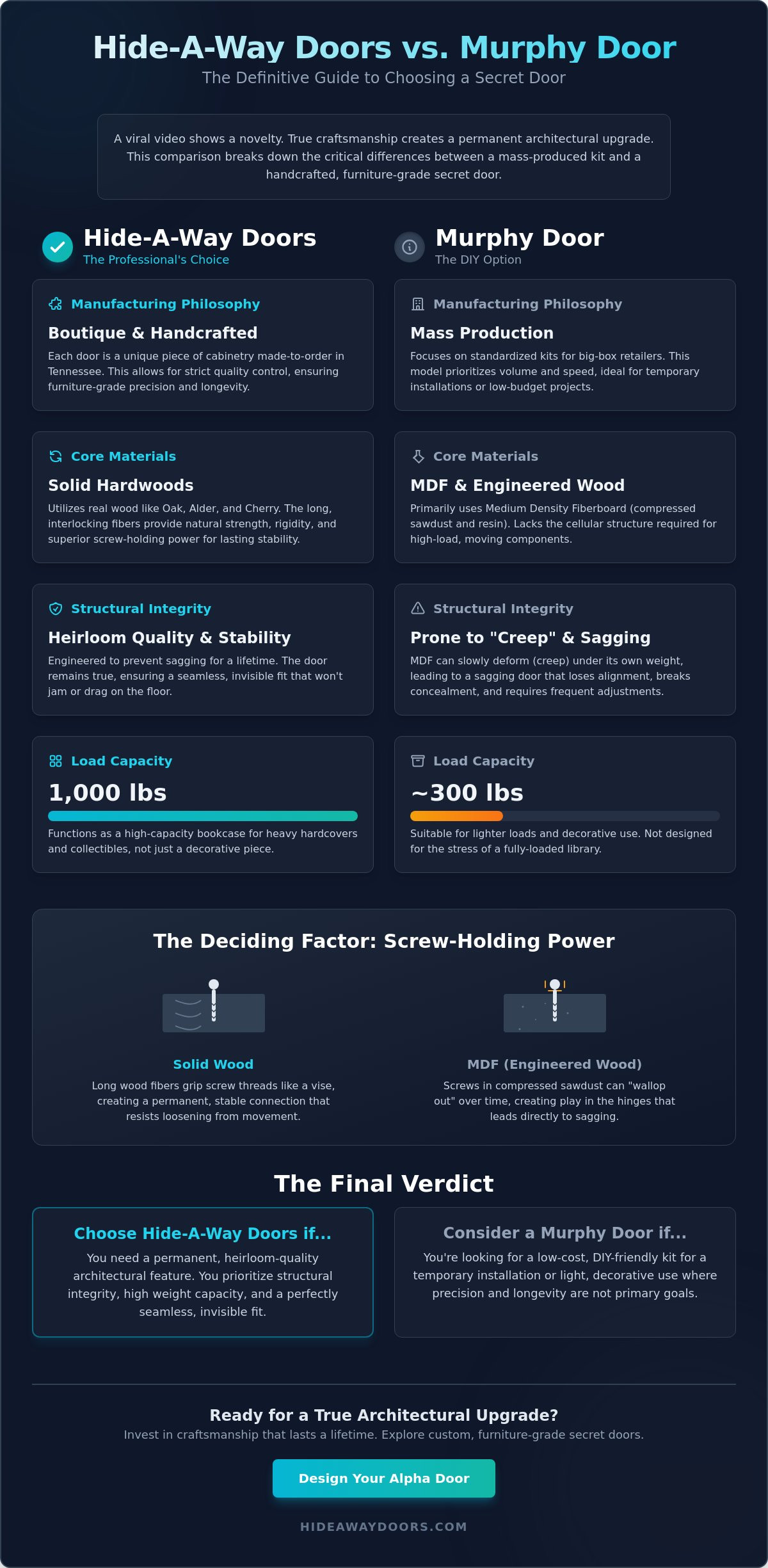
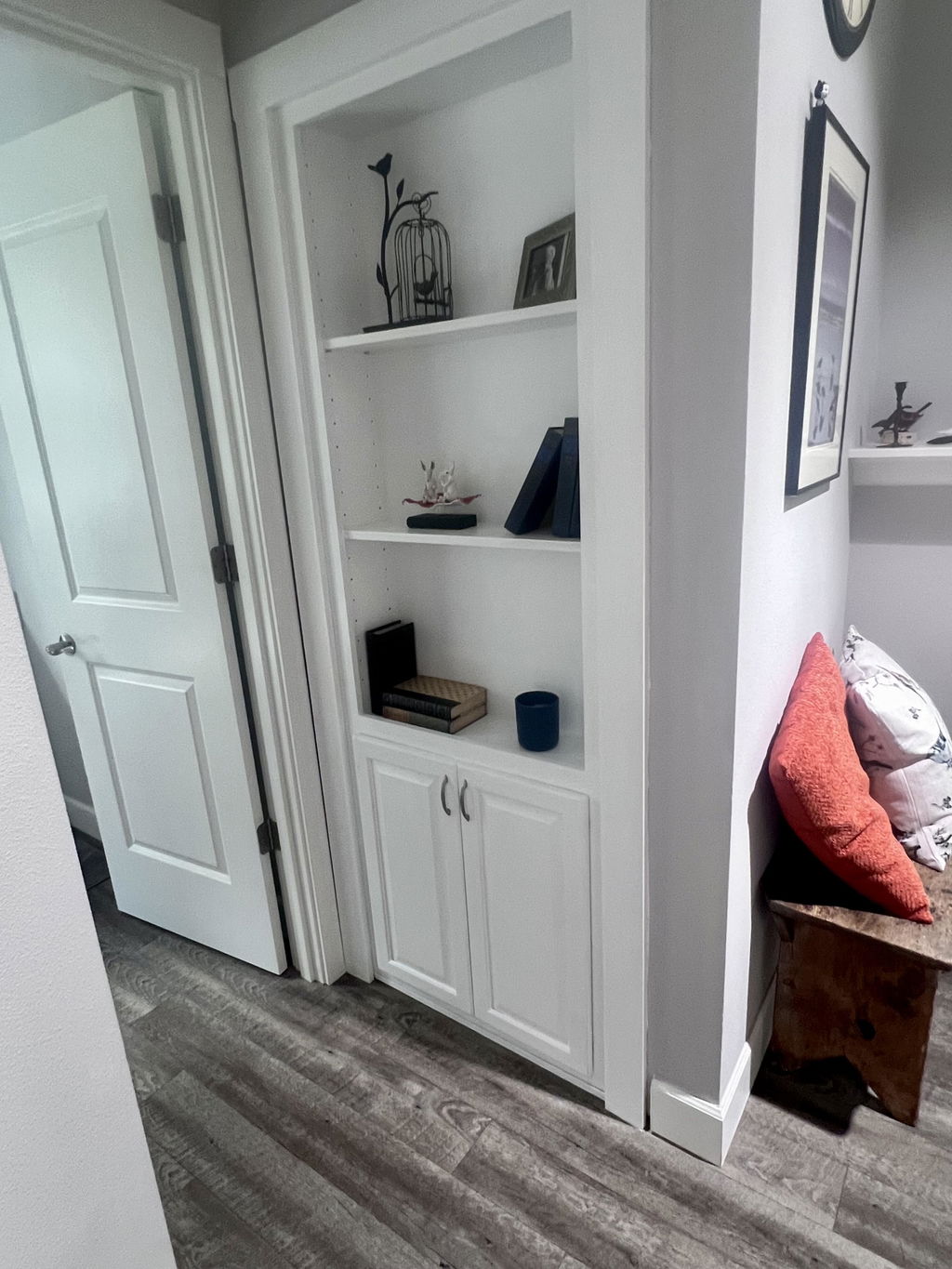
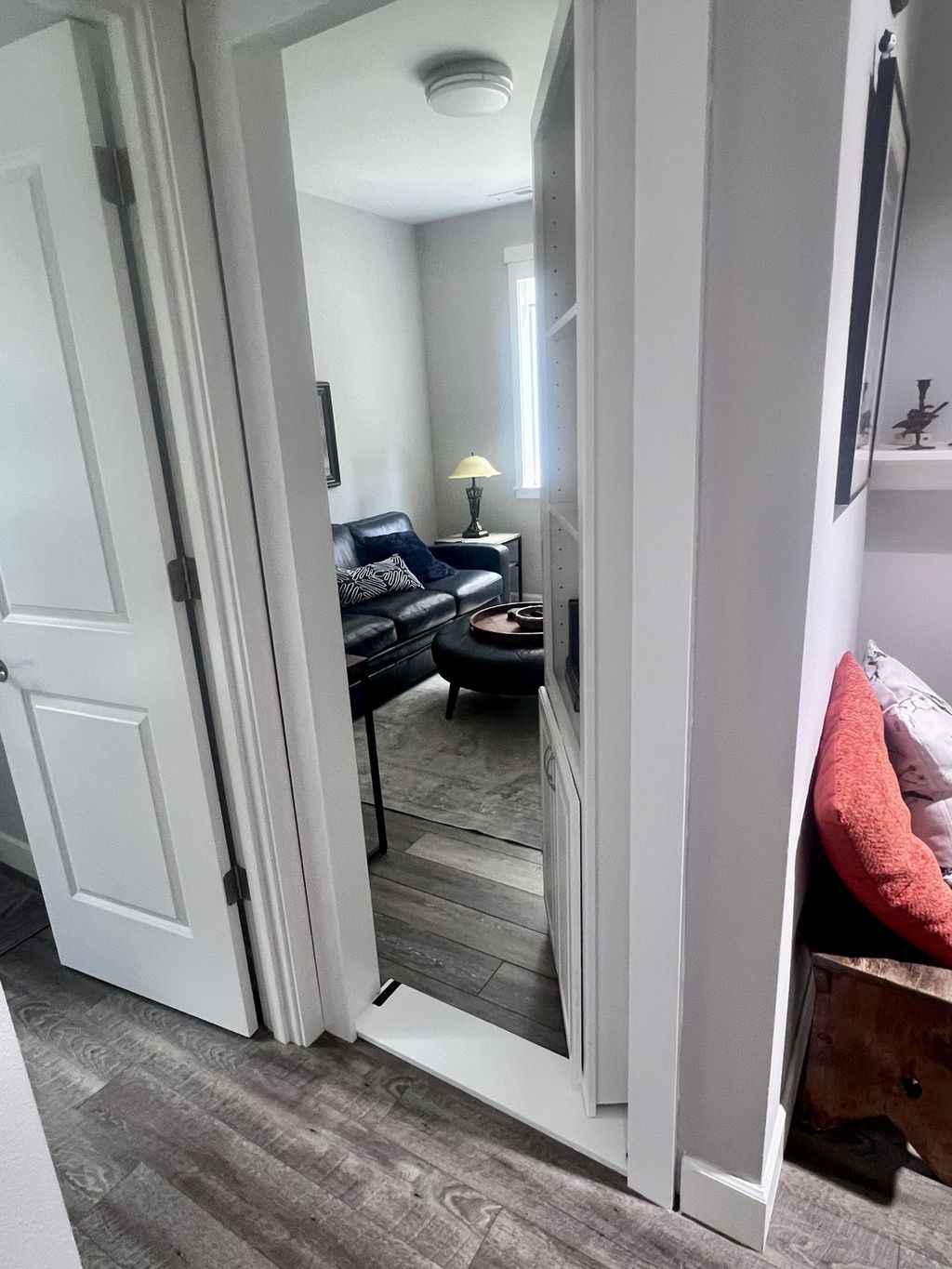
The most recognizable name in the room isn't always the strongest hinge in the wall. You've likely seen the viral videos of secret rooms, but there's a massive difference between a mass-produced kit and a hand-fitted piece of heirloom furniture. When evaluating hide-a-way doors vs murphy door, the choice often comes down to whether you want a simple novelty or a permanent architectural upgrade. You deserve a solution that functions as a high-capacity bookcase by day and a secure, invisible portal by night.
It's natural to feel anxious about a heavy door sagging over time or struggling with a complex installation that leaves gaps in your trim. You want the "wow factor" of discovery without the frustration of a jammed mechanism or materials that feel like a temporary fix. This comparison reveals the critical differences in materials, engineering, and load-bearing capacity to help you choose a door that stays true for a lifetime. We'll look at why Tennessee-crafted engineering, like that found in the Alpha Door, sets the standard for furniture-grade aesthetics and actual book storage.
Key Takeaways
Identify the material differences that prevent sagging and ensure your secret door functions as a piece of heirloom quality furniture.
Master the physics of weight capacity to ensure your bookcase can hold real weight without jamming or damaging your flooring.
Evaluate the hide-a-way doors vs murphy door comparison to decide between a standardized kit and a handcrafted engineering solution.
Discover how custom options like the Alpha Door provide a flush, invisible fit for unique rough openings and specialized security needs.
Hide-A-Way Doors vs. Murphy Door: Understanding the Brand Landscape
Names carry weight in the world of home renovation. Much like "Kleenex" or "Band-Aid," the term "Murphy Door" has evolved into a genericized trademark that many homeowners use to describe any secret bookcase. However, a name is not a guarantee of engineering. When you begin a deep dive into hide-a-way doors vs murphy door, you quickly realize these two companies represent entirely different philosophies of construction. One focuses on the convenience of mass-market retail, while the other prioritizes the standards of a master artisan.
Choosing between these brands isn't just about price points or shipping speeds. It's an investment in your home's structural integrity. A hidden door is essentially a moving wall that must support hundreds of pounds of weight while maintaining a seamless, invisible appearance. If the engineering fails, the door sags, the trim misaligns, and the secret is lost. Understanding the landscape of 2026 requires looking past the marketing gloss to see how these products are actually built.
The Rise of the Secret Room Trend
Hidden portals have moved from luxury novelties to essential solutions for modern living. While the history of secret passages is rooted in ancient architecture and defensive design, today's demand is driven by the need for secure home offices and discreet storage. Social media has played a massive role in this resurgence, often highlighting the immediate "wow factor" of a swinging bookcase. Unfortunately, a thirty-second video doesn't show how that door performs after two years of daily use. For a secret room to remain functional, the aesthetic beauty must be supported by heavy-duty engineering that prevents the unit from dragging across your hardwood floors.
Manufacturing Philosophies: Boutique vs. Mass Production
The core difference between these two industry leaders lies in their production scale. Murphy Door has successfully pivoted toward standardized kits designed for big-box retail distribution. This model favors volume and speed, making it a viable choice for low-budget DIY projects or temporary installations where furniture-grade precision isn't the primary goal. They offer kits that appeal to the broadest possible audience through high-volume manufacturing.
Hide-A-Way Doors maintains a boutique, handcrafted approach. Based in Tennessee, this manufacturer treats every Alpha Door, Mirror Door, or Pool Cue Door as a unique piece of cabinetry rather than a warehouse SKU. Because they focus on made-to-order units, they can enforce stricter quality control over wood grain matching and structural joints. This craftsmanship is vital for high-load applications like the Double Bookcase Door, where the physics of leverage and torque demand a level of precision that mass production rarely achieves. When you choose a dedicated custom manufacturer, you're choosing a door built to last as long as the house itself.
Solid Wood vs. MDF: The Battle for Structural Integrity
The integrity of a secret entrance relies entirely on the material's ability to resist gravity. A hidden door is a heavy machine, not just a static piece of trim. When you load a shelf with thirty pounds of hardcovers, the physics of leverage begins to work against the material's internal bonds. In the comparison of hide-a-way doors vs murphy door, the most significant point of failure is often the choice between real wood and Medium Density Fiberboard (MDF). While MDF is a stable choice for stationary baseboards or crown molding, it lacks the cellular structure required to support moving, high-load components over several decades.
Screw-holding power is the silent hero of secret door longevity. Real wood species like Oak, Alder, and Cherry consist of long, interlocking fibers that grip a screw's threads like a vice. MDF is essentially compressed sawdust held together by resin. Over time, the constant swinging motion of a bookcase door causes screws in MDF to "wallop out," creating microscopic play that eventually leads to a sagging unit. Once a door begins to sag, it loses its alignment, ruins the concealment, and can eventually jam against the floor or frame.
The Hidden Dangers of Engineered Wood
Engineered wood is susceptible to a phenomenon known as "creep." This is the slow, permanent deformation of a material under constant stress. Because MDF lacks the natural rigidity of grain, it can bow under its own weight even before you add books or collectibles. This leads to frequent hinge adjustments that only mask the underlying structural decay. Additionally, many mass-produced engineered doors utilize urea-formaldehyde in their resins, raising valid health and environmental concerns for homeowners who prioritize indoor air quality. Real wood is a breathable, natural alternative that responds to humidity and temperature changes with predictable, manageable movement rather than structural failure.
Furniture-Grade Finishes and Wood Species
Beyond the technical specs, the aesthetic difference is undeniable. Choosing solid wood bookcase doors provides a depth of grain and texture that laminate veneers simply cannot replicate. Real wood allows for a stain-grade finish that can be perfectly matched to your existing cabinetry, ensuring the door remains truly invisible. It's also significantly more durable against the scuffs and impacts of daily life. While a chip in a laminate door reveals the tan dust of its core, a scratch in real wood can be sanded and refinished, preserving the heirloom quality of the piece. You can explore a selection of professional-grade doors to see how different species enhance a room's character while providing superior strength.
Engineering the Alpha Door: Why Weight Capacity Matters
A hidden door is a study in physics. It functions as a massive lever, exerting constant torque on its pivot points. When comparing hide-a-way doors vs murphy door, the engineering of the hinge system is what separates a functional piece of architecture from a frustrating home improvement project. While standard residential hinges might suffice for a hollow-core interior door, they quickly fail under the strain of a fully loaded bookcase. The Alpha Door system was designed specifically to handle these extreme loads without compromising the secret's invisibility.
Industrial steel hardware is the backbone of a reliable installation. Most mass-market kits rely on standard-grade pivots that are rated for light loads, often leading to the "dragging door" syndrome frequently mentioned in consumer forums. In contrast, the Alpha Door utilizes a heavy-duty steel pivot system engineered to maintain alignment under pressure. This ensures that the gap between the door and the frame remains consistent, preventing the tell-tale signs of a hidden entrance. Engineering for weight isn't just about strength; it's about the precision of movement over thousands of cycles.
Calculating Your Actual Load Requirements
Don't underestimate the weight of a private library. A single linear foot of hardcover books can weigh up to 20 pounds. For a standard bookcase door, the total weight of the unit plus its contents can easily exceed 400 pounds. Many competitors market a 300-pound capacity, which sounds impressive until you realize it barely covers the weight of the wood and a few decorative items. Whether you choose an outswing or inswing configuration also dictates how stress is distributed across the frame. Hide-A-Way Doors addresses this by using a proprietary steel pivot system that anchors into the structural header and floor, bypassing the weaknesses of a standard door jamb.
Installation Precision and Long-Term Performance
Precision begins at the factory. One of the primary causes of door failure is "racking," which occurs when a frame is installed slightly out of square. Hide-A-Way Doors prevents this by shipping units in pre-assembled frames, ensuring the geometry is perfect before it ever reaches your home. The threshold also plays a vital role, acting as a foundation that distributes weight across the floor rather than hanging it entirely on the wall studs. Because real wood doors are structurally superior to composite alternatives, they require fewer adjustments over a decade of use. A well-engineered door doesn't just look good on day one; it operates with the same quiet confidence ten years later.
Customization Options: Beyond the Standard Bookshelf
Standardized kits often fail the reality test of a high-end custom home. While a big-box retailer might offer a few preset widths, real-world architecture involves non-standard rough openings and unique trim requirements that a mass-produced unit simply cannot accommodate. In the debate of hide-a-way doors vs murphy door, the "Alpha Door" series represents a shift toward truly bespoke engineering. It allows for sizing precision that ensures a flush, seamless fit regardless of your wall's specific dimensions, eliminating the need for awkward shimming or oversized trim.
Utility shouldn't be limited to simple shelving. For the homeowner with specific passions, a secret entrance can serve a dual purpose that reflects their lifestyle. Specialized hobby doors transform a transition point into a Wine Rack Door or a Pool Cue Door, integrating your interests directly into the home's architecture. For those prioritizing security, these units can be equipped with electronic locks or hidden safe room triggers. These integrations maintain total invisibility while providing rapid, secure access when it matters most.
Specialized Concealment Solutions
Concealment is an art form that requires more than just a swinging hinge. Designing a Gun Cabinet Door for home defense requires a balance of quick access and absolute discretion. Similarly, a Wine Rack Door can lead to a secret cellar, keeping your collection at the ideal temperature while hidden from casual view. In master suites, a Mirror Door offers a sophisticated aesthetic that conceals a walk-in safe or a private dressing room without the bulky profile of a traditional bookcase. You can view our specialized door designs to see how these solutions blend security with elegance.
The Artisan Process: Handcrafted in the USA
There is a tactile difference in a door built by a single master craftsman. While mass-produced units often rely on cam locks and staples, artisan joinery utilizes time-honored techniques like dovetails and mortise-and-tenon joints. This level of craftsmanship ensures the door remains rigid under load and resists the racking that plagues cheaper alternatives. Being handcrafted in Tennessee means every unit undergoes rigorous quality control before it ever leaves the shop. This domestic focus ensures reliability in shipping and provides you with direct access to expert support from the people who actually built your door.
The Final Verdict: Which Secret Door Should You Choose?
Selecting the right entrance comes down to the intended lifespan of your project. The comparison of hide-a-way doors vs murphy door isn't just a battle of brand names; it's a choice between two different tiers of home construction. Murphy Door provides an accessible entry point for those seeking a standardized, budget-friendly solution or a basic DIY kit for a temporary space. These mass-produced units serve a purpose for light-duty applications where the inherent limitations of engineered wood composites won't be tested by heavy loads or daily high-traffic use.
For the "forever home," the requirements are much stricter. If your vision includes a library that holds actual books, a secure safe room, or a seamless integration with high-end cabinetry, the artisan approach is the only logical path. You need a door that functions as a structural component of the house. This is where Hide-A-Way Doors excels, offering the Alpha Door and specialized units like the Gun Cabinet Door or Wine Rack Door. These are engineered to handle the physics of torque and leverage that cause lesser doors to fail within the first few years.
Price vs. Value: A Long-Term Perspective
The true cost of a hidden door includes the price of potential failure. An MDF unit that sags or "creeps" over time isn't just a nuisance; it's a liability that can damage your flooring and require expensive structural repairs. When you invest in real wood species like Oak or Cherry, you're paying for a material that grips hinges for a lifetime. Professional-grade cabinetry increases home value and appraisal appeal, turning a simple doorway into a piece of functional art. Choosing quality at the start eliminates the frustration and expense of replacing a failed unit down the road.
Next Steps: Designing Your Entrance
Before you commit to a purchase in 2026, run through this final checklist to ensure your secret remains safe:
Material Check: Is the unit built from real wood or engineered MDF?
Weight Capacity: Can the pivot system handle 400 lbs or more without sagging?
Sizing: Does the manufacturer offer bespoke sizing for your specific rough opening?
Joinery: Are the shelves and frame built with master-level joinery or simple cam locks?
Your home deserves an entrance that reflects your commitment to quality and security. Transitioning from the dreaming phase to the execution phase is simple when you have a master artisan as your guide. You can take the first step toward a perfectly concealed room by exploring the customization options available for your unique space. Build your custom Alpha Door today.
Secure Your Legacy with Architectural Excellence
The decision between hide-a-way doors vs murphy door ultimately rests on the standard you set for your home. While mass-produced kits offer a starting point for casual projects, they cannot match the structural permanence of 100% real wood construction. You've seen how material integrity prevents the inevitable sag of engineered composites and how industrial-grade pivot systems ensure your secret remains truly hidden for decades. A hidden door should be a seamless extension of your home's character, not a compromise in quality.
By choosing a product handcrafted in the USA, you invest in a level of precision that only a master artisan can provide. Whether you are integrating a Mirror Door into a master suite or securing a safe room with the Alpha Door, the result is a piece of functional art that works as perfectly on day one as it does ten years later. With a national professional installation network ready to assist, your vision of a sophisticated, secret sanctuary is within reach.
Your home is your sanctuary. Make every entrance count with a solution built to last a lifetime.
Frequently Asked Questions
Do Hide-A-Way Doors come fully assembled?
Yes, Hide-A-Way Doors are shipped as pre-hung units within their own specialized frames. This ensures the unit is square and ready for installation, which is a significant advantage in the hide-a-way doors vs murphy door comparison. Most standardized kits require more assembly of the actual door box before they can be mounted, which can lead to alignment issues if not handled with precision.
What is the weight limit for a Hide-A-Way bookcase door vs. a Murphy Door?
Hide-A-Way Doors are engineered to support heavy loads, with many units rated to hold well over 400 pounds of actual contents. In contrast, many mass-produced Murphy Door kits are rated for approximately 300 pounds. This difference is critical if you plan to store a full collection of hardcover books or heavy collectibles. The steel pivot system ensures the door doesn't sag under this extreme pressure.
Can I install a secret door in an existing doorway?
Yes, these units are designed to replace standard interior doors within an existing rough opening. While the installation process is straightforward for those with basic carpentry skills, you must ensure the rough opening is square. The pre-assembled frame helps bridge the gap between your existing wall structure and the moving bookcase to ensure a flush, invisible finish that hides the doorway entirely.
Does Hide-A-Way Doors use MDF in any of their products?
No, Hide-A-Way Doors maintains a strict commitment to 100% real wood construction. Unlike many competitors who use MDF or particle board for their shelving or frames, these handcrafted units utilize solid wood species. This choice ensures maximum screw-holding power and long-term structural integrity. Real wood responds better to environmental changes and won't suffer from the "creep" or sagging common with engineered wood composites.
How do the locking mechanisms work on these hidden doors?
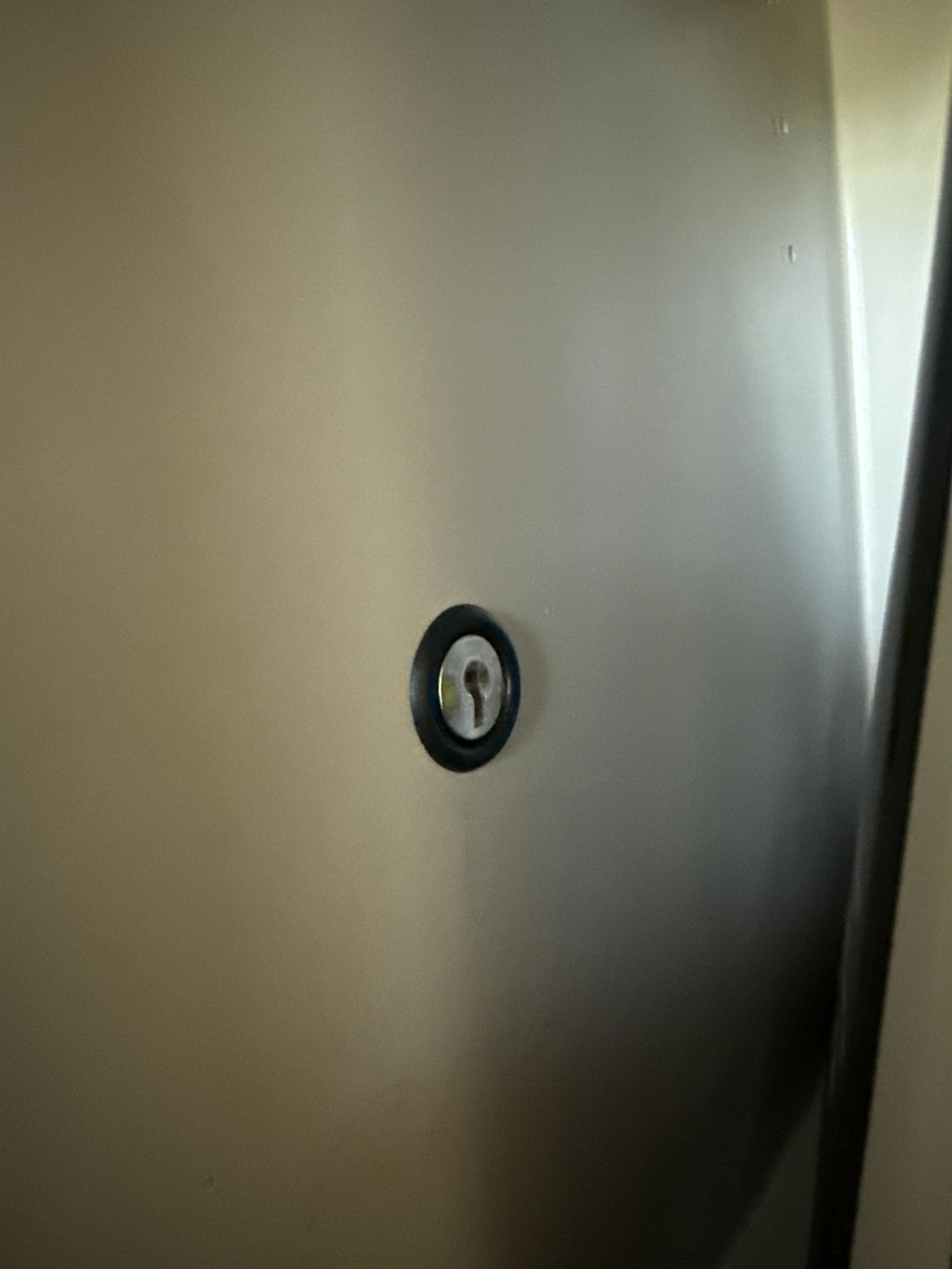
Most hidden doors utilize mechanical or electronic locking systems that remain invisible to the observer. Options range from simple mechanical latches hidden behind a book to advanced electromagnetic locks. These systems provide essential security for safe rooms or private offices without compromising the exterior's seamless appearance. You can select the level of security that matches your specific concealment needs during the build process.
What wood species are available for custom hidden doors?
You can choose from several premium wood species including Red Oak, Maple, Knotty Alder, and Cherry. This variety allows you to match the door's grain and finish to your home's existing cabinetry or trim perfectly. Because these are real wood species, they take stain beautifully. This allows for a high-end furniture finish that helps the door blend into a wall of matching built-in shelving.
Is shipping included for national orders across the US?
Shipping costs are calculated at checkout based on the weight of the unit and the delivery destination. Since these doors are handcrafted in Tennessee and shipped as heavy, pre-assembled furniture pieces, specialized freight carriers are used to ensure safe arrival. You should verify the specific shipping rates for your region when placing an order. This ensures your handcrafted door arrives in pristine condition ready for installation.
What is the lead time for a handcrafted custom door in 2026?
Lead times vary depending on the complexity of the customization and current production volumes in the Tennessee workshop. As these are bespoke pieces of furniture rather than off-the-shelf warehouse items, the production window allows for proper wood acclimation and hand-finishing. You should check the current production schedule when placing your order to get the most accurate estimate for your specific Alpha Door or specialized unit.