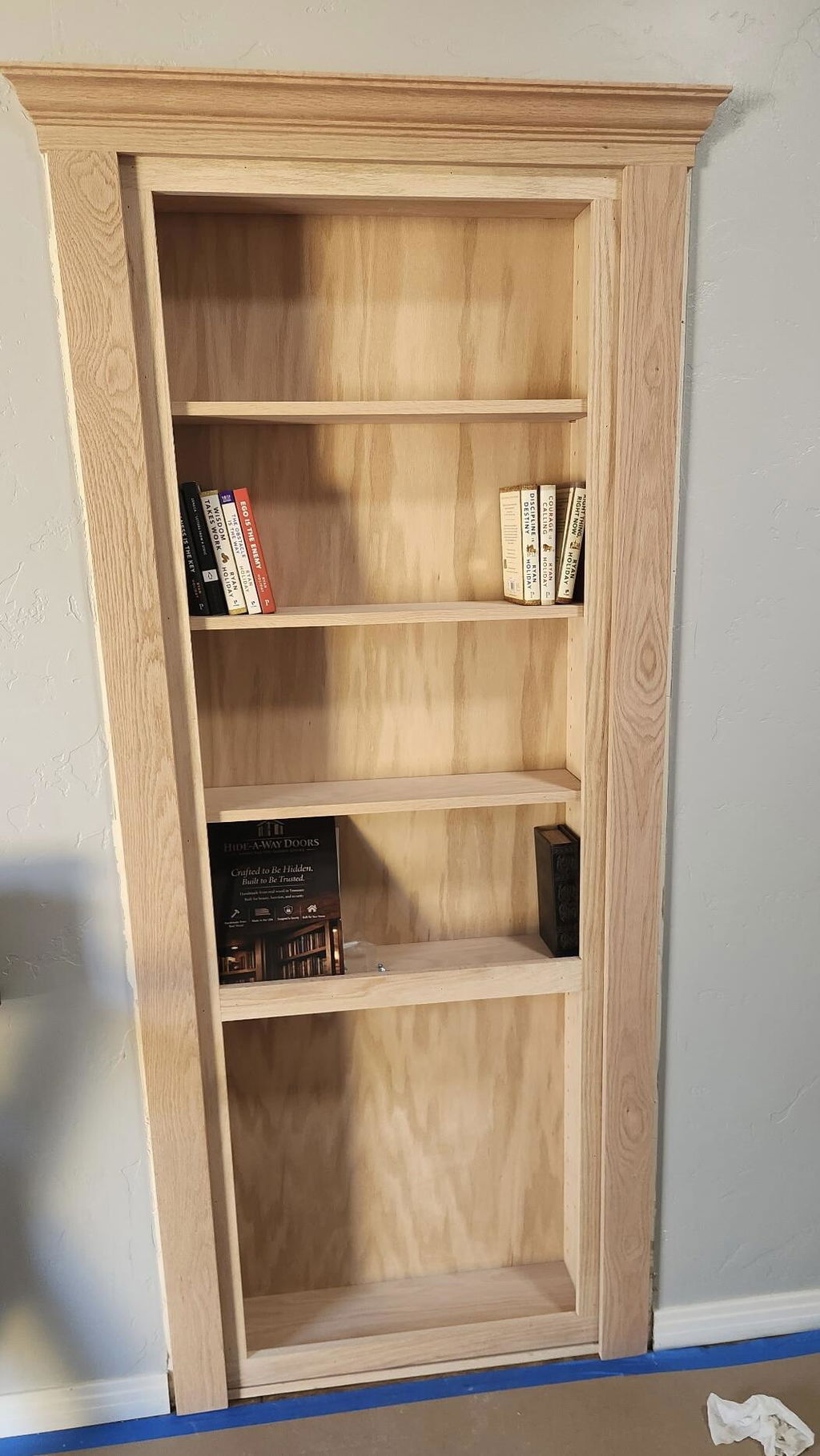
Hidden Mirror Door vs. Bookcase Door: The Ultimate 2026 Comparison Guide
The most sophisticated security solutions are those that nobody ever suspects exist. While the classic library door remains a timeless icon of home design, many modern spaces demand a more subtle approach to concealment. Choosing between a hidden mirror door vs bookcase door isn't just about style; it's a technical decision involving wall depth, weight distribution, and the intended purpose of your secret room. You likely already appreciate the intrigue of a hidden passage, yet you might worry that a heavy unit will sag over time or look out of place in a minimalist hallway.
We'll show you how to achieve a seamless, furniture-grade finish that defies detection. This guide compares the functional storage of our Alpha Series bookcases with the low-profile, space-saving benefits of a professional mirror door. You'll learn exactly how a proprietary hinge system transfers weight to the floor to prevent the common pitfalls of sagging found in mass-produced alternatives. By the end of this comparison, you'll know which secret entrance fits your home's architecture and provides the lasting durability your sanctuary deserves.
Key Takeaways
Contrast the high-utility storage of the Alpha Door with the slim, space-expanding profile of a dedicated mirror system.
Learn how to choose between a hidden mirror door vs bookcase door by evaluating your specific wall depth and concealment needs.
Discover why a proprietary hinge system is essential for transferring weight to the floor, ensuring your secret entrance remains durable without sagging.
Understand the long-term value of furniture-grade real wood construction over the flimsy, mass-produced MDF alternatives found in basic kits.
Gain clarity on in-swing versus out-swing configurations to ensure a seamless fit that respects your home’s architectural flow.
Beyond the Wardrobe: Defining the Mirror vs. Bookcase Choice
Choosing between a hidden mirror door vs bookcase door is more than a matter of taste. It's a strategic decision based on your home's structural layout and your specific concealment goals. A hidden bookcase door is a high-utility, deep-profile storage solution. It acts as a functional piece of heavy-duty furniture that happens to guard a secret. On the other hand, a Mirror Door serves as a low-profile, space-expanding concealment option. It requires significantly less depth, making it the preferred choice for narrow hallways or compact bedrooms where a bulky shelf would feel intrusive.
In 2026, the market has shifted. Homeowners are no longer satisfied with mass-produced, flat-pack kits made of MDF. There is a renewed demand for artisan craftsmanship and the longevity of real wood like Alder, Oak, and Walnut. This preference for substance over fleeting trends is driven by three primary factors: wall depth, room purpose, and weight capacity. You must consider if your wall can accommodate the 8 to 10-inch depth of a bookcase or if the slim profile of a mirror better serves the architectural flow.
The Aesthetic Impact on Your Interior Design
A bookcase adds immediate warmth and a traditional library atmosphere to any room. It suggests a sense of history and intellectual depth. In contrast, a full-length mirror is a powerful tool for brightening smaller spaces. By reflecting natural light, it makes a cramped hallway feel twice as large. To ensure the door remains truly invisible, we focus on matching wood species to your existing trim. Whether you choose the rugged reliability of Oak or the sophisticated finish of Cherry, the goal is a seamless integration that feels like a permanent part of the home's character.
Concealment Strategy: Visual Clues to Avoid
Throughout the history of secret passages, the most effective doors were those that blended perfectly into their context. A bookcase door is easiest to hide when it's surrounded by other built-in shelves. This eliminates the "floating furniture" look that often gives secrets away. For modern, minimalist homes, our Alpha Series Mirror Door offers a different advantage. It eliminates the deep seams and heavy shadows associated with thicker units. This low-profile approach is essential for maintaining a clean aesthetic while ensuring your secret room stays truly private. Precision in handcrafted hidden doors ensures that gaps are tight and the movement is silent, removing the physical clues that often compromise security.
The Secret Bookcase Door: A Masterclass in Functional Concealment
The bookcase door is the quintessential choice for those who value both utility and the classic allure of a hidden passage. Unlike its thinner counterparts, a bookcase door is a substantial piece of furniture. It demands a specific structural commitment, typically requiring between 8 and 10 inches of clearance to swing properly. This depth is what allows it to function as a legitimate storage unit, making it the superior choice for home offices, private libraries, and dedicated speakeasies. When weighing the benefits of a hidden mirror door vs bookcase door, the decision often hinges on whether you need that extra shelf space or a more flush, low-profile fit.
Our alpha concealment door stands as the gold standard for this category. It serves a dual purpose: providing a beautiful display for your collection while masking the entrance to a safe room or hobby haven. The sheer presence of a well-stocked bookshelf creates a natural psychological barrier; most visitors won't even think to look behind it. This tradition of bibliophilic secrecy is well-documented, famously seen in historical examples like The Grolier Club's secret door, which proves that the most effective concealment is often hidden in plain sight.
Maximizing Storage in Your Secret Passage
Storage should never be an afterthought. Our units feature adjustable shelving, allowing you to customize the space for everything from rare first editions to hidden collectibles. Real wood construction is non-negotiable here. While MDF might look acceptable in a catalog, it lacks the structural integrity to hold hundreds of pounds of weight without bowing. A solid wood Alpha door is engineered to support a total load-bearing capacity of up to 500 pounds, ensuring smooth operation even when fully stocked. If you have a specific vision for your shelving, you can explore our custom options to match your exact storage requirements.
The "Wow Factor" of the Classic Secret Library
There is an undeniable thrill in watching a wall of books swing open to reveal a hidden room. This "wow factor" is why the hidden bookshelf remains a staple in luxury home design. Beyond standard books, the Alpha Series can be adapted into a Wine Rack Door or a Pool Cue Door, turning a standard doorway into a centerpiece of the room. For safe rooms, the bookcase offers a level of visual density that a mirror cannot match. It provides a heavy, physical barrier that looks entirely permanent, discouraging any casual investigation into what might lie beyond the shelves.
The Hidden Mirror Door: Sophisticated Discretion for Tight Spaces
While the bookcase door is a statement piece, the Mirror Door is a master of invisibility. In the ongoing debate of hidden mirror door vs bookcase door, the mirror wins on spatial efficiency every time. A bookcase requires significant depth to be functional, often protruding into a room or requiring a deep wall cavity. In contrast, a dedicated mirror system is engineered to fit within a standard door jamb. This makes it the premier choice for master bedrooms, dressing rooms, walk-in closets, and home gyms where every inch of floor space is valuable.
One of the most compelling features of our Alpha Series Mirror Door is the "See-Through Mirror" option. This allows for discreet surveillance or safe-room monitoring from the inside without alerting anyone on the exterior. It provides a tactical advantage that a bookcase simply cannot offer. By utilizing high-quality glass and precision-milled wood, we create a tool for security that doubles as an elegant piece of home decor. This dual-purpose design ensures that your secret room remains a private sanctuary, hidden behind an object that belongs in any sophisticated interior.
Low-Profile Engineering for Modern Hallways
Modern architectural trends often favor clean lines and minimalist hallways that don't have the width for a protruding bookshelf. The Alpha Series Mirror Door sits flush with the wall, maintaining the original flow of your home's design. To ensure longevity, we use a reinforced hardwood frame made from Alder, Oak, or Walnut. This structural integrity is vital; it prevents the mirror from flexing or cracking during operation, a common failure in cheaper, mass-produced alternatives. You can customize the frame style to match your standard interior door casings, ensuring the "hidden" element is backed by a perfect visual match.
Privacy and Utility in the Master Suite
In a master suite, a full-length dressing mirror is a standard fixture, which is precisely why it makes such an effective secret entrance. It doesn't draw the eye or invite the same level of curiosity as a lone bookshelf might in a bedroom setting. Using a mirror to conceal a jewelry vault or a private closet adds a layer of discretion that is both practical and aesthetically pleasing. The seamless transition from a high-quality dressing mirror to a secure secret room is achieved through precision craftsmanship that eliminates the heavy shadows and wide gaps found in DIY kits. It's a sophisticated solution for those who prioritize both beauty and peace of mind.
Structural Showdown: Comparing Weight, Depth, and Installation Needs
The technical reality of a hidden mirror door vs bookcase door involves more than just selecting a finish. It's a matter of physics and architectural constraints. A bookcase door is a heavy-duty installation that requires a significant footprint, whereas a mirror door offers a more streamlined profile. One of the most important decisions you'll make is the swing direction. In-swing doors are excellent for concealing rooms that open into a larger space, but they require a clear path inside the secret room. Out-swing doors are often easier to disguise as standard wall features but can be trickier to navigate if the hallway is narrow.
Engineering makes the difference between a door that lasts decades and one that fails within months. Our proprietary Hidden Door Hinge Pin System is a hallmark of our craftsmanship. Unlike standard hinges that pull on the door header, our system transfers the entire weight of the unit directly to the floor. This is vital for both the Alpha Door and the Mirror Door, as it prevents the sagging and sticking that plague mass-produced alternatives. You must also consider your jamb depth. Most of our standard units are designed for a minimum depth of 4 inches and a maximum of 6.5 inches, ensuring they fit within the structural limits of modern residential framing.
Weight Distribution and Floor Integrity
Massive storage units like the Double Bookcase Door can weigh hundreds of pounds once fully loaded with books or collectibles. This weight necessitates a floor-bearing hinge to maintain the integrity of your door frame. While the mirror door has a lighter profile, which contributes to long-term hinge longevity, it still benefits from the same robust hardware. Your flooring type also plays a role in the installation. Hardwood, tile, or polished concrete provide the most stable surfaces for our hinge system. If you're installing over thick carpet, you may need to consider a transition strip or a slightly higher clearance to ensure the door operates without resistance.
Measuring Your Opening for Success
Precision is the master artisan's best friend. You must understand the distinction between a "Rough Opening" and a "Finished Opening" before placing an order. The rough opening is the framed space within the wall studs, while the finished opening accounts for the drywall and any existing flooring. Don't forget to account for baseboards and decorative trim. If your trim is particularly thick, it can interfere with the swing radius of an out-swing door. Because 2026 home builds often feature non-standard ceiling heights or unique alcoves, custom fabrication is frequently the best path to achieving a truly invisible look. To ensure your project starts with the right dimensions, you can consult our expert measurement guides to avoid common installation errors.
The Hide-A-Way Standard: Why Artisan Craftsmanship Trumps Mass-Produced Kits
Our "Real Wood" manifesto is simple: a secret door is only as good as the material from which it's carved. While mass-market retailers rely on MDF or particle board to cut costs, we prioritize the enduring strength of Alder, Oak, Cherry, and Walnut. These species offer the structural integrity required to support the complex mechanics of a hidden passage without warping or swelling. When deciding on a hidden mirror door vs bookcase door, your choice shouldn't be compromised by flimsy materials that fail under the weight of your home's daily life. Our handcrafted hidden doors are built in Morristown, TN, where traditional skills meet modern engineering to create a product that is as much a piece of fine furniture as it is a security feature.
The difference between a furniture-grade finish and a "primed only" mass-market option is immediately apparent. A handcrafted door features tight joints, hand-sanded surfaces, and a depth of color that only real wood can achieve. This isn't just about aesthetics; it's about permanence. A door made from solid wood is a legacy addition to your home, whereas MDF units often begin to degrade the moment they are exposed to varying humidity levels. Choosing Hide-A-Way means you're investing in a solution designed to operate silently and smoothly for decades.
The Durability of Solid Wood vs. MDF
MDF is essentially compressed sawdust and glue. It lacks the grain structure necessary to hold screws securely over time, especially under the constant torque of a pivot hinge. In high-traffic residential areas, this leads to hardware failure and a door that eventually looks "fake" because it no longer sits flush. Handcrafted joints in solid wood are designed to move with the home, maintaining their alignment. Whether you choose a stain-grade finish to highlight natural beauty or a paint-grade finish for a modern look, the underlying substrate must be solid wood to ensure the door remains a secret.
Customization: Beyond the Standard Box
Bespoke engineering allows us to create solutions that a "standard box" kit simply can't match. If your space requires a Double Bookcase Door for a grand entrance or a Wine Rack Door for a private cellar, we can adapt the design to your specific functional requirements. Security is also a matter of choice. You can opt for traditional mechanical keys or upgrade to electronic 1,000lb force locks for maximum peace of mind. Your final decision should rest on your available room depth and the "Real Wood" durability test. If you have the depth, the Alpha Series bookcase is a functional masterpiece; if space is tight, the Mirror Door offers unmatched discretion. Design your custom hidden door with Hide-A-Way today.
Securing Your Sanctuary with Artisan Precision
Choosing the right entrance is the final step in refining your home's unique character. Whether you prioritize the expansive storage of a functional library or the sleek, low-profile discretion of a mirror, the structural foundation remains the most critical factor. You've seen how the depth of your wall and the intended room purpose dictate the best fit for your lifestyle. A secret is only as secure as the craftsmanship that hides it.
When you settle the hidden mirror door vs bookcase door debate, ensure your choice is backed by the durability of real wood like Alder or Walnut. Our proprietary floor-bearing hinge system ensures that even the heaviest units operate with silent precision, protecting your home's integrity for years to come. Every piece we build is handcrafted in Morristown, Tennessee, by artisans who value substance and heritage over mass-produced alternatives.
Is a mirror door easier to install than a bookcase door?
Yes, a mirror door is generally simpler to install because it has a lighter profile and fits within a standard door jamb. While both units come as pre-hung systems, the mirror door requires less structural reinforcement of the surrounding wall. Its lower weight makes the initial alignment process faster for a single installer compared to the substantial mass of a fully assembled bookcase.
Can a bookcase door hold real books without sagging over time?
A bookcase door will hold a full collection of books without sagging if it utilizes a proprietary floor-bearing hinge system. Our Alpha Door is engineered from solid hardwoods like Oak and Walnut, which possess the natural rigidity to maintain their shape under heavy loads. Unlike MDF, which bows under pressure, our real wood construction transfers the weight directly to the floor to ensure the unit remains level for decades.
Do I need a special wall depth for a hidden mirror door?
No, the Alpha Series Mirror Door is designed to fit standard 2x4 or 2x6 wall framing without additional modifications. This is a significant factor when deciding between a hidden mirror door vs bookcase door. While the bookcase requires 8 to 10 inches of clearance to be functional, the mirror system sits flush within a standard 4.5-inch or 6.5-inch jamb depth, making it ideal for narrow hallways.
Which door style is more secure for a safe room or vault?
The bookcase door is often considered more secure because it provides a dense, physical barrier that looks like a permanent architectural fixture. It discourages investigation by appearing entirely immobile. However, the mirror door offers a tactical advantage for safe rooms when equipped with see-through glass. This allows you to monitor the exterior of the room without revealing your presence, providing a different level of security through surveillance.
Can I retrofit a secret door into an existing standard doorway?
Yes, you can retrofit our secret doors into most standard finished openings by removing the existing door and casing. You must ensure the rough opening is square and matches the dimensions required for a pre-hung unit. Because our doors are built to furniture-grade standards, they arrive ready to be shimmed and fastened into your existing framing, though you may need to adjust your baseboards to achieve a perfectly flush look.
What is the difference between an in-swing and out-swing hidden door?
An in-swing door pushes away from you into the secret room, while an out-swing door pulls toward you into the hallway. In-swing doors are often easier to conceal because the door sits behind the wall trim, hiding the gaps more effectively. Out-swing doors are better for very small secret rooms where there isn't enough internal clearance for the door to swing inward without hitting furniture or equipment.
Does a hidden mirror door look like a real door from the side?
No, a professionally crafted mirror door is designed to look like a decorative, framed wall mirror from every angle. We use custom-milled casings that wrap around the unit to hide the hinge mechanism and the gap between the door and the wall. When someone views the mirror from the side, they see a thick, high-quality wood frame that appears to be mounted directly to the drywall rather than a functional entrance.
Are real wood hidden doors significantly heavier than MDF versions?
Solid wood doors are heavier and denser than MDF, but this weight is actually an advantage when paired with the right hardware. While a solid Oak door has significant mass, our floor-bearing hinge system makes that weight irrelevant to the user experience. The door will glide open with a single finger. MDF units often feel "flimsy" and are prone to hardware failure because the material cannot hold screws as securely as solid Alder or Cherry.