Hidden Door for Basement: The Ultimate Guide to Secret Entrances and Safe Rooms
What if your basement's most impressive feature was completely invisible to the naked eye? A professional-grade hidden door for basement installations does more than just mask a room; it creates a sense of intrigue while providing a secure sanctuary or a private lounge for your guests. You want the "wow factor" of a secret entrance, but you're likely worried about the practicalities of a subterranean environment.
It's a valid concern. You've probably wondered if the weight of a fully loaded bookshelf will cause the frame to sag over time, or how humidity might affect the integrity of the wood. We believe a secret door should be a masterpiece of engineering, not a DIY gamble. This guide will show you how to transform your lower level into a secure retreat or a sophisticated speakeasy that functions as high-quality furniture. We'll walk through the technicalities of inswing versus outswing layouts, the necessity of solid wood construction, and how to increase your home's value with a seamless, invisible entrance.
Key Takeaways
Leverage under-stairs areas and utility closets to turn overlooked "dead space" into a sophisticated and functional secret entrance.
Compare the utility of single and double bookcase doors to determine which configuration best suits your basement's architectural footprint.
Understand why furniture-grade real wood is the only reliable choice for a hidden door for basement installations to prevent sagging and resist subterranean humidity.
Navigate technical logistics with expert guidance on measuring rough openings and selecting the optimal swing direction for your specific room clearance.
Discover how professional-grade engineering ensures your secret room functions as both a high-security retreat and an elegant conversation piece.
Why the Basement is the Perfect Location for a Hidden Door
Secret passages have been woven into architectural history for centuries, from medieval castles to Victorian manor houses. The impulse to conceal a room, a staircase, or a corridor runs deep. But no space in a modern home lends itself to that tradition more naturally than the basement. It's already removed from the main living areas, already separated by a staircase, and already associated in the imagination with something slightly apart from ordinary life.
Structurally, basements are full of what designers call "dead space." The triangular void beneath a staircase. The oversized utility closet that was framed out during construction and never properly finished. The awkward corner where two load-bearing walls meet at an unexpected angle. These aren't design flaws; they're opportunities. A skilled installation transforms these overlooked areas into a concealed entrance that feels entirely intentional, as though the architecture itself is keeping a secret.
To achieve this level of architectural integration, many homeowners turn to specialists like Finest Furniture Studio, who excel at designing bespoke fitted furniture that blends seamlessly with the existing structure of a room.
From a property value standpoint, a thoughtfully executed hidden door for basement installations carries real appeal. Buyers respond to features that are genuinely distinctive. A finished basement is common. A finished basement with a concealed entrance to a private room is a conversation that follows a showing for weeks.
Creating a truly private sanctuary often requires attention to every detail, including how light and visibility are managed. Incorporating professional solutions from Axent Shutters Blinds & Shades LLC for your window treatments can help maintain the exclusive atmosphere of your basement while adding a layer of refined style to the overall design.
The Speakeasy and Man Cave Aesthetic
The entrance sets the tone before a single guest steps inside. When a wall of books pivots open to reveal a private bar, a cigar lounge, or a dedicated entertainment room, the experience begins at the threshold. The room itself doesn't carry the full weight of the reveal; the door does, and to ensure the interior matches that quality, you can check out X Cabinet & Stone for professional remodeling and cabinetry. A bookcase door or a wine rack door positioned at the base of a finished basement creates an immediate shift in atmosphere, signaling that what lies beyond is curated, intentional, and decidedly private. The "wow factor" isn't just a feature; it's the first impression.
Security and Safe Room Applications
A concealed entrance often outperforms a visible vault door in one critical respect: it doesn't announce what it's protecting. A steel door with a keypad tells an intruder exactly where to focus their attention. A flush, furniture-grade bookcase door offers no such invitation. For homeowners securing valuable collections, important documents, or home defense equipment, the most effective security measure is one that doesn't reveal itself. A well-engineered hidden door for basement safe rooms integrates seamlessly into a finished space, preserving both the aesthetic and the security without compromise. For those looking to extend this level of security to the rest of their home, ensuring your main entry points are robust and functional with help from Swiftly Garage Doors is a vital step in a comprehensive home safety plan.
Evaluating Types of Hidden Doors for Basement Layouts
Selecting the right hidden door for basement applications requires a balance between architectural constraints and your ultimate goal for the space. Unlike standard interior rooms, basements often have unique ceiling heights and wall thicknesses that influence which concealment method works best. A well-chosen door doesn't just hide a room; it complements the existing footprint of your home while providing effortless operation for years to come.
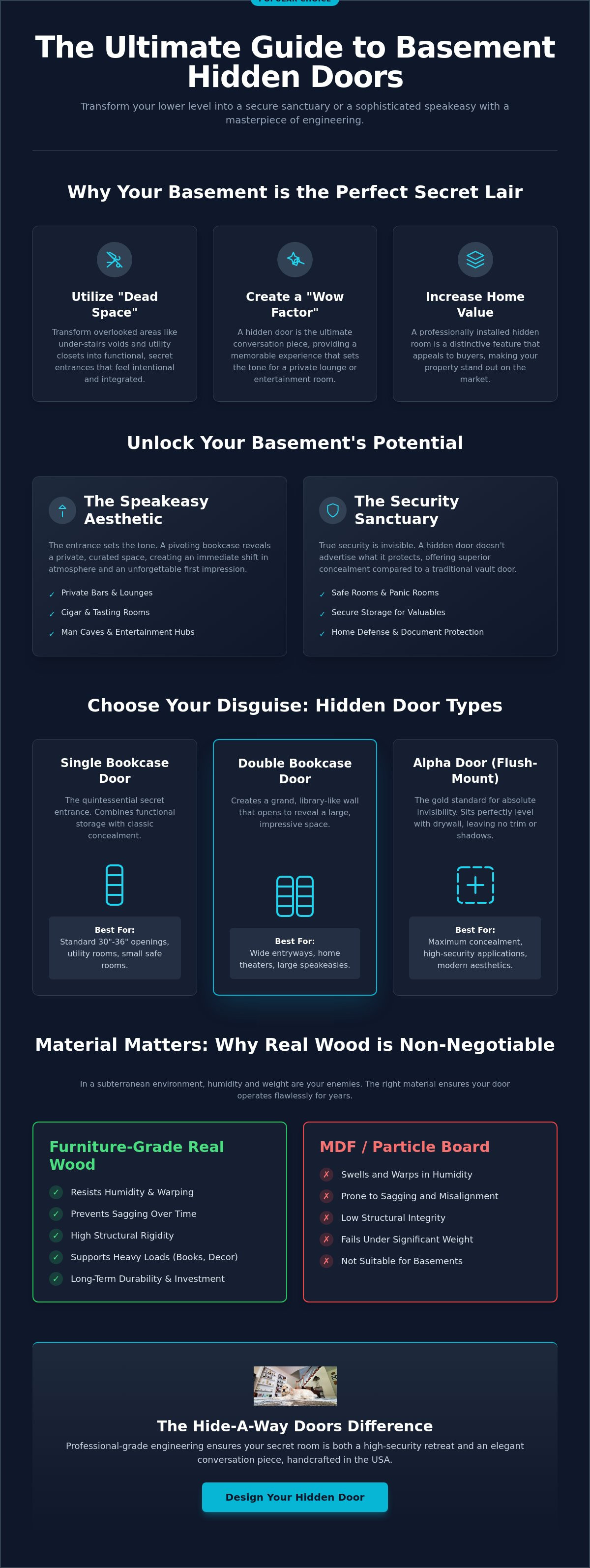
Standard doorways typically accommodate a Single Bookcase Door, which remains the workhorse of home concealment. These units fit 30 to 36-inch openings perfectly, making them ideal for utility rooms or small safe rooms. If you're working with a grander scale, Double Bookcase Doors span wide entryways, creating a dramatic reveal for a home theater or a sprawling speakeasy. For those seeking absolute invisibility, the Alpha Door is the gold standard. It utilizes a flush-mount design that sits perfectly level with the surrounding drywall, leaving no tell-tale trim or shadows that might betray its presence to an observer.
Environmental factors are equally critical in a subterranean setting. Understanding the causes and solutions for basement moisture is vital before starting your installation. Inferior materials like MDF or particle board will swell and warp in these conditions, leading to sticking or misalignment. This is why we prioritize furniture-grade real wood, which offers the structural rigidity needed to handle the weight of your collections while resisting the atmospheric shifts common in lower levels.
The Versatility of the Hidden Bookcase Door
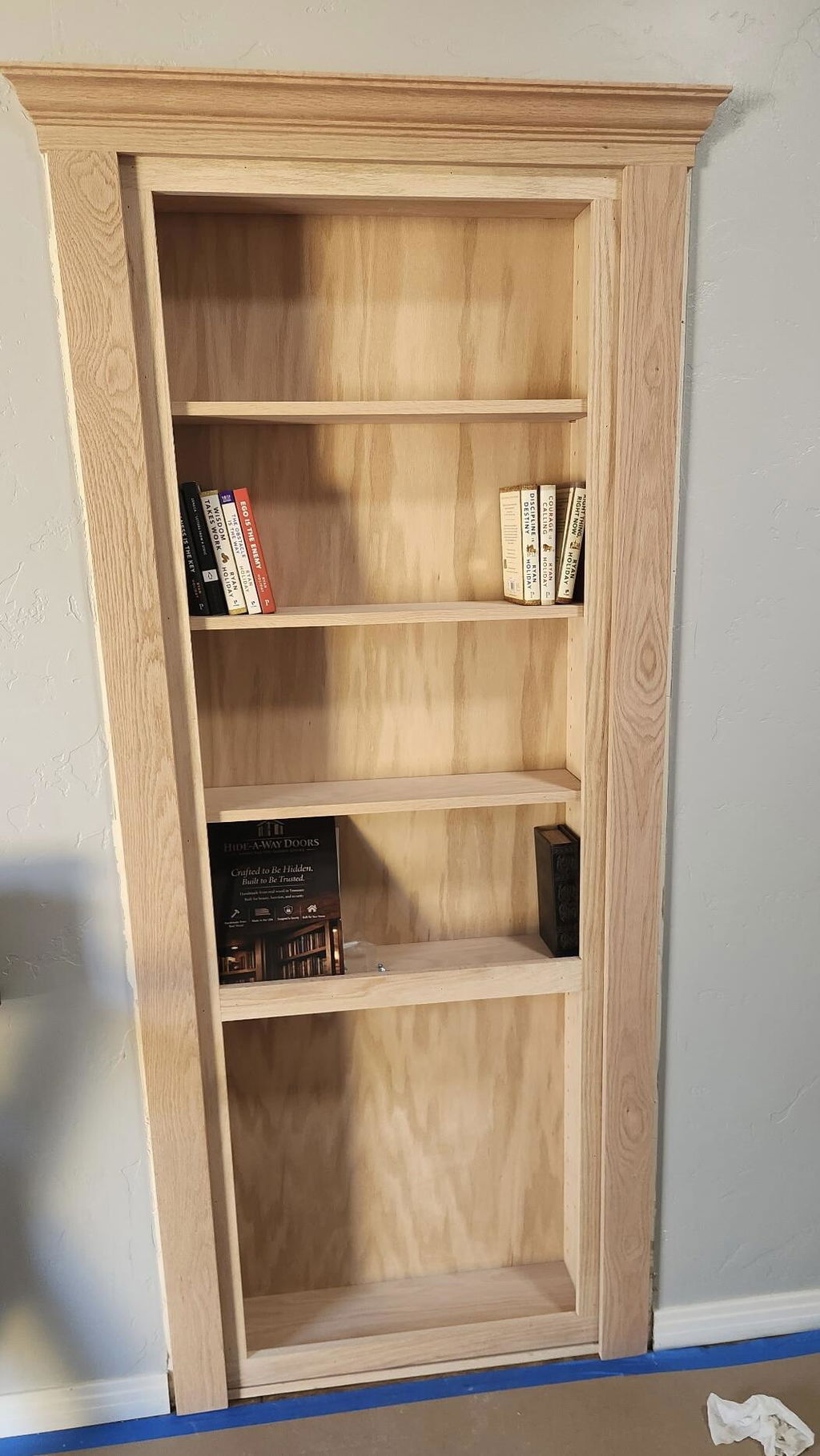
A bookcase door is the quintessential secret entrance. It provides genuine storage for your library while masking the room behind it. These designs feature adjustable shelving, allowing you to customize the display for everything from heavy hardbacks to delicate decor. When it comes to the finish, you can choose between paint-grade wood for a modern, integrated look or stain-grade wood to showcase the natural grain and rugged craftsmanship of a traditional library. If you're ready to begin your project, you can browse our collection of Alpha and Mirror doors to see which style fits your vision.
Mirror and Hobby Door Solutions
Basements often lack natural light. Mirror Doors solve this by reflecting what little light is available, effectively brightening dark hallways and making narrow spaces feel twice as large. For specialized spaces, hobby doors offer a unique blend of form and function. A hidden pool cue rack door keeps your billiard accessories organized and accessible while guarding the entrance to your private retreat. Similarly, a Wine Rack Door creates a functional display for your vintage collection, turning a simple cellar entrance into a sophisticated focal point of your basement design.
Structural Integrity: Why Real Wood Trumps MDF in Basements
A secret door is more than a piece of decor; it's a functional machine. Many homeowners assume any sturdy bookshelf can be converted into a doorway. This is a critical mistake. A hidden door for basement use faces two relentless enemies: gravity and moisture. When you load shelves with hardbacks, decor, or spirits, the downward force is immense. Cheap materials like MDF or particle board lack the internal structure to resist this weight. Over time, these materials will bow. The shelves sag, the frame racks, and the "invisible" seam becomes a glaring gap.
Humidity is the silent killer of inferior construction. Below-grade spaces naturally hold more moisture than the rest of the home. MDF acts like a high-density sponge. It absorbs ambient moisture, causing the edges to swell and the fibers to lose their bond. Once a door warps by even a fraction of an inch, the tight tolerances required for concealment vanish. Real wood provides the cellular density required to remain plumb and true. We utilize species like Oak, Alder, and Cherry because they offer the structural rigidity needed for a life-long installation.
Real Wood vs. Particle Board
Screw-holding power is the primary difference between a door that lasts and one that fails. In particle board, screws eventually pull through the compressed fibers under the stress of daily use. Solid wood fibers grip the hardware with tenacity. This ensures the door stays square within its frame for decades. The longevity of handcrafted hidden doors far exceeds mass-produced kits. They're built using time-honored joinery techniques that emphasize strength and permanence. Real wood also accepts furniture-grade finishes that simply aren't possible on synthetic surfaces.
To ensure your new secret entrance perfectly matches the high-end look of your existing cabinetry or wet bar, professional finishing is key. If you're looking for expert results, Cabinet Painting Denver specializes in the kind of precision wood refinishing that makes custom installations look truly integrated and factory-new.
Engineering the Perfect Swing
It's all about the pivot. Standard door hinges aren't designed to handle the 300 to 500 pounds of a fully loaded bookcase. Professional-grade pivot hinges distribute that weight directly into the floor and the structural header rather than the side jamb. This precision engineering is what maintains a tight, consistent reveal around the perimeter of your hidden door for basement entry. It prevents the unit from sticking or dragging on your flooring. When the engineering is right, the secret stays safe. The operation remains effortless, and the door feels as solid as the wall it's built into. This same focus on mechanical reliability is essential for all heavy entry points in your home, and We Do Garage Doors provides the expert maintenance required for residential garage door systems.
Planning Your Basement Installation: Logistics and Design
Executing a flawless hidden door for basement installation requires more than just a keen eye; it demands meticulous planning. You aren't just hanging a door. You're integrating a complex mechanical unit into a finished environment. To complement this high-end look, many homeowners choose custom window treatments from Save On Blinds to ensure the rest of the room matches the quality of their new entrance. Basements present unique challenges, from low ceilings to uneven concrete floors, that must be addressed before the first screw is driven. Success lies in the preparation, ensuring that the final product operates with the quiet confidence of a master artisan's work.
To ensure a seamless fit, follow these logical progression steps during your design phase:
Step 1: Measuring the rough opening. Basements are notorious for settled foundations and out-of-plumb walls. Measure the width and height at three different points to account for any structural variations.
Step 2: Choosing the swing. This decision is often dictated by hallway width and furniture placement. You'll need to decide if the door should pivot into the secret room or out into the common area.
Step 3: Selecting a wood species. Consistency is key for concealment. If your basement features maple or pine trim, your secret door should match that material to avoid drawing unwanted attention.
Step 4: Determining the locking mechanism. Options range from traditional magnetic latches to sophisticated wireless systems that respond to a remote or a biometric sensor.
Step 5: Determining your path to completion. While our DIY Door Kits are designed for the capable homeowner, professional installation ensures the unit is perfectly plumb. If you prefer expert help, you can explore our handcrafted hidden door collections which include access to our installation network.
Inswing vs. Outswing: Which is Right?
Navigating tight hallways requires a strategic choice in swing direction. If your basement corridor is narrow, an outswing door might block traffic or feel cumbersome when opened. In these instances, an inswing configuration is the superior choice. However, if you're trying to maximize every square inch inside a small safe room or a compact wine cellar, an outswing door is preferable. It keeps the interior space clear of the door's arc, allowing for more shelving or storage capacity. The goal is to balance the physical footprint of the door with the functional flow of your basement layout.
Concealment Strategies for Basement Walls
The most important part of a secret door design is the "reveal," which is the tiny gap around the door's perimeter. If this gap is inconsistent, the secret is lost. To achieve true invisibility, the door casing must match your existing baseboards and crown molding exactly. This continuity tricks the eye into seeing a built-in fixture rather than an entrance. For those working with modern, minimalist basement finishes, using the alpha concealment door allows for a completely flat-wall look. This design eliminates traditional trim entirely, allowing the wood grain or paint to flow uninterrupted across the wall surface for the ultimate stealth installation.
The Hide-A-Way Doors Difference: Handcrafted in the USA
Choosing a hidden door for basement entry isn't just about the room you're hiding; it's about the legacy of the craftsmanship you're installing. Hide-A-Way Doors is a family-owned operation with more than ten years of specialized experience in the field. We don't just assemble products. We engineer furniture-grade solutions designed to last a lifetime. Our commitment to using only real wood materials ensures that every unit we ship meets the high standards of a master artisan, providing you with a product that's as durable as it is beautiful.
We believe that true quality comes from a direct connection between the builder and the homeowner. By manufacturing our doors in-house, we maintain absolute control over the sourcing of materials and the precision of the joinery. This eliminates the uncertainty found in mass-produced kits or inferior imports. When you invest in a professional-grade hidden door for basement applications, you're gaining a piece of functional art that has been vetted for structural integrity before it ever leaves our floor.
Handcrafted Quality You Can Trust
Handcrafted isn't a marketing buzzword for our team. It's a technical requirement for structural longevity. When you buy directly from the manufacturer, you're cutting out the middleman and ensuring accountability. You're supporting American artisans who utilize traditional woodworking techniques to create doors that won't sag or warp. This level of precision is only possible when the people designing the door are the ones building it. Our doors are built to be used daily, functioning as high-quality furniture while maintaining the "wow factor" of a secret entrance.
Secure Your Home with Style
Security doesn't have to look industrial. For those building basement vaults or safe rooms, our gun concealment door offers a discreet way to protect your assets while maintaining a polished home aesthetic. If your project requires a more expansive entrance, we offer the ultimate guide to double bookcase secret doors to help you plan for grand reveals. Whether you need a pool cue door for a game room or a wine rack door for a cellar, our design team is available to navigate the technical details of your custom basement solution.
We handle the logistics so you can focus on the transformation. With national shipping and an established network of professional installation services, getting your hidden door from our workshop to your basement is a streamlined process. From selecting the perfect wood species to choosing specialized hobby inserts or coordinating with premium window treatments from Luxe Drapery and Shades, we provide the tools and expertise to make your vision a reality. Contact our design team today to start building a space that is uniquely yours.
Elevate Your Home with a Masterpiece of Concealment
A secret entrance is more than a home improvement project; it's an investment in security, privacy, and enduring craftsmanship. You now understand that a successful hidden door for basement installation depends on more than just a clever idea. It requires professional-grade engineering that accounts for weight distribution, subterranean humidity, and precise swing clearances. By choosing real wood over synthetic alternatives, you protect your home from the sagging and warping that plague inferior products.
Our team is ready to help you bridge the gap between inspiration and execution. Every unit we produce is handcrafted in the USA, utilizing time-honored techniques to ensure your door functions as high-quality furniture for years to come. With our national shipping and professional installation network, bringing a bespoke secret entrance into your home is a seamless experience. Browse Our Handcrafted Basement Hidden Doors to find the perfect fit for your retreat. Your basement has hidden potential; let's help you unlock it with confidence.
Frequently Asked Questions
Can I install a hidden door in an existing basement doorway?
Yes, you can certainly install a secret entrance in a pre-existing opening. Most standard basement doorways have a rough opening of 30 to 36 inches, which accommodates our single bookcase doors perfectly. You'll simply need to remove the existing door and its trim to ensure the new unit sits flush against the wall framing for a seamless appearance. This makes it a popular choice for converting utility closets into hidden rooms.
What is the best wood species for a basement hidden door?
Oak, Alder, and Cherry are the premier choices for subterranean environments due to their natural density and structural stability. These hardwoods provide the necessary rigidity to support heavy shelving while resisting the warping that often affects softer materials. Selecting a durable wood species ensures your hidden door for basement use remains plumb and functional despite the unique atmospheric conditions found in lower levels of the home.
How much weight can a secret bookcase door actually hold?
Our professional-grade units are engineered to support between 300 and 500 pounds of weight. This high capacity is achieved through a heavy-duty pivot hinge system that transfers the load directly into the floor and structural header. You can confidently fill your shelves with hardback books, heavy collectibles, or spirits without worrying about the frame sagging or the door dragging on the floor over time.
Do hidden doors require special framing in the basement wall?
Standard 2x4 or 2x6 framing is typically sufficient for a secret door installation. However, it's vital that the header is structurally sound and the rough opening is perfectly square. Because the door's weight is significant, the framing must be able to handle the pivot point's pressure. We recommend checking that your studs are plumb before installation to ensure the door operates smoothly and maintains its concealment.
How do you lock a hidden door from the outside?
You have several sophisticated options for securing your secret entrance, ranging from magnetic latches to electronic wireless systems. Many homeowners choose a mechanical trigger, such as a "secret book" that releases the latch when pulled. For higher security safe rooms, we offer biometric scanners or keypad entries that can be hidden behind a decorative element, providing modern protection without sacrificing the classic aesthetic of your hidden room.
Will a hidden door work with low basement ceilings?
Yes, hidden doors are highly adaptable to the lower ceiling heights often found in basements. We can customize the height of the unit to fit your specific rough opening, ensuring the door has adequate clearance to pivot. It's essential to measure the distance from the floor to the lowest point of your ceiling or joists accurately so the bookcase doesn't strike any obstructions during its swing.
Is professional installation required for a hidden door?
While we offer high-quality DIY kits for those with advanced woodworking skills, professional installation is often the best choice for achieving a perfect finish. A professional installer understands how to shim the unit so it's perfectly level, which is critical for a hidden door for basement applications. This precision ensures that the "reveal," or the gap around the door, is consistent and nearly invisible to the naked eye.
How do hidden doors handle basement humidity and moisture?
Our commitment to real wood construction is specifically designed to address the humidity challenges of below-grade spaces. Unlike MDF or particle board, which swell and lose their integrity when exposed to moisture, solid wood handles atmospheric shifts with far greater resilience. When treated with furniture-grade sealants and finishes, our doors maintain their shape and structural integrity, preventing the sticking or swelling that ruins the functionality of inferior secret doors.