The Ultimate Guide to DIY Hidden Door Kits: Quality vs. Convenience
A hidden door that sags under the weight of a few hardcovers isn't a secret passage; it's a structural liability. While over 75% of homeowners are now undertaking their own home improvements, many hesitate at the thought of a flimsy diy hidden door kit that stands out for all the wrong reasons. You've likely seen the hardware-only options that leave you guessing or the budget MDF kits that feel more like temporary shelving than a permanent architectural feature. It's a valid concern because a secret door is only as good as the engineering behind it.
We believe a high-end finish should be accessible without the five-figure price tag of a custom build. This guide will show you how to select a kit that offers professional-grade stability and the beauty of real, stainable wood. We'll explore the critical differences between basic hardware and full kits, explain how to avoid the dreaded door sag, and provide a clear path to a secret passage that looks and feels like a master artisan's commission.
Key Takeaways
Understand why a complete diy hidden door kit must provide structural support beyond a simple pivot hinge to prevent long-term failure.
Discover why furniture-grade real wood is essential for supporting heavy loads and why MDF often fails at the joint level.
Evaluate the three tiers of DIY options to determine if you need a hardware-only solution or a full, unfinished wood kit.
Master the technical basics. You'll learn to verify that your rough opening is square, level, and plumb before the work begins.
Identify the benefits of sourcing American-made, handcrafted kits that provide the permanence of heirloom furniture.
Beyond the Hinge: What Defines a True DIY Hidden Door Kit?
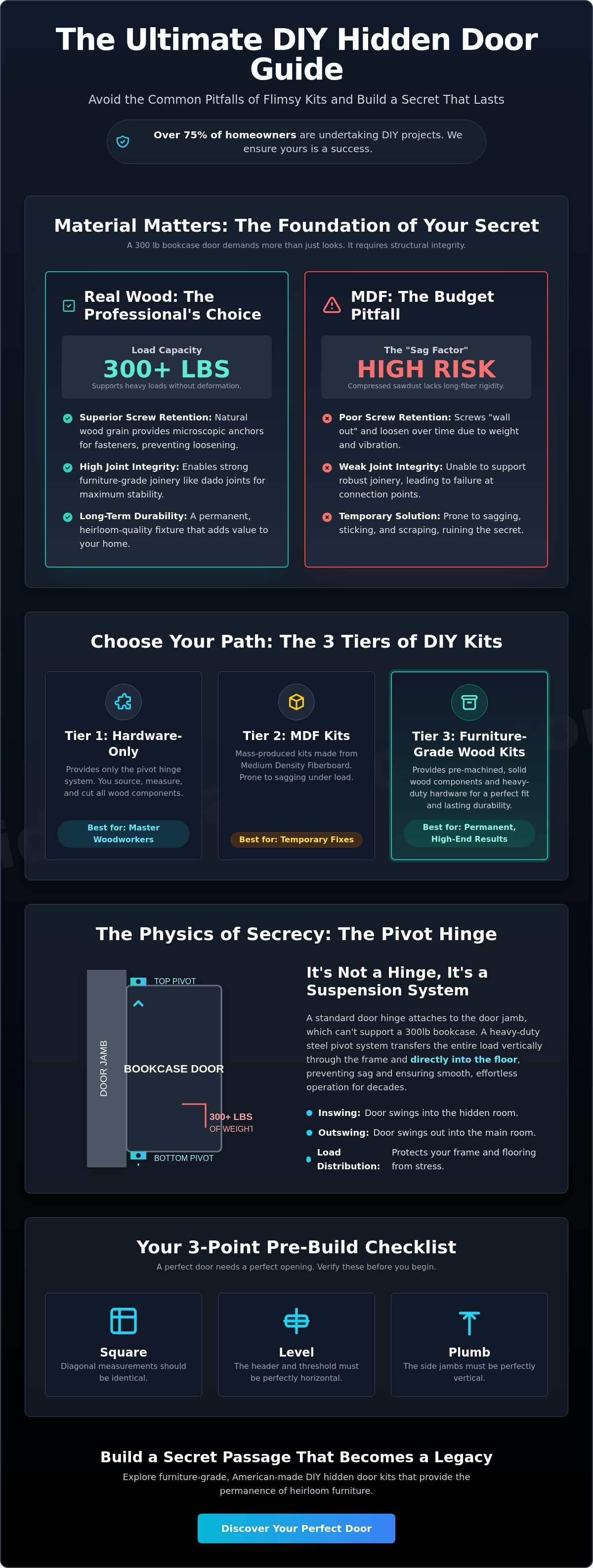
The fascination with concealed entryways isn't a modern fad. It's rooted deep in the history of secret passages, where utility met mystery. Today, the challenge isn't just creating the room; it's finding a diy hidden door kit that actually stays hidden. Most enthusiasts start their journey at one of three levels. You have hardware-only setups for the master woodworker, mass-produced MDF kits for the temporary fix, and furniture-grade real wood kits for the homeowner who values permanence. A true kit should bridge the gap between a DIY "hack" and a bespoke commission, providing a result that looks like it was built into the home's original architecture.
Hardware-Only vs. Component Kits
Sourcing your own lumber sounds economical until you factor in the waste and the high stakes of precision. Secret doors demand much tighter tolerances than standard cabinetry. If your cuts are off by even a fraction, the reveal gap will be uneven, immediately giving away the secret. Component-based kits remove this frustration. They provide pre-machined, furniture-grade wood that ensures every joint is tight and every pivot point is aligned. This precision reduces the margin of error for home installers, turning a complex engineering project into a manageable assembly.
The Role of the Pivot Hinge System
Physics is the primary enemy of any diy hidden door kit. A standard door hinge is designed for a light, flat panel. A bookcase door, however, might carry 300 pounds of books and decor. This weight requires an all-steel pivot system that transfers the load directly into the floor rather than the door jamb. Professional-grade kits utilize these heavy-duty systems to prevent the door from sagging over time. Understanding the mechanics is vital:
Inswing Mechanics: The door swings into the secret room, requiring the bookcase to be recessed perfectly within the frame.
Outswing Mechanics: The door pulls out into the main room, which demands surgical precision to clear the floor and surrounding trim.
Load Distribution: All-steel pivots ensure the weight is centered on a single, durable axis, protecting your flooring and your frame.
Choosing a kit that includes these heavy-duty components ensures the "wow factor" of your discovery isn't ruined by a sticking door or a scraping floor. It’s about the peace of mind that comes from sturdy, well-made objects that function as well as they look.
The Engineering of Secrecy: Why Real Wood Trumps MDF in DIY Projects
A secret door is more than an architectural curiosity; it's a moving piece of heavy furniture that must maintain its alignment within a fraction of an inch. When you install a diy hidden door kit, you're essentially building a high-capacity storage unit that happens to swing on a pivot. A standard bookcase door, once fully loaded with hardcovers and decor, can easily exceed 300 lbs. This immense weight creates a constant downward force that tests every joint in the assembly. If the material can't handle the load, the secret is revealed the moment the door begins to sag.
While secret passages are increasingly popular in modern interior design, the materials used in many mass-market kits often fall short of the engineering requirements. MDF, or Medium Density Fiberboard, is essentially compressed sawdust held together by resin. It lacks the long-fiber structural rigidity of real wood species like Oak or Alder. Over time, the constant load of a diy hidden door kit made from MDF leads to the "Sag Factor," where the frame slowly deforms. This causes the door to scrape the floor or stick against the jamb, ruining the illusion of a seamless wall.
Screw Retention and Joint Integrity
The science of joinery relies on how well a material can grip a fastener. Real wood possesses a natural grain that acts like a series of microscopic anchors for screws. This allows for furniture-grade techniques like dado joints and pocket holes which distribute weight across the entire structure. MDF lacks this internal architecture. Under the vibration of daily use, screws in composite materials tend to "wall out" or loosen, compromising the door's integrity. When evaluating kits, look for solid wood components that allow for mechanical fasteners to bite deep into the fiber. It's the difference between a temporary fix and a permanent fixture.
Long-Term Durability and Resale Value
There's a significant tactile difference between a solid wood door and a synthetic alternative. Homebuyers recognize the quality of traditional materials, which translates directly into added resale value. Beyond aesthetics, a sagging door is a liability. If the frame warps, it can damage your flooring and tear at the drywall of the surrounding opening. A well-engineered door operates as smoothly in year ten as it did on day one. For those seeking a secret passage that stands the test of time, choosing furniture-grade DIY solutions ensures your project remains an asset rather than a maintenance headache. Real wood also handles humidity fluctuations with grace, whereas MDF can swell and "bloom" when exposed to moisture, permanently ruining the finish and the fit.
Comparing DIY Hidden Door Tiers: From Hardware-Only to Unfinished Kits
Selecting the right diy hidden door kit requires a realistic assessment of your workshop capabilities and your expectations for the final product. Most homeowners are motivated by the desire to save money, with 73% of DIYers citing cost savings as their primary driver. However, the true cost of a project includes the value of your time and the longevity of the materials used. To make an informed choice, you must distinguish between the three primary tiers available on the market today: hardware-only setups, primed MDF kits, and unfinished real wood systems.
The hardware-only approach is often the first stop for those looking to minimize upfront costs. This tier provides the pivot system but leaves the structural engineering and material sourcing entirely to you. At the opposite end, primed MDF kits offer a "flat-pack" experience. While these are suitable for temporary installations or budget-conscious renters, they lack the structural integrity discussed in previous sections. The "Goldilocks" choice for most homeowners is the unfinished real wood kit. It provides the professional-grade foundations of a custom build while allowing the installer to handle the final aesthetic touches.
The Hidden Difficulty of Hardware-Only Builds
Precision is the invisible requirement of a successful secret passage. When you source your own materials, you're immediately fighting the "reveal"-that tiny gap between the door and the frame that must remain perfectly consistent to hide the door's presence. Finding straight, true lumber at big-box retailers is a significant hurdle; even a slight bow in a vertical support will cause the door to bind. While a pre-engineered diy hidden door kit allows for a weekend installation, a scratch-built hidden door typically demands upwards of forty hours of design, milling, and assembly time.
Why Unfinished Kits Offer the Best Customization
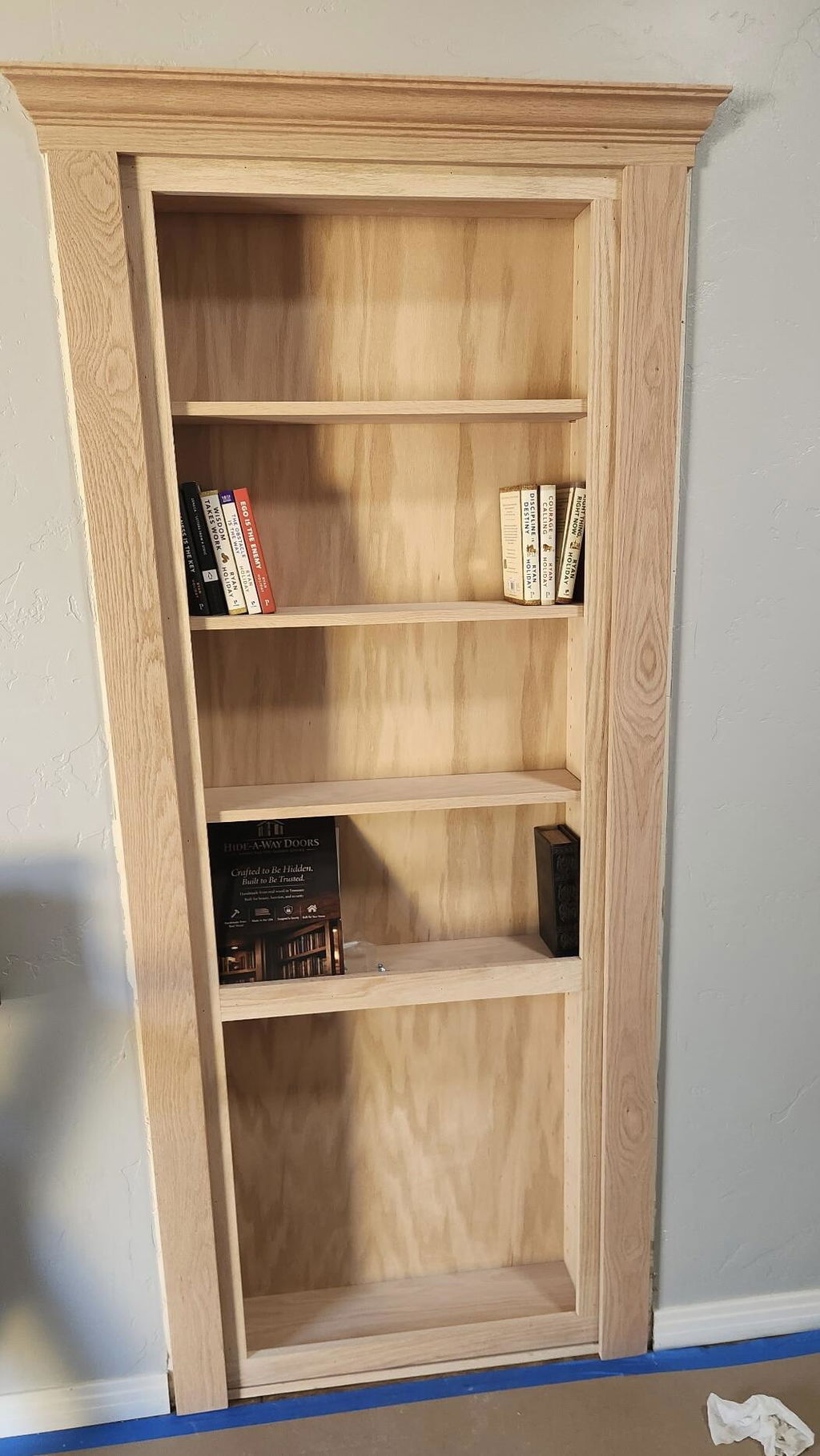
An unfinished wood kit provides a blank canvas that pre-painted alternatives cannot match. Every home has a unique "DNA" of trim styles and stain colors. By choosing an unfinished kit, you can match your existing mahogany, oak, or cherry finishes with surgical accuracy. This tier also allows for site-specific modifications, such as trimming a baseboard or adjusting a crown molding profile to ensure the door disappears into the wall. There is a deep sense of satisfaction in applying a professional finish to a handcrafted wood product. It transforms a project from a simple home improvement task into a permanent architectural feature that feels like a natural extension of your home's heritage.
Planning Your Build: Essential Measurements and Structural Requirements
Planning isn't just about the tape measure; it's about understanding the geometry of a secret. Before you unbox your diy hidden door kit, you must audit the space with the eye of a master builder. Success begins with the "Rough Opening." This is the raw space between the framing studs, and it's distinct from the finished opening that includes the jamb and trim. If your rough opening isn't square, level, and plumb, the door will never sit flush with the wall. These three factors are the primary enemies of a functioning secret passage.
Structural integrity starts at the base. A loaded bookcase weighs hundreds of pounds, so you must verify that the floor is perfectly level and capable of supporting a concentrated load without flexing. Next, evaluate your wall thickness. A standard 2x4 wall is roughly 4.5 inches thick, while a 2x6 wall is 6.5 inches. This depth dictates the swing radius and whether the door can fully clear the opening without binding against the interior frame. Finally, perform a clearance check. Ensure the door's path doesn't collide with existing lighting, furniture, or HVAC vents when it swings open.
The Critical Importance of the Header
The upper pivot point of a hidden door handles significant lateral tension. A standard door header isn't designed for this specific stress. You must add solid blocking to the frame to provide a secure anchor for the hardware. Precision is non-negotiable here; a 1/8-inch deviation at the header can cause a 1-inch gap at the floor. This misalignment ruins the "flush" look and places unnecessary stress on the lower pivot assembly, eventually leading to structural failure.
Electrical and Obstruction Planning
Secrets require a clean slate. If there are light switches or outlets within the swing path or on the wall being covered, they must be moved according to local building codes. Dealing with baseboards and crown molding is the next hurdle. To achieve a seamless look, these elements must wrap around the door with surgical accuracy. If you're planning for magnetic locks or secret latches, route the necessary channels during the framing stage. For those ready to start their project with precision-engineered components, exploring professional diy hidden door kits is the best way to ensure your measurements translate into a perfect fit.
The Hide-A-Way Advantage: Furniture-Grade DIY Solutions
True quality isn't a byproduct of mass production; it's the result of intentional, dedicated craft. Every diy hidden door kit we offer is handcrafted by skilled artisans who treat every piece of timber with respect. We maintain a strict Real Wood Guarantee, meaning we never substitute solid lumber with MDF or particle board. This commitment to traditional materials ensures that your secret passage has the structural integrity to support significant weight without deforming over time. Our DIY kits are built with the same "Alpha Door DNA" found in our flagship professional models, translating decades of engineering expertise into a format you can install yourself. If you encounter a unique architectural hurdle during your build, our national support network provides access to experts who can guide you through the process.
Wood Species Options for the Discerning DIYer
Selecting the right wood species allows you to integrate your secret door into the existing soul of your home. We provide several premium options, including Alder, Oak, Cherry, and Walnut. Alder is prized for its versatility and smooth finish, while Walnut offers a rich, sophisticated look that commands attention. You can choose between paint-grade wood for a clean, modern aesthetic or stain-grade lumber that highlights the natural beauty of the grain. Because these are real wood products, they offer a level of longevity that synthetics can't match. You have the freedom to sand, refinish, or repair the wood over time, ensuring the door remains an asset to your property for the life of the home.
Assembling Your Hide-A-Way Kit
When you open your diy hidden door kit, you'll find more than just a pile of wood. Each component is pre-machined to exact tolerances, paired with the same all-steel pivot hardware used in our custom builds. We include precision instructions that take the guesswork out of the assembly, focusing on the internal bracing that supports our "No-Sag" promise. This engineering outperforms the flimsy joints found in mass-market alternatives, keeping your door perfectly aligned even when the shelves are fully loaded with your personal library. It's a professional-grade solution designed for the homeowner who refuses to compromise on substance or security. Explore our DIY Hidden Door Kits and start your project today!
From Vision to Reality: Your Next Masterpiece Build
A secret door is more than a clever hidden entrance; it's a testament to your home's character and your own craftsmanship. You now understand that a successful diy hidden door kit relies on the uncompromising strength of real wood and the precision of all-steel pivot systems. By prioritizing structural integrity over the convenience of flat-pack composites, you avoid the common pitfalls of sagging frames and sticking doors. Every detail, from the reinforced header to the choice of Alder or Oak, contributes to a passage that operates with silent, heavy-duty reliability. We take pride in providing the same 300lb+ capacity hardware and handcrafted American quality that professionals demand.
Your journey from initial inspiration to technical execution is a path toward creating something truly enduring. With the right planning and a foundation built on traditional skills, your secret room will become a cherished feature for generations. Build your secret room with a handcrafted DIY kit from Hide-A-Way Doors. It's time to stop dreaming and start building a legacy of security and intrigue in your own home.
Frequently Asked Questions
Is a DIY hidden door kit hard to install for a beginner?
Installation is manageable for anyone with basic carpentry skills and a commitment to precision. Because the components are pre-machined, the complex engineering and milling are already completed for you. Your primary focus will be ensuring the rough opening is square and following the assembly steps. It's a weekend project that rewards patience and accurate measurements over advanced woodworking expertise.
How much weight can a DIY bookcase door kit actually hold?
A properly installed diy hidden door kit is engineered to support over 300 lbs of weight. This high capacity is achieved through an all-steel pivot system that transfers the load directly into the floor rather than the door jamb. This structural design ensures that your bookcase remains functional and easy to operate even when fully loaded with a private library.
Do I need special tools to assemble a real wood hidden door kit?
You don't need a full woodshop or specialized industrial machinery to complete the assembly. Standard household power tools, including a drill, a level, and a tape measure, are the primary requirements. Since the wood is already cut to size and pre-drilled, you can achieve a professional-grade finish without owning a table saw or a jointer.
Can I install a hidden door in an existing doorway without tearing out the wall?
Yes, you can install these kits in most existing doorways by removing the original door, jamb, and casing. The kit includes its own specialized frame designed to house the pivot hardware and the moving unit. As long as your existing rough opening matches the kit's requirements, you won't need to perform major structural demolition on your drywall or studs.
What is the difference between an in-swing and an out-swing DIY kit?
An in-swing door pushes away from you into the concealed room, while an out-swing door pulls toward you into the main living area. In-swing models are frequently chosen for their ability to look like a recessed, built-in bookcase. Out-swing models are ideal for smaller secret rooms where every inch of interior floor space is needed for storage or safety.
How do I hide the gap around the door so it stays truly 'secret'?
The secret is managed through the "reveal" and the strategic use of trim. By overlapping the casing over the gap between the door and the frame, you create a visual transition that mimics a standard fixed bookshelf. Precise leveling during the initial framing stage ensures that these gaps remain uniform and invisible to the casual observer.
Can I use a DIY kit for a gun safe or panic room entrance?
A diy hidden door kit is an exceptional choice for securing sensitive areas like gun cabinets or safe rooms. The solid wood construction provides a durable physical barrier, while the concealment offers a layer of security that a standard door cannot provide. It allows you to keep your valuables accessible yet completely out of sight from unauthorized visitors.
Why should I choose real wood over the cheaper MDF kits found on Amazon?
Real wood provides superior screw-holding power and long-term structural rigidity that compressed sawdust simply cannot offer. While MDF might look acceptable initially, it is prone to sagging under heavy loads and swelling when exposed to humidity. Choosing real wood ensures your door remains an heirloom-quality fixture that operates smoothly for decades rather than months.