Stain Grade Bookcase Doors: The Ultimate Guide to Furniture-Grade Concealment
A stain grade bookcase door is far more than a simple concealment solution; it is a structural commitment to using the highest-quality clear-faced lumber that refuses to hide behind a mask of paint. While many homeowners settle for the uniformity of engineered materials, you understand that true craftsmanship lies in the unique character of natural wood grain. You likely worry about the long-term reality of such a heavy installation, fearing that a poorly engineered unit might sag or fail to match the existing trim in your library. It is a valid concern when you are investing in a permanent, functional fixture for your home.
This guide helps you move from the initial dream of a secret passage to the technical execution of a flawless installation. Discover how to select, customize, and install a premium stain grade bookcase door that blends structural integrity with timeless aesthetic appeal. We will explore the distinct advantages of species like Oak, Maple, and Alder, while providing the clarity you need regarding the cost differences between stain and paint grades. By the end, you will have the knowledge to choose a door that looks like a permanent built-in and functions with the precision of a master artisan's finest work.
Key Takeaways
Understand the structural necessity of clear-faced lumber and why a premium stain grade bookcase door requires materials free of knots and defects.
Compare the density and porosity of Oak, Maple, and Alder to ensure your secret door perfectly complements your home’s existing aesthetic.
Learn why solid wood construction is the only reliable choice for supporting heavy loads and preventing the structural sagging common in inferior materials.
Gain expert insights into the sanding and preparation techniques needed to transition raw, furniture-grade wood into a finished masterpiece.
Explore the craftsmanship behind the Alpha Door, an artisan-led concealment solution designed for both beauty and enduring security.
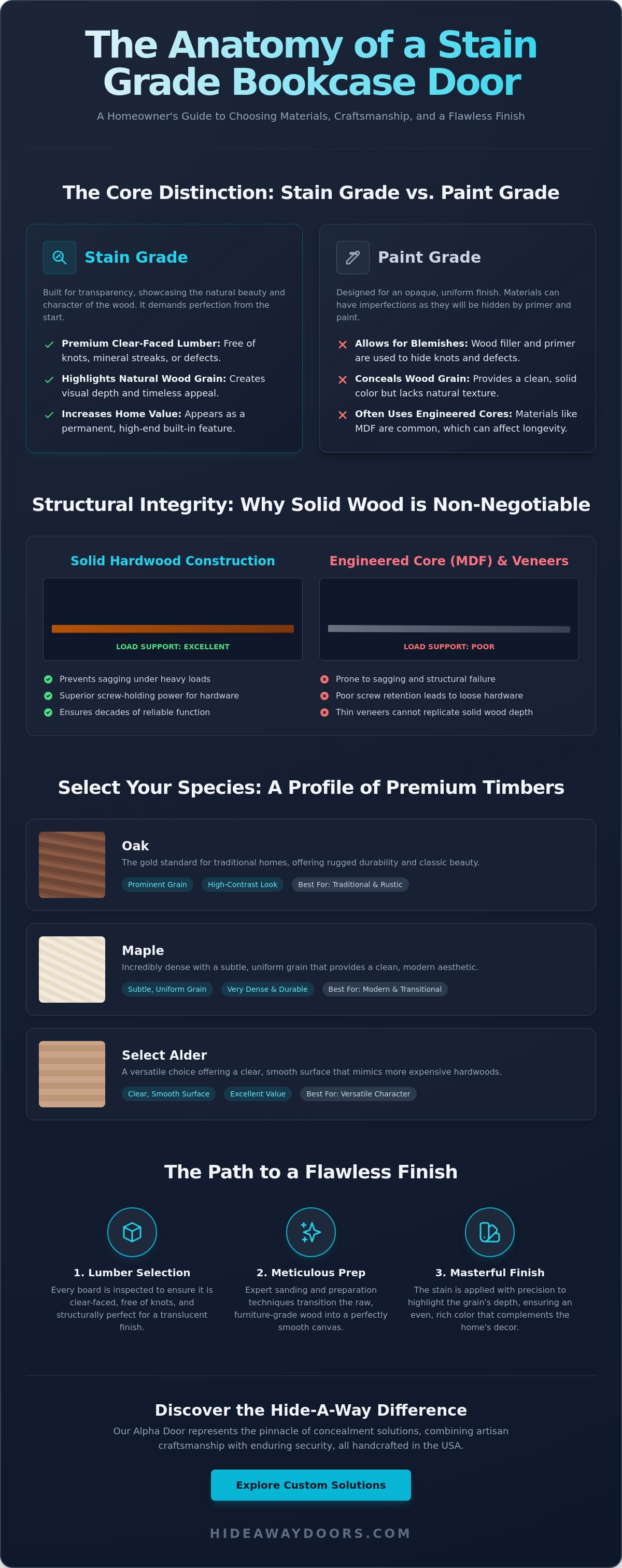
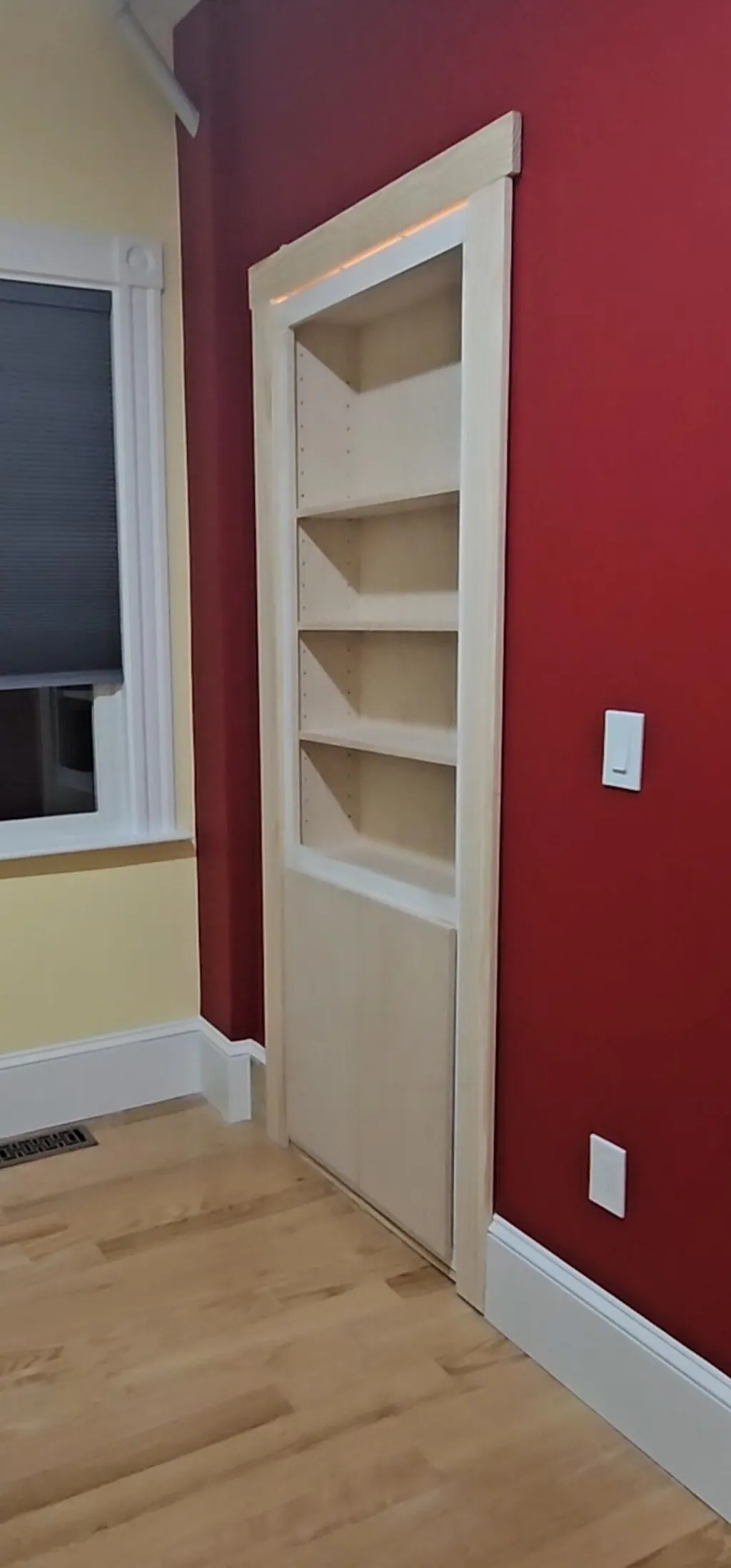
A stain grade bookcase door isn't defined by the liquid you apply to it; it's defined by the raw timber selected before the first cut is even made. In premium cabinetry, the term stain grade refers to clear lumber. This means every board is meticulously inspected to ensure it's free of knots, mineral streaks, or structural defects that would be magnified by a translucent finish. While paint grade units often rely on wood filler and heavy primers to hide a variety of sins, a stain grade door offers nowhere to hide. It demands perfection from the start.
The tradition of using fine hardwoods stretches back through the history of hidden doors, where master builders used the natural patterns of the forest to mask entrances to secret chambers. Today, that same level of craftsmanship is required to maintain the hidden illusion. If the grain pattern on your door doesn't align with the surrounding casing or wainscoting, the eye will immediately catch the break in continuity. Real wood grain provides a tactile and visual depth that synthetic materials simply cannot replicate. It creates a three-dimensional landscape that shifts as the light in the room changes throughout the day. A high-quality stain grade bookcase door relies on this inherent beauty to remain truly invisible.
The Aesthetic Difference: Stain vs. Paint
Choosing stain over paint is a choice for visual warmth and architectural permanence. While paint offers a clean look, stain highlights the natural architecture of the wood itself. This approach often increases home resale value by creating a built-in appeal that feels like an original part of the house rather than an afterthought. The specific wood species you choose, whether it's the tight grain of Maple or the bold patterns of Oak, will ultimately dictate the final color depth and how the piece interacts with your existing decor. It's about more than color; it's about the soul of the material.
Why Material Selection Matters in 2026
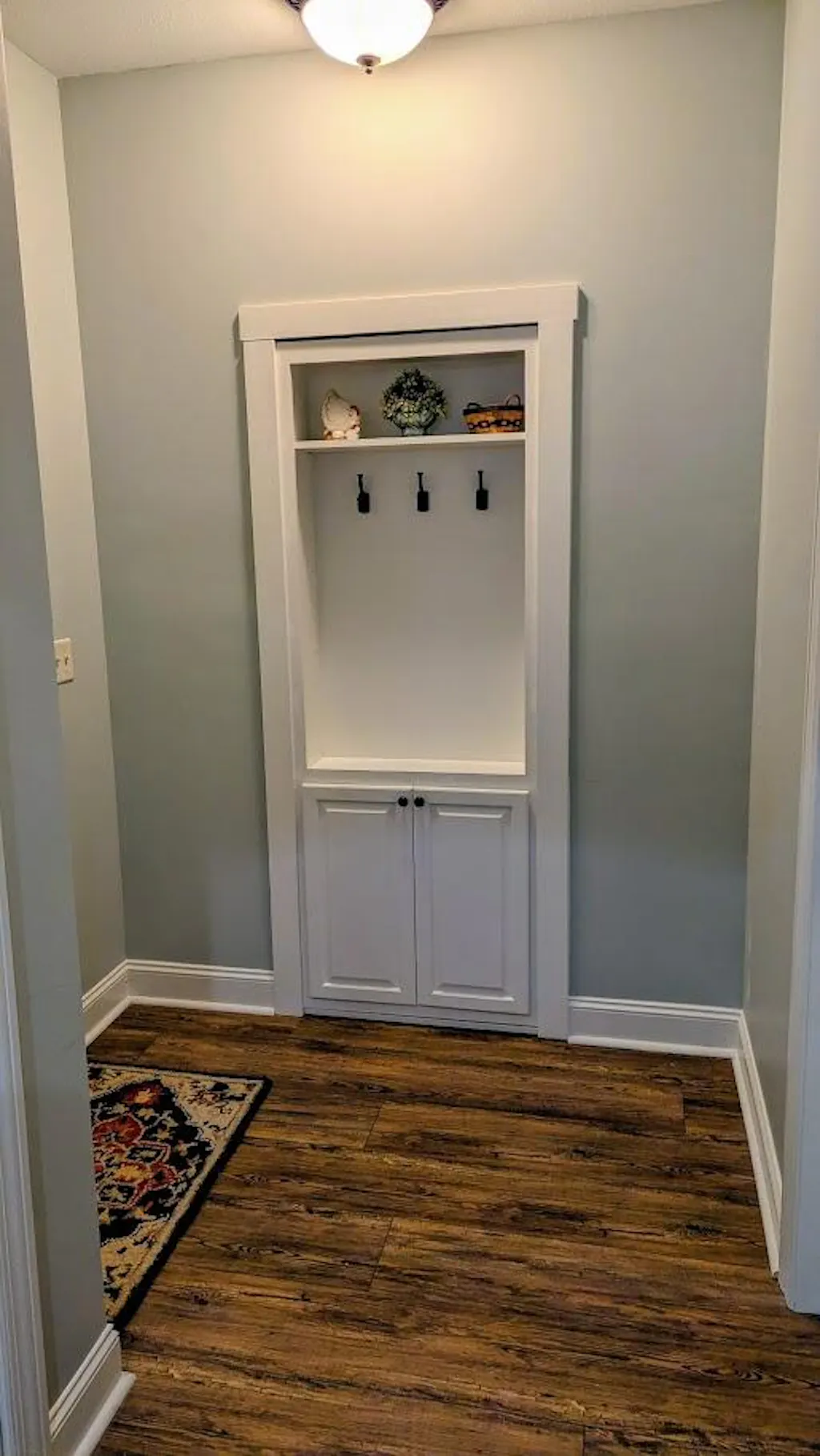
Current design trends in 2026 are shifting heavily toward natural textures and organic modernism. Homeowners want materials that feel grounded and authentic. The psychological wow factor of a secret door is doubled when that door is a seamless extension of high-end cabinetry. Achieving this level of consistency requires a stain-grade approach, ensuring that the secret entrance is indistinguishable from the surrounding millwork. It turns a functional security feature into a centerpiece of elegant home design that stands up to the closest inspection.
Choosing the Right Wood Species for Your Secret Door
Selecting the right timber for a stain grade bookcase door is a decision that balances physics with aesthetics. Because these doors function as moving furniture, the density and grain structure of the wood you choose will impact both the door's long-term operation and its visual depth. Different species possess unique mechanical properties that dictate how they behave under the stress of a full load; understanding the properties of wood species is essential for ensuring your door remains plumb and functional for decades.
Porosity is the silent factor in your final finish. Open-grained woods like Oak absorb stain deeply and unevenly, which creates a high-contrast look that celebrates the wood's cellular structure. In contrast, tight-grained woods like Maple or Cherry have smaller pores, requiring a more deliberate approach to ensure the stain applies evenly without blotching. While some mass-market manufacturers use thin veneers over engineered cores, true furniture-grade quality relies on solid wood. Solid lumber provides the superior screw-holding power and rigid stability required to prevent sagging under the weight of a full library. It's a commitment to durability that veneers simply cannot match.
Hardwood Profiles: Oak, Maple, and Alder
Oak remains the gold standard for traditional homes. Its prominent, classic grain patterns are unmistakable and offer a rugged durability that hides minor wear and tear. If your home features a more modern or transitional aesthetic, Maple is an excellent alternative. It's incredibly dense and features a subtle, uniform grain that takes lighter stains beautifully. For those seeking a specific "character" look, Alder is a versatile choice. While "Knotty Alder" is popular for rustic designs, "Select Alder" is the requirement for a premium stain grade bookcase door, offering a clear, smooth surface that mimics the look of more expensive hardwoods at a better cost-to-value ratio. If you're looking for a balance of strength and refined beauty, the handcrafted Alpha Door in Select Alder or Oak provides a dependable foundation for any room.
Luxury Species: Walnut and Cherry
When the project demands the highest level of prestige, Walnut and Cherry are the primary contenders. Walnut is prized for its natural dark hues and straight, elegant grain. It's a wood that rarely requires heavy staining, as its natural color provides a level of sophistication that is difficult to replicate with dyes. Cherry offers a different kind of luxury; it's famous for its aging process. Over time, Cherry lightens and then darkens into a deep, rich patina when exposed to natural light. Choosing these species ensures your secret door doesn't just hide a room-it matches the elite furniture and architectural details of a master-crafted home.
Structural Integrity: Why Real Wood Beats MDF for Staining
A stain grade bookcase door is more than a piece of decor; it's a mechanical system. While MDF or particle board might suffice for a static, painted shelf, those materials fail when asked to perform as a pivoting structural unit. The physics of a secret door are unforgiving. When fully loaded with books or collectibles, a single door can weigh hundreds of pounds. This weight creates immense leverage on the hinge side. Without the internal fiber strength of solid hardwood, the door will eventually succumb to "creep," which is a slow deformation that leads to sagging and sticking.
Screw-holding power is where the difference becomes most apparent. In a solid wood frame, the screw threads bite into dense, longitudinal fibers that act like a mechanical lock. MDF lacks this structural grain. Over time, the constant motion of opening and closing causes screws to wiggle, eventually enlarging the holes until the hardware pulls free. A stain-grade finish on real wood doesn't just look better; it protects a material that is fundamentally more durable against the friction and impact of daily use. Unlike painted composites that chip to reveal a gray core, stained hardwood maintains its visual integrity even if it's subjected to minor surface wear.
Weight Capacity and Shelf Engineering
Engineering a door to support over 100 lbs per shelf requires more than just thick wood. It requires a strategic mix of fixed and adjustable shelving. Fixed shelves act as structural ribs, providing the lateral rigidity needed to keep the bookcase perfectly square during its swing. This box-beam construction is a hallmark of professional design. The Alpha Door load-bearing standard for 2026 ensures that every structural component maintains its geometric integrity even when it's subjected to the maximum weight of a full library. This precision prevents the door from scraping the floor or binding against the jamb over years of service.
Resistance to Warping and Environmental Factors
Environmental stability is the final piece of the structural puzzle. Proper kiln-drying of the lumber is essential to prevent wood movement in different climates. While MDF can swell and lose its shape when it's exposed to humidity, real wood that's been sealed with a high-quality stain-grade finish remains remarkably stable. The finish acts as a barrier, slowing the exchange of moisture and allowing the wood to maintain its structural dimensions. This stability is critical for a secret door. Even a few millimeters of warping can ruin the seamless integration with your wall, exposing the secret you've worked so hard to conceal.
Customizing Your Finish: From Raw Wood to Masterpiece
The finishing process is where a stain grade bookcase door truly earns its name. While the structural assembly provides the strength, the finish determines how the door interacts with light and whether it successfully vanishes into your wall. Achieving a furniture-grade result starts long before the stain hits the wood. Meticulous sanding is the non-negotiable foundation. You must progress through grit levels with precision, ensuring that every millimetric scratch is removed. Any oversight in prep work will be magnified once the pigment is applied, turning a minor flaw into a permanent eyesore.
Choosing your medium is the next critical step. Oil-based stains are the traditional choice, offering a long open time that allows for deep penetration and a classic richness. Water-based options have improved significantly, providing faster dry times and lower odors, though they often require an extra round of light sanding to knock down raised grain. For woods prone to blotching, such as the Alder or Maple discussed previously, gel stains are a superior alternative. They sit on the surface rather than soaking in, providing a more uniform color across the entire unit. Once the color is set, a high-quality topcoat is essential. A secret door is a high-touch surface; it needs the protection of a durable polyurethane or lacquer to resist oils from hands and the friction of moving parts.
Matching Existing Trim and Cabinetry
The goal of a hidden door is total integration. To achieve this, you must identify both the species and the specific stain profile of your room's existing millwork. A reliable trick for predicting the final look of a raw door is the "wet test." Wiping a small, inconspicuous area with mineral spirits will temporarily show you what the wood looks like with a clear finish, helping you decide if you need to add pigment or simply seal the natural grain. Because of the complexity involved in matching aged finishes, many homeowners find that factory-controlled finishing is the safest path to a perfect result. If you're ready to begin your project with a professional foundation, you can order a custom stain grade bookcase door that arrives ready for your final vision.
The Role of Sheen: Matte, Satin, and Gloss
Sheen plays a vital role in the "stealth" of your installation. A high-gloss finish might look prestigious in a formal library, but its reflective nature can highlight the slight gap around the door's perimeter, potentially giving away the secret. Satin is the industry standard for a reason. It provides a soft, sophisticated glow that mimics fine furniture while effectively hiding fingerprints and minor dust. Maintenance is straightforward. Avoid harsh chemicals and stick to microfiber dusting or specialized wood cleaners to preserve the luster of your stain-grade investment for decades.
The Hide-A-Way Difference: Handcrafted in the USA
The pursuit of a perfect stain grade bookcase door eventually leads to a single question of origin. Mass-produced units often prioritize shipping volume over structural integrity, resulting in thin veneers and unreliable hardware. At Hide-A-Way Doors, we take a different path. Our family-owned operation, proudly based in the USA, is led by artisans who view every project as a testament to traditional American craftsmanship. We don't just build doors; we create furniture-grade concealment systems designed to last for generations. This commitment to local manufacturing ensures that the soul of the wood is preserved from the first cut to the final topcoat.
The Alpha Door stands as our flagship model for those seeking the ultimate in stain-grade quality. It represents the intersection of secret utility and elegant home design. While its primary function is to hide a room, its secondary role is to serve as a high-capacity storage solution that feels like a permanent part of your home's architecture. Our clients often expand their vision beyond simple shelving, exploring custom configurations such as a Gun Cabinet Door for secure storage or a Wine Rack Door for a sophisticated cellar entrance. For enthusiasts of premium audio, the same dedication to structural integrity can be found in a HiFi Rack, ensuring that every piece of equipment is supported by furniture-grade materials. This level of bespoke service is only possible when the manufacturing process is handled entirely in-house by people who understand the nuances of clear-faced lumber.
Uncompromising Quality Control
Consistency is the enemy of the mass-produced but the hallmark of the artisan. Every single door that leaves our facility undergoes a rigorous hand-inspection process. We examine the grain patterns across the entire unit to ensure that your stain grade bookcase door will accept pigment evenly and match the surrounding trim of your home. This attention to detail is why we offer a Limited Lifetime Warranty on our structural components. It is a level of confidence born from knowing that our joinery and hardware systems are engineered to handle the physics of a fully loaded pivoting shelf without failure.
Planning Your Custom Project
Bringing a secret door into your home is a seamless experience with the right guidance. Our online configurator allows you to select your preferred wood species and finish options with precision. Once your order is finalized, we utilize a specialized national shipping network to ensure your investment arrives in pristine condition. We also provide access to a professional installation network to help you cross the finish line with a unit that operates with quiet, heavy-duty precision. Your home deserves a piece that reflects a commitment to quality. Design your custom stain grade bookcase door today and discover the peace of mind that comes from handcrafted excellence.
Secure Your Legacy of Craftsmanship
A successful installation relies on the intersection of structural physics and aesthetic precision. By prioritizing clear-faced lumber over composite materials, you ensure your secret entrance maintains its alignment and visual depth for a lifetime. You now have the tools to choose the right wood species and finishing techniques to match your existing cabinetry with confidence. Investing in a stain grade bookcase door is a commitment to quality that transforms a simple doorway into a masterpiece of functional art.
Since 2012, Hide-A-Way Doors has remained dedicated to the craft of American-made concealment. Our units are handcrafted from 100% real wood, and we never use MDF or particle board in our construction. Whether you are planning a library entrance or a secure vault, our national professional installation network is available to ensure your project is executed with precision. It's time to bring your vision of a hidden sanctuary to life with a build that values substance as much as style.
Is a stain grade bookcase door more durable than a painted one?
Yes, a stain grade bookcase door is generally more resilient than a painted one because the pigment is absorbed into the wood fibers. While paint can chip and reveal a contrasting primer or raw material underneath, a stained surface hides minor abrasions within the natural grain. This makes it ideal for high-traffic secret passages where hands frequently touch the frame and shelves.
Can I buy a stain grade door unfinished and stain it myself?
You can purchase your door unfinished to handle the final pigment application yourself. We offer DIY Door Kits and unfinished Alpha Doors specifically for homeowners who want total control over the color match. It's an excellent way to ensure the unit integrates perfectly with custom millwork already present in your home while maintaining the structural benefits of professional joinery.
Which wood species is best for a dark walnut stain?
Select Alder is the most versatile species for achieving a dark walnut look if you aren't using natural Walnut. Its uniform grain and consistent porosity allow it to accept dark pigments without the heavy flickering or blotching often seen in other woods. Oak is another strong contender if you prefer the prominent, rugged texture of a traditional grain with high contrast.
How do I match my new bookcase door to my existing hardwood floors?
Matching a door to hardwood floors requires identifying the wood species first to ensure the grain patterns align. Once the species is confirmed, we recommend performing a wet test with mineral spirits on a sample piece to predict the wood's natural reaction to a clear coat. This allows you to adjust your stain choice to account for the lighting and age of your existing flooring.
Do stain grade doors require special maintenance over time?
Stain grade doors require minimal but specific maintenance to preserve their luster for decades. Regular dusting with a microfiber cloth and the occasional use of a high-quality wood cleaner are usually sufficient to keep the finish looking new. You should avoid harsh chemical degreasers or abrasive pads, as these can strip the protective topcoat and leave the raw wood vulnerable to humidity changes.
Will a real wood bookcase door sag if I fill it with heavy books?
A properly engineered stain grade bookcase door will not sag under the weight of a full library when it's built from solid hardwood. Unlike MDF or particle board, which lack internal fiber strength, our solid wood construction is designed to maintain its squareness under heavy loads. Every unit is built to a specific load-bearing standard that prevents binding or scraping even when every shelf is occupied.
What is the lead time for a custom handcrafted stain grade door?
Lead times for custom handcrafted doors reflect the meticulous artisan process required for furniture-grade construction. Because each unit is hand-inspected for grain consistency and structural integrity, production times can vary based on current demand and the complexity of your configuration. You should check the current production schedule during the design phase to plan your project timeline with precision.
Can I get a stain grade door in a double-door configuration?
We offer the Double Bookcase Door specifically for wider openings that require a grander entrance. This configuration provides a symmetrical, built-in look that is perfect for large libraries or master suites. Each side of the double unit maintains the same stain-grade quality and structural standards as our single-door models, ensuring a seamless and impressive concealment solution for any room.