Safe Room Door Cost in 2026: A Complete Buying and Budgeting Guide
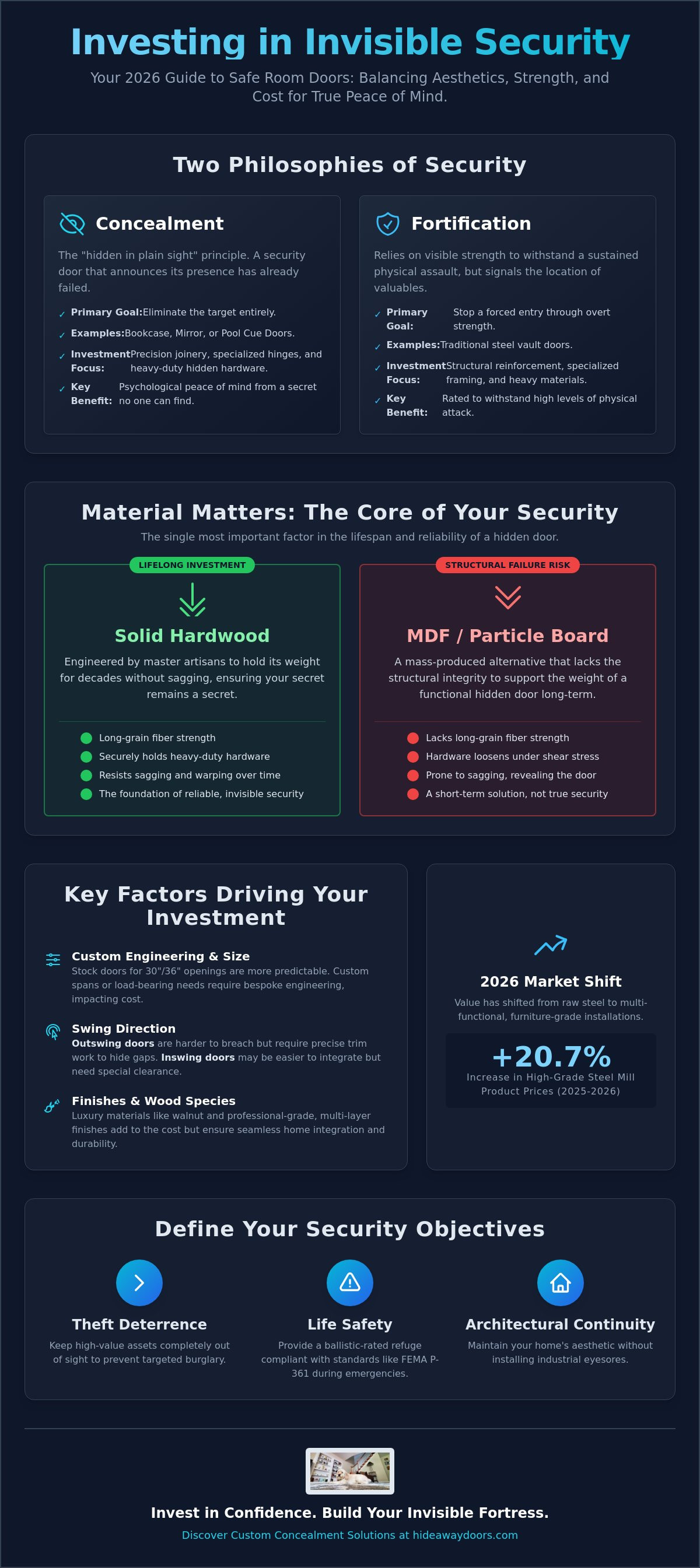
A security door that announces its presence is a security door that has already failed. True protection shouldn't compromise the elegance of your home or draw unwanted attention from guests. It's natural to feel overwhelmed by the safe room door cost in 2026, especially as material prices for high-grade steel mill products rose by more than 20 percent over the last year. You want a solution that offers the rugged strength of a vault while remaining entirely invisible to the naked eye.
You likely worry about whether a heavy, armored door will eventually sag or if a wood finish is simply a thin veneer over cheap materials. We understand that a secure entrance must be a masterpiece of both engineering and aesthetics. This guide will show you how to budget for a door that holds its weight for decades and blends seamlessly into your decor. We'll examine the critical factors of structural integrity, concealment technology, and the precision craftsmanship that separates a lifelong investment from a mass-produced alternative. Discover how to navigate the technical requirements of the latest FEMA P-361 standards so you can invest in your family's safety with absolute confidence.
Key Takeaways
Distinguish between the overt strength of traditional vault doors and the sophisticated concealment of hidden passage systems to find the right security profile for your home.
Learn why material choice is a critical safety decision, favoring the enduring strength of solid hardwoods over the structural failure risks associated with mass-produced MDF.
Understand how the safe room door cost in 2026 is influenced by rising material markets and the shift toward multi-functional, furniture-grade security installations.
Evaluate how bespoke customization options, from luxury walnut species to professional-grade finishes, impact your final investment and home integration.
Gain insight into the structural advantages of doors designed by master artisans, ensuring your hidden entrance holds its weight without sagging over time.
Understanding the Cost Spectrum of Safe Room Doors in 2026
Security has matured. In 2026, discerning homeowners are moving away from cold, industrial aesthetics in favor of seamless architectural integration. Your total safe room door cost is largely determined by whether you prioritize raw fortification or absolute secrecy. While steel mill products saw a price increase of 20.7 percent between early 2025 and 2026, the value of these installations has shifted. A standard steel slab might stop a forced entry, but it also signals to every guest exactly where your valuables are located. Modern security now emphasizes multi-functional furniture, where a high-security entrance serves as a functional Double Bookcase Door or an elegant Mirror Door. This shift means your budget covers both a tactical asset and a high-end piece of handcrafted cabinetry.
The choice between stock dimensions and custom-engineered structural openings also dictates the price point. Stock doors fit standard 30 or 36 inch rough openings, making them a more predictable investment for new builds. However, custom engineering is required when your security goals demand larger spans or specific load-bearing capabilities for life safety. Your specific objectives will dictate the entry price point:
Theft Deterrence: Keeping high-value assets out of sight to prevent targeted burglary.
Life Safety: Providing a ballistic-rated refuge during a home invasion or emergency.
Architectural Continuity: Maintaining the home's aesthetic without installing industrial eyesores.
Concealment vs. Fortification: Two Security Philosophies
Concealment relies on the "hidden in plain sight" principle. By using a safe room entrance that looks like a Mirror Door or a Pool Cue Door, you eliminate the target entirely. Fortification involves visible steel doors built to withstand sustained physical assault. Choosing fortification often requires a larger renovation budget for structural reinforcement and specialized framing. In contrast, concealment focuses the investment on precision joinery and heavy-duty hidden hardware that maintains the illusion of a standard wall or piece of furniture.
The "Invisible" Security Premium
There's a unique ROI in a door that no one can find. Engineering a heavy, solid-wood door to swing effortlessly while carrying the weight of a fully loaded bookshelf requires specialized hinges and steel-core frames. This isn't mass-produced MDF. It's a structural opening engineered to stay square for decades. The psychological peace of mind that comes from knowing your retreat is a secret is often the most valuable part of the safe room door cost. You aren't just paying for wood and steel. Your investment covers the technical execution of a secret that remains hidden even under close inspection.
Primary Factors That Drive Your Safe Room Door Investment
Investing in security is as much about structural physics as it is about locks and bolts. Your safe room door cost is shaped by the silent forces of gravity and tension, especially when your entrance doubles as a functional piece of furniture. A door that fails to swing smoothly or sags after six months isn't just a nuisance. It's a security breach that reveals the secret it was meant to protect. High-quality engineering ensures that the heavy materials required for protection don't compromise the ease of use or the invisibility of the entrance.
The direction of the door swing also plays a vital role in both safety and price. An outswing door is significantly harder to breach during a physical attack, as the door slab is pressed against the frame. This configuration often requires more precise framing and trim work to keep the hinges and gaps completely hidden from view. In contrast, an inswing door might be easier to integrate into existing hallways but requires specialized internal clearance. Understanding these variables helps you justify the safe room door cost as an investment in long-term reliability rather than a temporary fix.
Real Wood vs. MDF: The Structural Cost
Material choice is the single most important factor in the lifespan of a hidden door. Many mass-produced options utilize MDF or particle board because it's inexpensive and easy to machine. However, MDF lacks the long-grain fiber strength required to hold heavy-duty hardware under constant shear stress. Over time, the weight of a fully loaded Double Bookcase Door will cause MDF to sag, ruining the alignment and making the secret obvious. You can explore the technical differences in our guide on Solid Wood vs MDF: Why Furniture Grade Materials Matter. Handcrafted real wood provides the rigidity needed for high-use security applications, ensuring your door stays square for decades.
Hardware and Hinge Engineering
The magic of a secret door lies in its movement. Standard hinges aren't designed to carry the 500lb+ loads common in fortified bookcase doors. Professional-grade pivot hinges are engineered from hardened steel to distribute weight directly into the floor rather than the wall studs. This prevents the door from dragging or binding. When combined with steel-reinforced frames, this hardware maintains the perfect 1/8-inch gaps required for total concealment. If you're ready to see how master artisans balance this weight with elegance, browse our collection of handcrafted security solutions to find the right fit for your home.
Locking mechanisms add the final layer of both cost and capability. Simple magnetic catches provide basic concealment, while biometric scanners or electromagnetic shear locks offer high-level access control. Each step up in locking technology requires additional wiring and structural integration during the build process.
Comparing Costs: Hidden Bookcase Doors vs. Traditional Vault Doors
Choosing between a traditional vault door and a concealed entrance is a choice between two entirely different security philosophies. A vault door is an overt statement of strength. It is designed to be seen and, ideally, to intimidate. However, in a residential setting, the safe room door cost for an industrial vault often includes the hidden expense of masking it. Most homeowners find that a massive steel slab doesn't fit their hallway's aesthetic, leading them to install a second, standard interior door just to hide the security layer. This adds complexity to the framing and doubles the hardware maintenance over time.
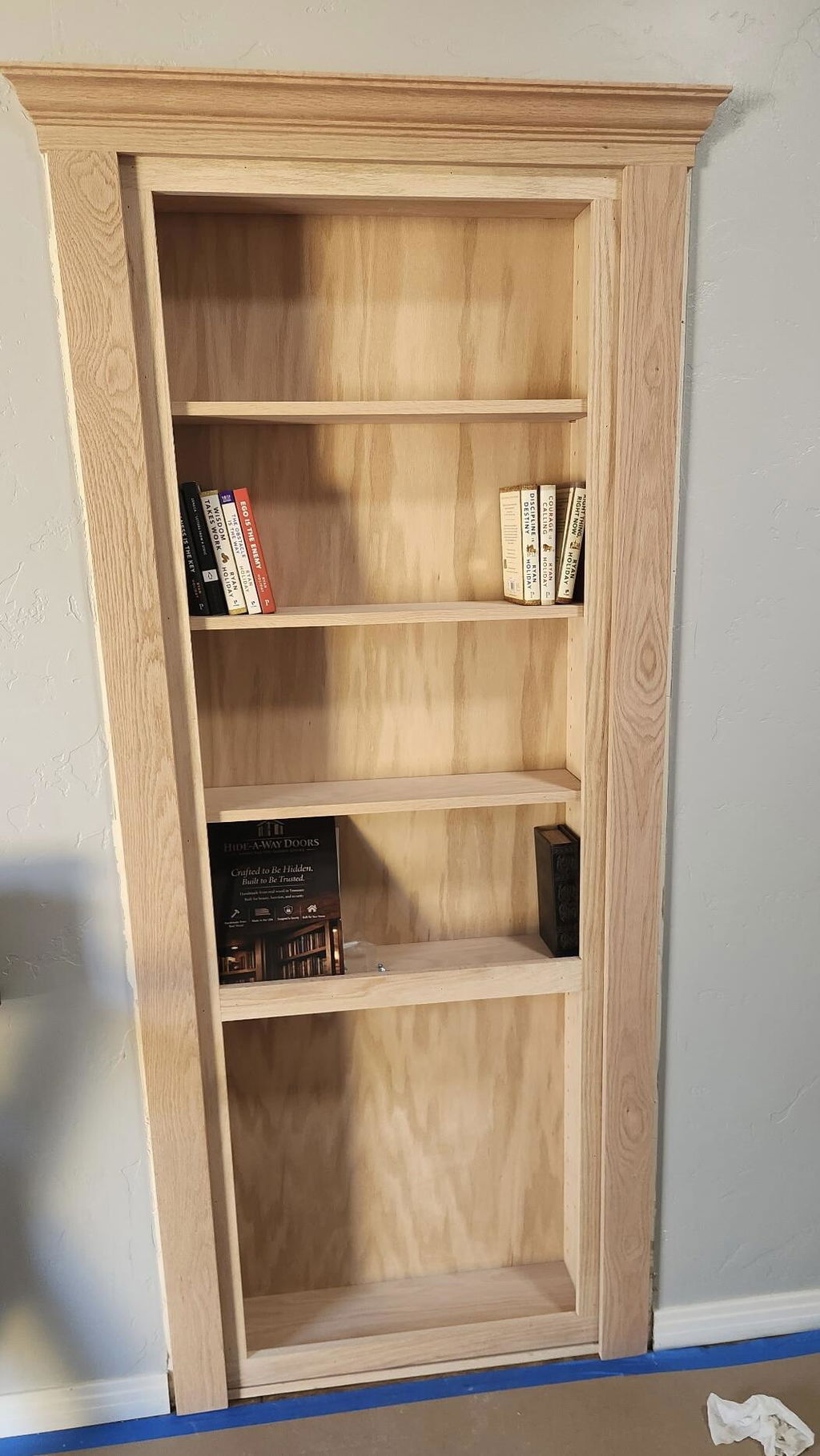
A double bookcase secret door approaches the problem differently by combining the entrance and the concealment into a single, high-performance unit. You aren't just buying a barrier. You're investing in a functional piece of furniture that serves a daily purpose while keeping your safe room a total secret. While vault doors excel in fire resistance and extreme ballistic ratings, they often lack the "intrigue" value that boosts a home's resale appeal. A beautifully crafted hidden door is a conversation piece that adds character to a library or office, whereas an industrial safe can sometimes feel like a liability to future buyers who don't share the same security concerns.
The Aesthetic Cost of Industrial Security
Industrial vault doors are rarely finished to match high-end home interiors. To make them presentable, you often have to pay for expensive decorative cladding or custom millwork to surround the steel frame. Handcrafted wood finishes on hidden doors eliminate this need. Because the door is built from furniture-grade hardwoods, it arrives ready to match your existing trim. You get the rugged security of a reinforced entrance without the cold, clinical look of a bank vault. It's a more streamlined way to achieve protection without sacrificing the warmth of your home.
Installation Complexity and Site Prep
The weight of your chosen door dictates the level of site preparation required. A 1,000lb steel vault door usually requires specialized structural framing and, in some cases, floor reinforcement to prevent settling. Concealed wooden doors are significantly lighter, making them much easier to retrofit into existing residential hallways without tearing out half the wall. The key to success here is ensuring the opening is perfectly square and level. Even a slight deviation can cause a secret door to hang unevenly, creating shadows that give the secret away. Precision at the installation stage ensures the door functions as a seamless part of the wall, maintaining its invisibility for years to come.
Customization Options and Their Impact on Final Pricing
Functional additions transform a dead space into a high-utility zone. You can integrate specialized storage like wine racks, pool cue racks, or even a hidden gun cabinet door directly into the safe room entrance. These features add weight and depth, which in turn necessitates more robust hinge systems and reinforced framing. Moving beyond a standard shelf to a custom configuration ensures your security solution serves your lifestyle every single day, not just during an emergency.
Selecting the Right Wood Species
Timber selection is where durability meets design. Standard paint-grade options often use softwoods like Alder, which provide a smooth surface for a clean, modern look. If you prefer the rich grain of a "Stain Grade" finish, you'll need to move into hardwoods like Oak, Cherry, or Walnut. These species aren't just about aesthetics. They offer superior density and impact resistance. Matching your existing home trim exactly requires higher-quality timber selection, as stain-grade wood cannot hide the knots or imperfections that paint can easily cover. This level of master-artisan selection ensures your secret remains safe from even the most observant guests.
Specialized Internal Configurations
The depth of your shelving is a critical factor in both cost and functionality. Standard depths work for books and small collectibles, but custom depths are required for media collections or larger wine bottles. As you increase the depth of the door, the center of gravity shifts. This requires precision-engineered pivot points to ensure the door doesn't bind against the frame. Complex internal storage isn't just a carpentry task. It's a structural challenge that demands the skills of a seasoned professional who understands how to balance weight with ease of movement. If you're ready to design an entrance that perfectly fits your home's architecture, start building your custom door today.
Configuration also plays a role in the final budget. A single door is a straightforward installation, but double-door systems require synchronized hardware and a perfectly level floor across a wider span. These larger systems offer a grander presence and more storage, but they also require double the precision to maintain the tight gaps necessary for total concealment.
The Alpha Door: A Case Study in Security Value
The Alpha Door represents the pinnacle of our engineering. It isn't just an entrance; it's a testament to what happens when master artisans refuse to compromise on structural integrity. When calculating your safe room door cost, you must look beyond the initial purchase price to the total cost of ownership. Mass-produced MDF doors often fail within years because they lack the fiber strength to hold heavy hardware. In contrast, our solid wood construction provides a rigid, dependable core that won't sag. This ensures your secret remains perfectly aligned for the life of your home.
Our national installation network further protects your investment. A DIY mistake on a high-precision security door can be a costly error that compromises both function and concealment. By leveraging professional installers who understand the nuances of our hardware, you eliminate the hidden costs of trial and error. This systematic approach ensures that every joint is tight, every swing is silent, and every lock is secure. You're paying for the peace of mind that the door will perform exactly as intended during a crisis.
The Alpha Concealment Door Difference
The secret to the Alpha Door's longevity lies in a proprietary design that distributes weight across a steel-reinforced frame. This prevents the "racking" common in inferior products. Every joint is hand-fitted by a master artisan, creating a level of precision that machines cannot replicate. You can learn more about this specialized construction in our Alpha Concealment Door Guide. It's the difference between a door that feels like a temporary fix and one that feels like a permanent architectural feature.
Finalizing Your Safe Room Budget for 2026
Budgeting for high-end security requires a holistic view of the project. To ensure your investment is sound, use this checklist to account for all variables:
The Door Unit: The primary investment in wood species and structural core.
Shipping and Logistics: Specialized crating and freight for heavy, furniture-grade units.
Professional Installation: The cost of expert site prep and final fitting.
Hardware and Access Control: Upgraded hinges and your choice of biometric or mechanical locks.
Professional measurement is the most critical step before placing an order. A fraction of an inch can be the difference between a seamless fit and a visible gap. When you're ready to move from planning to execution, requesting a custom quote allows us to tailor the engineering to your specific wall requirements and security goals. This ensures your final safe room door cost reflects a solution built exactly for your home, providing a secure entrance that honors the craftsmanship of your property.
Secure Your Home With Artisan Precision
Choosing a secure entrance is a decision that balances structural permanence with architectural beauty. You've seen how material integrity and precision engineering define the safe room door cost, ensuring your investment remains a hidden asset rather than a sagging liability. By prioritizing solid hardwoods and professional-grade hardware, you guarantee that your secret room stays a secret for decades. True security doesn't just stop an intruder. It prevents them from ever finding the target in the first place.
At Hide-A-Way Doors, we take pride in our heritage as a family-owned business with over a decade of artisan expertise. Every door is handcrafted in Tennessee from real solid wood, designed to withstand the test of time and heavy use. Our national network of professional installers ensures that your custom project is fitted with the exactness required for total, seamless concealment. Don't settle for mass-produced compromises when it comes to your family's safety.
How much does a basic safe room door cost compared to a custom hidden door?
A basic safe room door focuses on industrial utility, while a custom hidden door integrates aesthetic concealment into the security layer. The safe room door cost for industrial models often excludes the additional expenses required to mask their appearance in a residential hallway. Custom options like a Mirror Door or Alpha Door provide a finished, furniture-grade look that serves a dual purpose as functional storage.
Is a wooden hidden door actually secure enough for a panic room?
A wooden hidden door is highly secure when it utilizes a reinforced core and professional-grade pivot hardware. The primary security advantage of a hidden door is that it removes the target from sight entirely. If an intruder can't identify the entrance, they can't attempt to breach it. When built from solid hardwoods rather than MDF, these doors offer significant physical resistance.
Does the type of wood I choose affect the door’s security?
Hardwood species like Oak, Cherry, and Walnut provide superior density and impact resistance compared to softwoods like Alder or Pine. Denser hardwoods hold screws and hinges more securely over time. This prevents the door from sagging and ensures the locking mechanisms remain perfectly aligned for maximum defensive strength. Choosing the right timber is a critical structural decision, not just an aesthetic one.
What are the hidden costs of installing a safe room door?
Hidden costs often include specialized structural framing, floor leveling, and professional trim work to ensure perfect concealment. You must also account for shipping logistics for heavy, furniture-grade units. Professional installation is a vital part of the total safe room door cost because even a small misalignment can create shadows or gaps that give away the secret entrance.
Can I install a hidden safe room door in an existing doorway?
Yes, you can install a hidden safe room door in an existing doorway, provided the rough opening is square and the surrounding wall can support the weight. Retrofitting often involves removing the original trim and door frame to accommodate the deeper profile of a Double Bookcase Door. It's a common project for library or office conversions where a standard closet is turned into a secure vault.
How much weight can a hidden bookcase door realistically hold?
A professionally engineered bookcase door can realistically hold between 300 and 500 pounds of additional weight on its shelves. This capacity depends on the use of heavy-duty pivot hinges that transfer the load directly into the floor rather than the wall studs. While the door itself is sturdy, exceeding these limits can eventually strain the hardware and affect the smoothness of the swing.
Do hidden doors require special maintenance or adjustments?
High-quality hidden doors require minimal maintenance, though occasional hinge lubrication and alignment checks are recommended. Because wood is a natural material, it can expand or contract slightly with seasonal humidity changes. Precision-engineered systems allow for minor adjustments to keep the gaps consistent and the secret hidden throughout the year. It's a simple process that ensures lifelong reliability.
What is the most secure locking mechanism for a secret door?
Electromagnetic shear locks and high-security biometric scanners offer the most reliable and discreet protection for secret doors. These systems allow for quick entry and can be integrated into the home's security network. Mechanical deadbolts with hidden triggers are also effective options for those who prefer a solution that doesn't rely on electrical power during an emergency. Each choice impacts the final engineering of the frame.