How to Install a Hidden Door for an Existing Doorway: A 2026 Retrofit Guide
What if the most unremarkable feature of your home, a standard bedroom door, was actually a masterfully crafted gateway to a private sanctuary? Finding a high-quality hidden door for existing doorway installations shouldn't mean tearing down your drywall or compromising on structural integrity. You likely want the intrigue of a secret room, yet you're held back by the fear of a heavy bookcase sagging after six months or a door that looks like a clunky project rather than a seamless part of the wall.
We understand that a secret entrance is only as good as its precision. You deserve a door that moves with the quiet confidence of high-end furniture and remains perfectly flush for years to come. This 2026 retrofit guide shows you how to replace any standard interior door with a handcrafted, real wood entrance without the headache of major remodeling. We will walk you through the essential structural requirements, swing directions, and artisan techniques needed to achieve a durable, invisible finish that stands the test of time.
Key Takeaways
Determine if your current 28 to 36-inch opening is a viable candidate for a sophisticated secret entrance without major structural changes.
Learn to evaluate your floor and header to ensure they can support the substantial weight of a handcrafted, real wood installation.
Discover why choosing solid hardwoods is vital for a hidden door for existing doorway to prevent the sagging associated with lesser materials.
Master the art of measuring the rough opening to achieve the flush, furniture-grade finish that defines professional craftsmanship.
Explore the finishing details, including custom casing and covert locks, that keep your private sanctuary entirely undetectable.
Can You Install a Hidden Door in an Existing Doorway?
The short answer is a resounding yes. In fact, most standard interior openings measuring 28, 30, 32, or 36 inches are prime candidates for a secret entrance. Retrofitting a hidden door for existing doorway frames is often more practical than carving out a new passage through a load-bearing wall. It utilizes the structural header already in place, which simplifies the engineering required to support a heavy, functional piece of furniture. You don't need to be a master architect to realize that the best place to hide something is right in plain sight.
The history of secret passages shows us that the most effective concealment relies on the mundane. A doorway that people expect to see is the last place they'll look for a hidden room. However, there's a significant divide between a basic "kit" and a handcrafted, furniture-grade door. While a kit might provide the bare-bones hinges, a true hidden entrance requires a precision-engineered unit that accounts for wall depth and the swing clearance of real wood components. Before starting, you'll need to assess the surrounding wall for light switches, thermostats, or baseboard heaters that might interfere with the new door's footprint.
Retrofit vs. New Construction
Choosing to retrofit saves you from the mess and expense of major demolition. You won't need to hire a framing crew or a drywall finisher to patch large sections of your home. Instead, you're working within the "rough opening", which is the space between the wall studs. Our Alpha Door is designed specifically for this scenario. It arrives as a pre-hung system, meaning the door and its frame are already aligned. This ensures the unit fits snugly into your existing space while maintaining the tight tolerances necessary for a flush, invisible look.
Common Rooms for Hidden Door Conversions
Where you choose to install your door depends on your goal for privacy or security. Many homeowners find that a hidden door for existing doorway is the perfect upgrade for these common spaces:
The Master Suite: Replacing a standard closet door with a Mirror Door adds functionality while concealing a walk-in safe or a private dressing area.
The Home Office: Create a quiet sanctuary or a "man cave" that remains completely undetected by guests and visitors.
Storage Areas: Turn a standard basement closet into a secure gun cabinet or a temperature-controlled wine cellar.
A secret door needs a clear path to swing open without hitting furniture or catching on thick carpeting. Precision at this stage prevents the door from "giving away" the secret later. By using the existing frame, you maintain the home's natural flow while adding a layer of sophisticated utility.
Structural Considerations: Assessing Your Current Door Frame
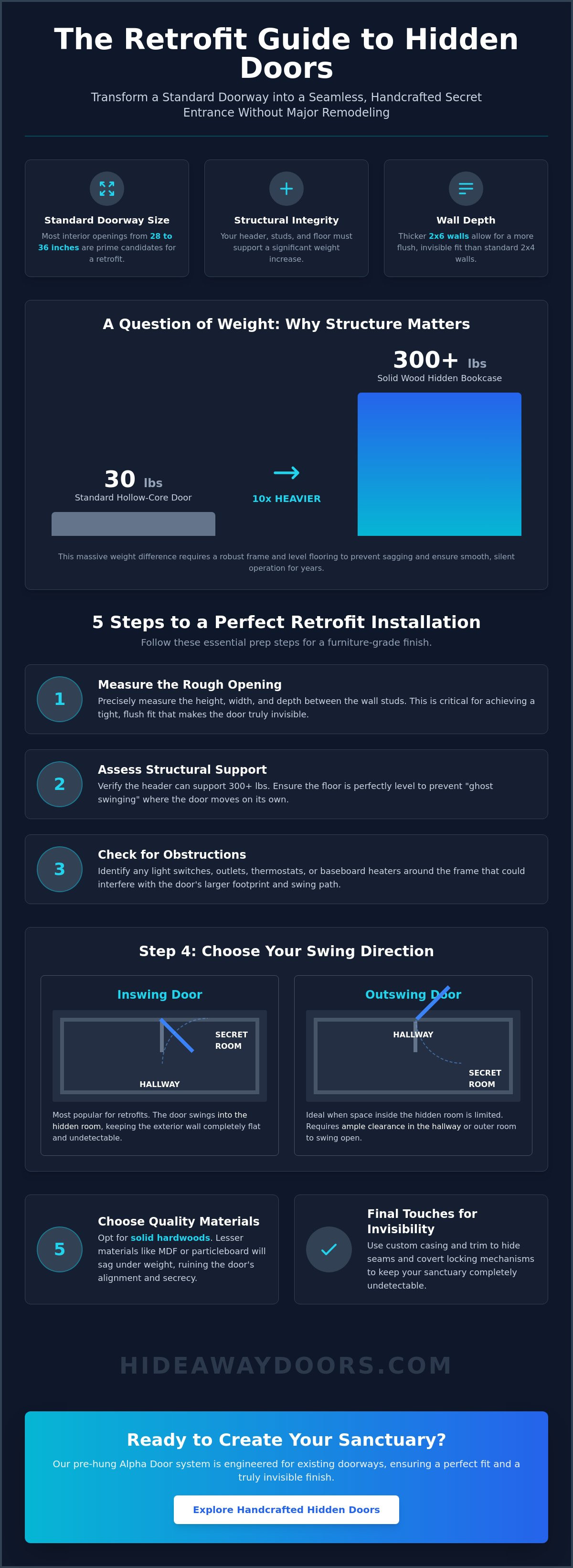
Before you order a hidden door for existing doorway retrofits, you must look beyond the aesthetics. A standard hollow-core door weighs about 30 pounds. By contrast, a handcrafted real wood bookcase door weighs between 150 and 300 pounds before you even place a single book on the shelf. This massive weight difference requires a critical look at your home's skeleton. Start by assessing your current door frame to ensure the vertical studs and horizontal header can support the load without bowing. If your floor isn't perfectly level, the door might "ghost" swing open or shut on its own or scrape against the flooring. Any mechanical resistance instantly ruins the illusion of a hidden entrance.
Wall depth is another deciding factor. Most modern homes use 2x4 interior framing, but older estates or high-end custom builds often utilize 2x6 walls. A thicker wall provides more depth for the shelving unit, allowing it to sit flush without protruding into the room. If you're working with a 2x4 wall, your door will typically require a specific casing style to hide the shelf depth. It's a solvable engineering challenge, but one that requires precision measurements from the start to maintain that furniture-grade appearance.
Inswing vs. Outswing: Which is Right for Your Opening?
The direction your door swings determines how it interacts with your space. Inswing doors are the most popular for retrofits because they fold into the secret room, keeping the hallway side completely flat and unassuming. If you have limited space inside the hidden room, an outswing door is the better choice, though it requires ample clearance in the hallway. For those dealing with grander architectural openings, an Outswing Double Bookcase Door: The Engineering of Grand Concealment provides a majestic solution for wider doorways that require specialized weight distribution.
Clearance and 'The Swing Path'
Precision engineering is what separates a master artisan's work from a DIY attempt. You must calculate the arc of the pivoting bookcase to ensure it doesn't collide with adjacent walls or furniture. This is often called "clash detection," and it's a step many homeowners overlook. The pivot point isn't at the edge like a standard hinge; it's offset to allow the heavy unit to rotate. Identify potential clash points by measuring the distance from the pivot to the furthest corner of the door. If your hallway is narrow, an outswing door might strike the opposite wall before it fully opens. Checking these clearances early ensures your installation is as functional as it is beautiful. If you're unsure about your specific measurements, exploring the technical specs at hideawaydoors.com can provide the clarity needed for a successful retrofit.
Why Material Choice Dictates Retrofit Success
The allure of a hidden door for existing doorway installations often leads homeowners toward budget-friendly composite materials. This is a tactical error. Medium-Density Fiberboard (MDF) and particle board are essentially compressed sawdust and resin. While they might look acceptable under a thick layer of paint, they lack the structural "memory" required for a heavy, moving architectural feature. Over time, the constant tension on the hinges causes these composite materials to compress. The result is a door that sags, sticks, and eventually drags across your floor. A secret entrance that leaves a permanent scuff mark on your hardwood is no longer a secret.
Authentic hardwoods like Oak, Alder, and Cherry are the gold standard for a reason. These species offer superior screw-holding capacity, which is the unsung hero of any secret door's longevity. When you drive a heavy-duty lag bolt into solid Alder, the wood fibers wrap around the threads, creating a bond that resists the lateral stress of a 200-pound swinging unit. We refuse to use MDF or particle board because we know that true security and aesthetic beauty require materials that can withstand decades of use without warping. A furniture-grade finish on real wood doesn't just look better; it feels substantial and sounds solid when closed, providing the tactile feedback of a well-built home.
The Weight Capacity Challenge
A common mistake in retrofitting is underestimating the load a bookcase must carry. It isn't just the weight of the wood; it's the weight of the life you put on the shelves. Whether you're storing rare books, heavy spirits, or collectibles, the downward force is immense. For specific data on what these units can handle, consult our guide on Bookshelf Door Weight Capacity: How Much Can a Secret Door Really Hold?. Solid wood construction ensures that the unit remains perfectly square even under full load. If a door sags by even an eighth of an inch, the reveal lines around the trim will become uneven, instantly alerting any observant guest to the doorway's true nature.
Aesthetic Integration
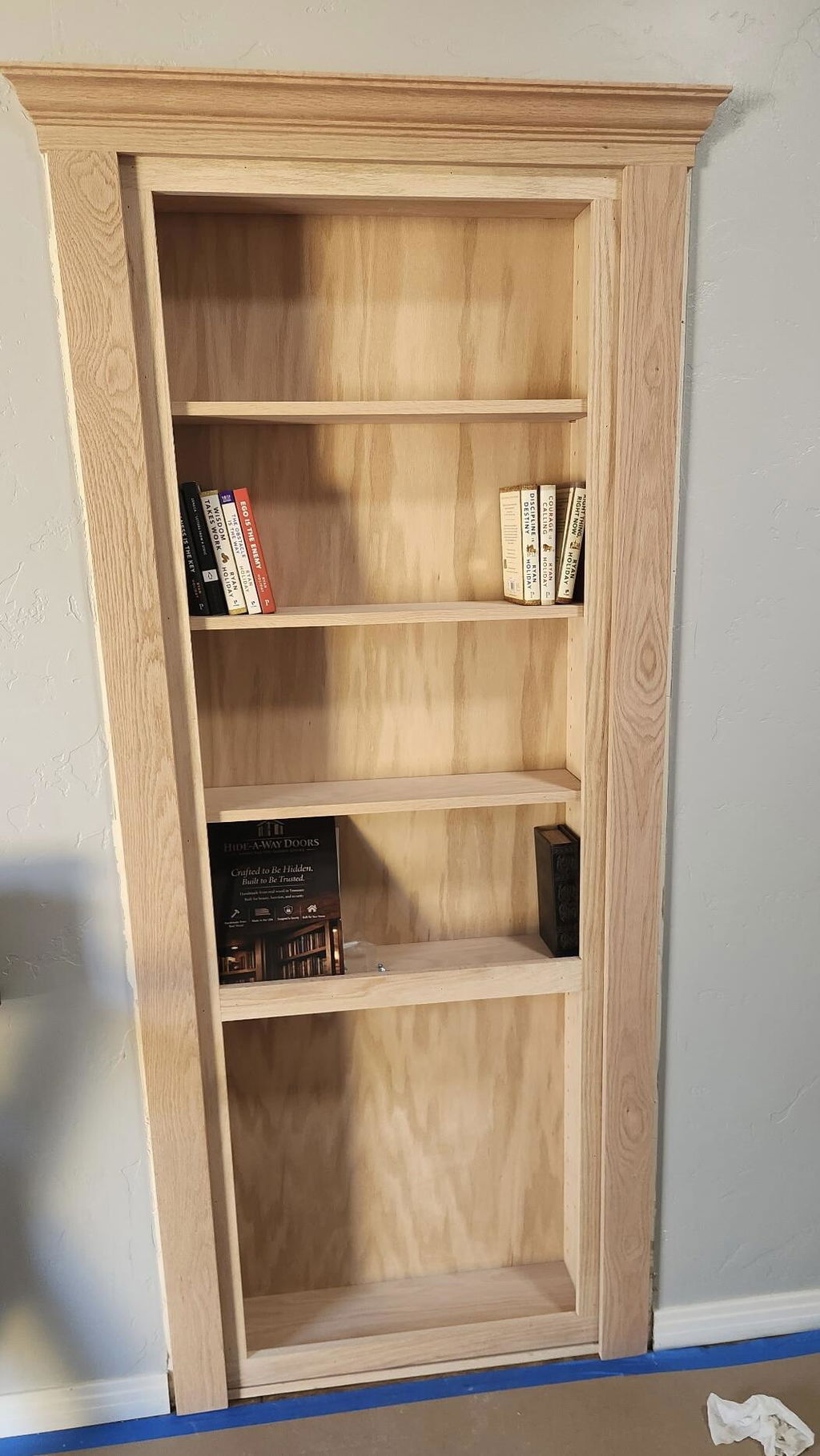
For a hidden door for existing doorway to truly disappear, it must match the surrounding environment with surgical precision. If your home features stained oak cabinetry, your secret door should share the same grain pattern and luster. This is where "stain grade" wood proves its value. Unlike "paint grade" materials that hide flaws under a coat of pigment, stain-grade wood celebrates the natural beauty of the timber. Choosing the right species allows the door to blend into your wall as if it were a permanent piece of built-in architecture. This creates a "wow factor" that isn't just about the surprise of the opening, but the stunning craftsmanship that kept it hidden in plain sight.
5 Steps to Prep Your Doorway for a Hidden Door
Preparing a hidden door for existing doorway retrofits requires a shift in perspective. You aren't just swapping one door for another; you're integrating a precision-weighted machine into your home's structure. Success begins with a clean slate and a meticulous eye for detail. Follow these five essential steps to ensure your rough opening is ready for a furniture-grade installation.
Step 1: Systematic Removal. Carefully remove the existing door, hinges, and all decorative casing. Use a sharp utility knife to score the paint where the trim meets the wall to prevent drywall tearing. You need to expose the raw jack studs to get accurate measurements.
Step 2: Define the Rough Opening. Measure the width between the studs at the top, middle, and bottom. Then, measure the height from the subfloor to the header on both sides. The smallest of these numbers will dictate your door size.
Step 3: The 3-4-5 Rule. Check for squareness by measuring 3 feet up one stud and 4 feet across the header. If the diagonal between those two points is exactly 5 feet, your opening is square. If it isn't, you'll need to shim the new unit with extreme care.
Step 4: Scan for Obstructions. Bookcase doors are deeper than standard doors. Check inside the wall cavity for electrical wires or plumbing lines that might interfere with the cabinet's depth. Relocating a light switch is a small price to pay for a perfect fit.
Step 5: Hardware Selection. Identify your wall type. If you're mounting into wood studs, use heavy-duty lag bolts. For metal studs or masonry, specialized anchors are required to handle the 300-pound dynamic load of a swinging bookcase.
The 'Alpha' Measurement Protocol
Precision is the only way to eliminate light-bleed, which is the faint glow of light from the other room that instantly reveals a secret passage. Our Alpha Door relies on a flush-mount design that requires a specific measurement protocol. You must account for floor transitions, such as moving from thick carpet to hardwood. If the door is too high, light leaks out the bottom; if it's too low, it will drag. Focus entirely on the rough opening dimensions rather than the old door's size. This ensures the pre-hung frame sits perfectly within the wall, maintaining the tight tolerances of a professional artisan. For those ready to begin their project, you can order your custom Alpha Door to match your exact rough opening specifications.
Preparing the Threshold
The pivot hinge is the heart of the system, and it demands a perfectly flat surface. In older homes, floors often settle and slope. You must level the threshold area before installation, or the door's weight will cause it to bind. If you're planning for a high-capacity Double Bookcase Door, consider reinforcing the floor joists from below. A door loaded with a full library can exert significant point-load pressure on a single spot. Ensuring a rock-solid foundation prevents the sagging that plagues inferior DIY installations and keeps your secret entrance moving with silent, effortless grace.
Final Touches: Making the Secret Truly Invisible
The final stage of a hidden door for existing doorway installation is where the work of a master artisan truly begins. It’s the transition from a simple construction project to a gateway that vanishes into the home's architecture. The secret lies in the psychological power of the mundane. By using the exact same casing found throughout the rest of your home, you normalize the opening. The eye doesn't linger on a standard door frame; it accepts it as part of the room’s rhythm. If the trim is off by even a fraction of an inch, the shadow lines will betray the secret. Precision in the finishing stages is what ensures the door remains undetected even under close scrutiny.
Security shouldn't compromise the aesthetic. Modern concealment relies on invisible locking mechanisms that require no external hardware. Magnetic keys, often hidden inside a dummy book or a decorative object, allow for a clean exterior that looks like a permanent built-in. For homeowners seeking a higher level of security, biometric sensors can be discreetly integrated into the wood grain. These systems provide the peace of mind that comes from functional security without the "fake" look of visible keypads or handles. A secret entrance should feel like a solid piece of history, not a modern gadget.
A door that slams or rattles is a liability. Adjusting the heavy-duty pivot hinge for a "soft close" ensures the unit settles into place with a muffled thud rather than a metallic click. This dampens the vibration across the shelves, preventing your books or spirits from shifting and betraying the door's function. While DIY enthusiasts can handle basic framing, the nuance of these final adjustments is why professional installation is often the best path for existing doorways. A seasoned professional understands how to account for the "settling" of an older home, ensuring the unit remains perfectly flush for decades.
Matching Your Existing Architecture
To achieve a truly "bottomless" look, the baseboards must be integrated directly into the door unit. This eliminates the gap at the floor that often gives away retrofitted kits. Similarly, using standard crown molding to hide the top gap of a bookcase door creates a seamless transition to the ceiling. If your home has unique architectural details, your secret entrance must mirror them exactly. Choosing a handcrafted solution allows you to customize these elements, ensuring the final product looks like it was built with the house rather than added as an afterthought.
The Alpha Concealment Advantage
The hidden door for existing doorway market is often flooded with low-quality kits, but elite secret entrances require a different level of care. A handcrafted Alpha Door provides a significantly tighter tolerance than anything you’ll find in a mass-market box. This precision is what allows for the zero light-bleed finish mentioned earlier in this guide. You can explore the technical details of these high-end systems in The Alpha Concealment Door: The Master Artisan’s Guide to Elite Secret Entrances. Utilizing a professional installation network takes the stress out of the retrofit, ensuring your vision of a private sanctuary becomes a durable, beautiful reality.
Secure Your Sanctuary with Artisan Craftsmanship
Retrofitting a hidden door for existing doorway is more than a simple home improvement project; it's the installation of a functional piece of art. By prioritizing real wood over sagging composites and meticulously assessing your home's structural capacity, you ensure a secret entrance that remains flush and silent for years. We've explored the critical importance of rough opening measurements and the final architectural touches that make a door truly disappear into your wall.
When you're ready to move from planning to execution, precision is paramount. Our team provides the expertise needed for a seamless transition. Each unit is handcrafted in the USA from premium real wood and offers custom sizing to fit any existing doorway in your home. With our national professional installation network, you can enjoy the "wow factor" of a secret room without the stress of the technical heavy lifting.
Will a hidden door fit into my standard 30-inch bedroom doorway?
Yes, a standard 30-inch opening is a perfect candidate for a hidden door for existing doorway retrofits. We design our units to fit common rough openings, though you should expect the clear walkthrough space to decrease slightly to accommodate the thickness of the bookcase cabinet. Using a pre-hung system like the Alpha Door ensures the unit fits precisely within your existing framing without requiring you to move studs or rebuild the wall.
Do I need to reinforce my floor to hold a secret bookcase door?
Reinforcement depends on the specific project and the age of your home. A single real wood bookcase door weighs between 150 and 300 pounds; most modern floor joists handle this weight without modification. However, if you plan to install a Double Bookcase Door or a high-capacity unit in an older home, reinforcing the joists helps prevent settling. This ensures the door remains perfectly square and won't drag over time.
Can I install a hidden door myself, or do I need a professional?
You can install a hidden door yourself if you have advanced carpentry skills, but professional installation is often recommended for retrofits. Achieving a completely flush, invisible look requires precision that is difficult to master with a standard DIY approach. Our national professional installation network provides experts who handle the structural assessment and final trim work, ensuring your secret entrance functions with the reliability of high-end furniture.
What is the difference between an inswing and an outswing hidden door?
The primary difference lies in the direction of the pivot and how the unit interacts with your space. An inswing door pushes into the secret room, making it the most discreet option for hallways because the face of the bookcase sits flush with the wall. An outswing door pulls toward you; this is ideal if the room behind the door is small or lacks the necessary interior clearance for a swinging cabinet.
How do I hide the gap between the door and the wall?
The secret to a truly invisible entrance is the strategic use of casing and trim to bridge the gap. By matching the existing molding in your home, you create a visual distraction that hides the door's seams from the casual observer. Our Alpha Door design is engineered with tight tolerances to eliminate light-bleed, ensuring that no faint glow from the other room reveals the location of your hidden door for existing doorway installation.
Can a hidden door be used for a high-security safe room?
A handcrafted real wood door is an excellent choice for a high-security safe room or a secure walk-in vault. Unlike hollow-core standard doors, these units provide significant physical mass and can be equipped with covert locking mechanisms. From magnetic keys to biometric sensors, these features allow you to secure your valuables behind a facade that looks like an ordinary, permanent part of your home's architecture.
What happens if the power goes out? How do I open a hidden door?
Our hidden doors don't rely on motorized opening systems, so a power outage won't trap you or prevent access to your room. We prioritize mechanical reliability through heavy-duty pivot hinges and covert manual locks. If you choose an electronic lock, these systems typically include a battery backup or a mechanical override. This ensures you always have a dependable way to open your secret entrance, regardless of your home's electrical status.
How much depth does a hidden bookcase door require in an existing doorway?
A functional bookcase door typically requires 8 to 10 inches of depth to accommodate standard books and decorative items. In a retrofit, this depth is achieved by allowing the cabinet to protrude into the secret room for an inswing door, or into the hallway for an outswing door. The thickness of your wall, whether 2x4 or 2x6, determines how much of the cabinet is recessed versus how much is visible on the exterior.