1
Do you push or pull?
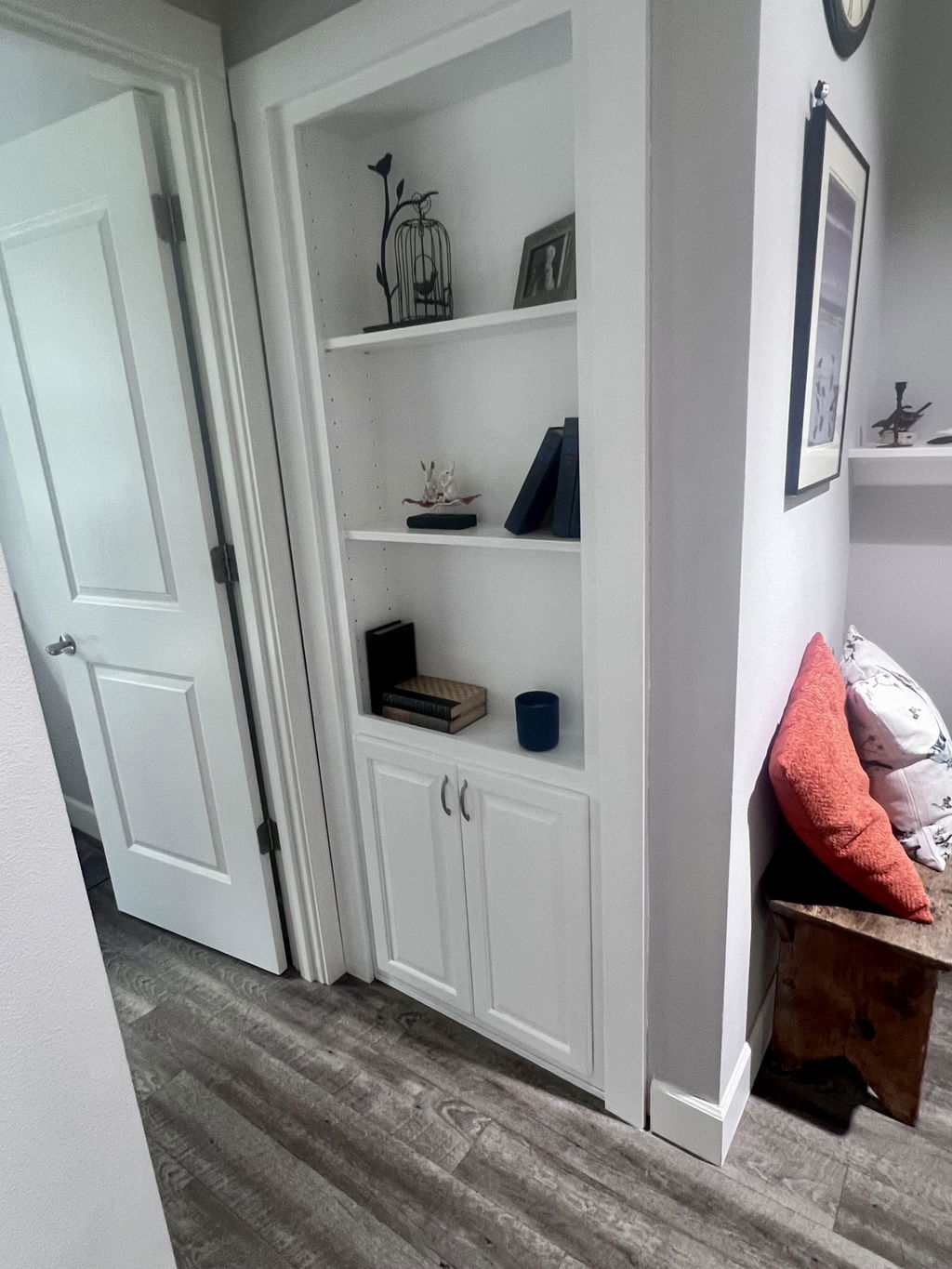
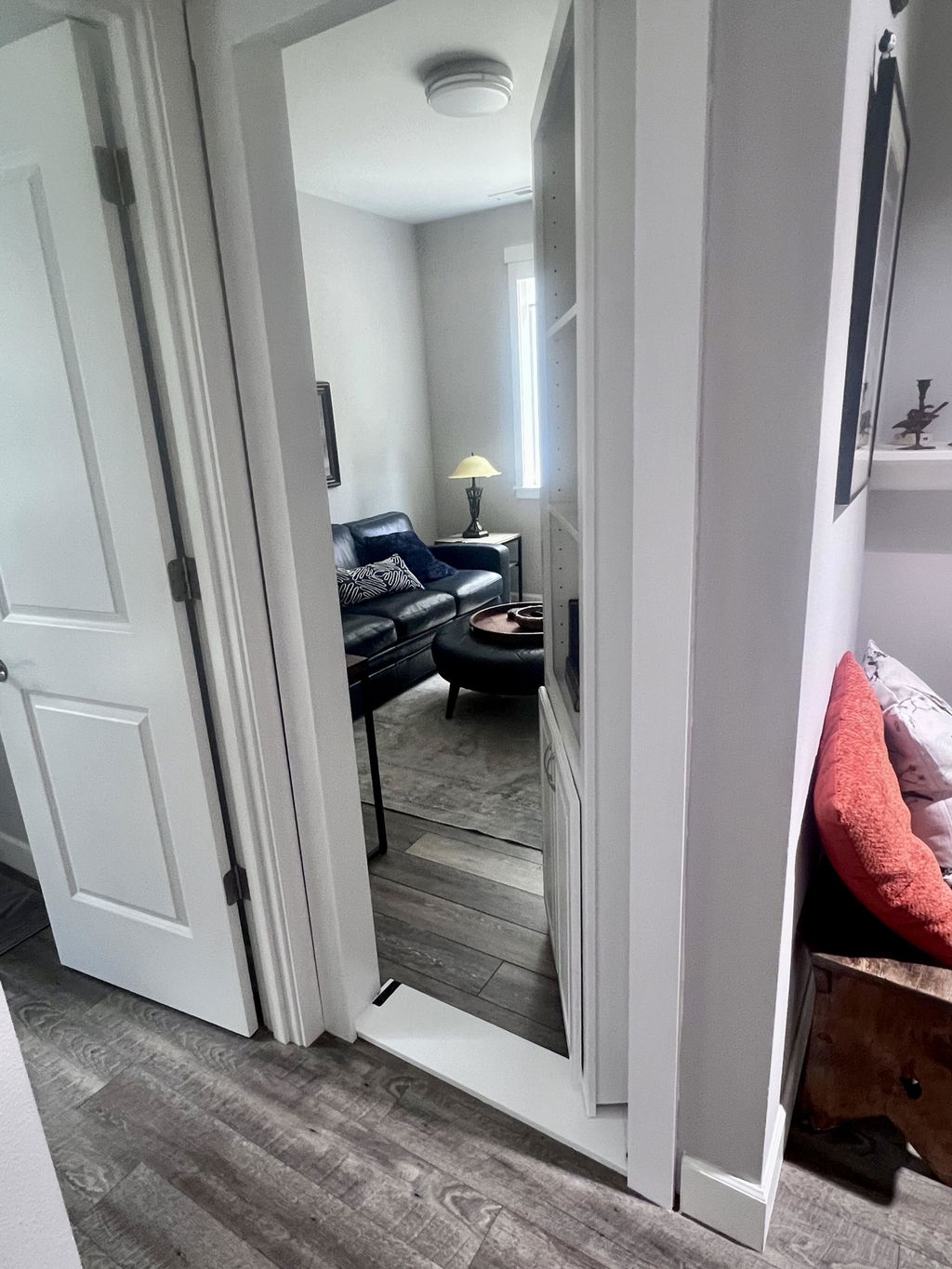
Imagine opening the hidden door from its finished bookcase or mirror side.
Push the door away from you = In-Swing
Pull the door toward you = Out-Swing
Pull the door toward you = Out-Swing
Use the finished bookcase or mirror side as your viewpoint. First decide whether you push or pull the door, then choose whether it moves to your left or right.
Changing a hidden door from in-swing to out-swing—or reversing its handing—after it is built is generally not practical. The frame, trim, hardware locations, and other components may need to be remade. Do not rely on another manufacturer's terminology. Use the method shown on this page for a Hide-A-Way Doors order.
The finished face of the bookcase or mirror is the front. Make every swing-direction decision while looking at that side of the closed door.
Imagine opening the hidden door from its finished bookcase or mirror side.
With your back positioned against the hinge side, note which side of your body the door swings toward.
The hinge appears on a different side when viewed from the back. That is why the finished-side viewpoint must remain consistent.
Each diagram is viewed from the finished bookcase or mirror side. The dark bar is the closed-door opening; orange shows the direction of travel.
From the finished side: pull the door toward you from the left
Hinges appear on the right.
From the finished side: pull the door toward you and from the right.
Hinges appear on the left.
From the finished side: push the door away from you and to the left.
Hinges appear on the left.
From the finished side: push the door away from you and to the right.
Hinges appear on the right.
The right choice depends on available floor space, furniture placement, wall depth, and how you intend to approach the hidden door.
The finished face pushes away from you and into the concealed room or space.
The finished face pulls toward you and into the room where the front of the bookcase or mirror is visible.
Important bookcase-door limit: The maximum wall/jamb depth for an in-swing bookcase door is 6-1/2 inches. The standard swing-direction guide does not impose that wall-depth restriction on out-swing bookcase doors. Other product dimensions and clearance requirements still apply.
This quick walkthrough uses Hide-A-Way Doors terminology. Watch it from beginning to end, then return to your doorway and repeat the two-question method from the finished side.
Stand where the bookcase shelves or mirror will be visible when the door is closed.
Push away is in-swing. Pull toward you is out-swing.
Name the direction the door travels—not just the side where you see the hinges.
Account for walls, furniture, shelving, light switches, baseboards, flooring, and anything stored on the shelves.
For an in-swing bookcase door, confirm the wall/jamb depth does not exceed 6-1/2 inches.
The hinges appear to change sides when you walk around the door. Naming the movement from one fixed viewpoint—the finished bookcase or mirror side—eliminates that ambiguity.
Generally, no. Hidden doors are built for the swing direction ordered. Reversing the swing may require remaking the frame, case molding, and other components rather than making a simple field adjustment.
Yes. From the finished bookcase or mirror side, you push an in-swing door away from you and into the space behind it.
Yes. From the finished side, an out-swing door pulls toward you into the room where the bookcase or mirror is visible.
Follow the terminology and diagrams on this page when ordering from Hide-A-Way Doors. Swing labels are not perfectly standardized across every manufacturer.
Take photos of both sides of the opening and mark where the finished bookcase or mirror face will be. Our hidden-door specialists can help you confirm the selection before production.
Final responsibility for verifying dimensions, clearances, swing direction, and jobsite suitability remains with the purchaser, builder, and installer.