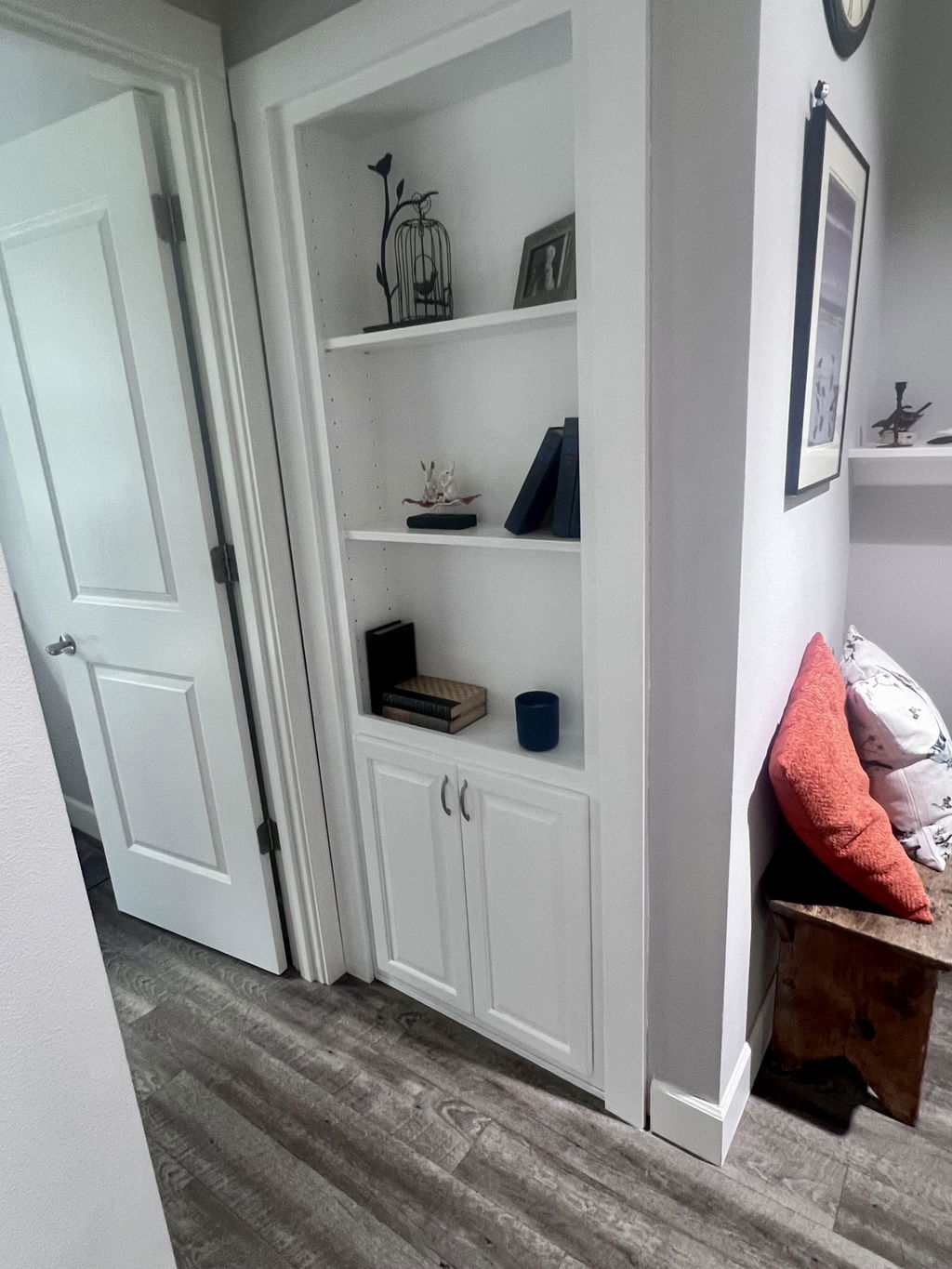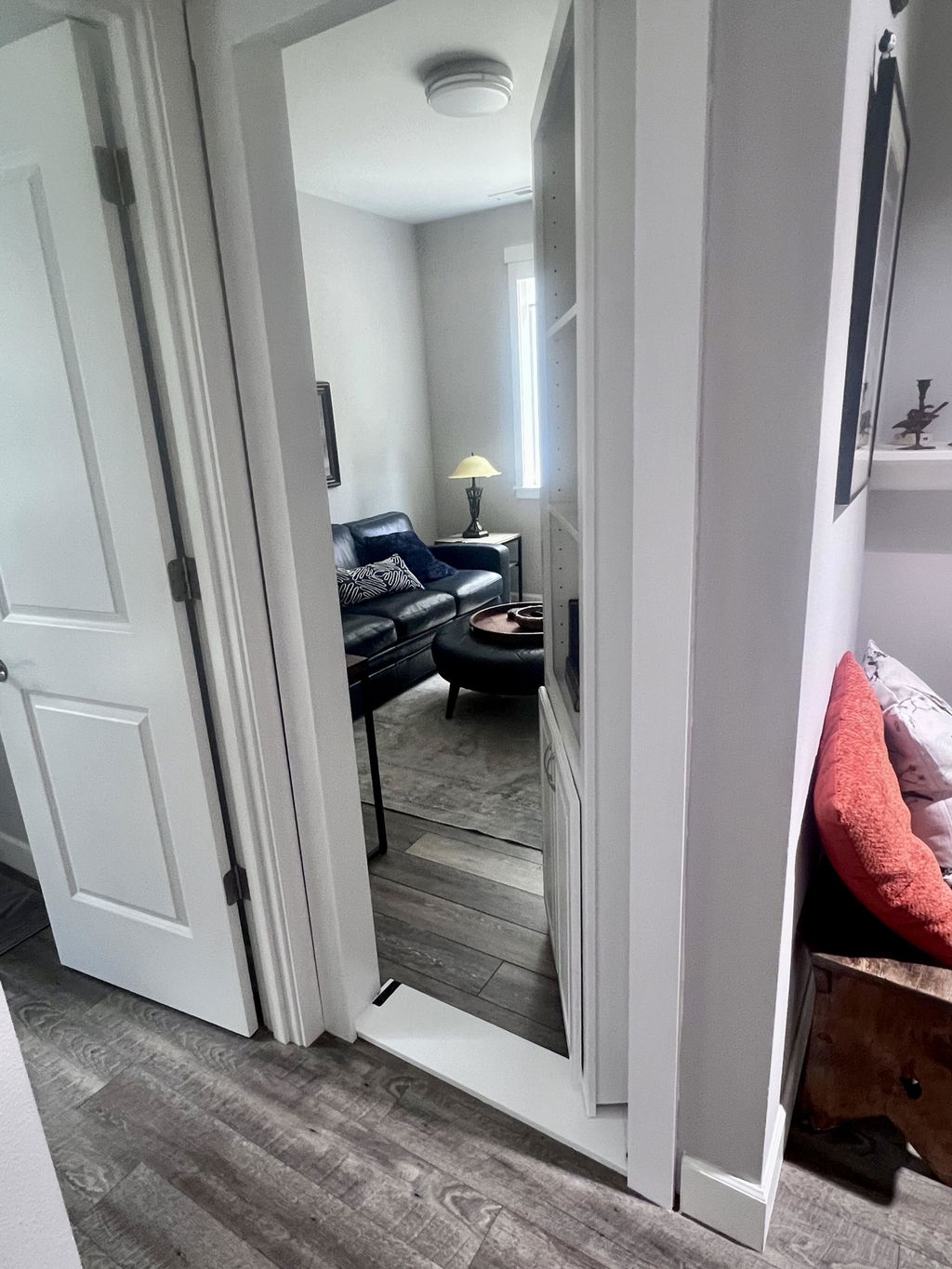
Best performance
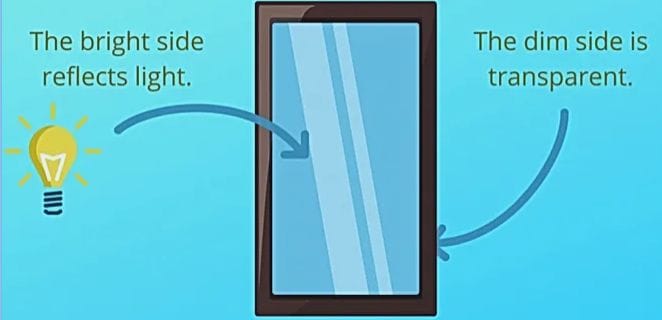
Bright front. Dark back.
Illuminate the room facing the reflective side and keep the room behind the glass dark or dim. Reduce light sources and reflections near the viewer.
Reflection ≈ 80%Through ≈ 20%
One-way mirror glass creates a reflective face toward the brighter room while allowing someone on the darker side to see through the door.
Keep the mirror-facing room well lit and the viewing side dark or dim. If the viewing side becomes brighter, people on the mirror side may be able to see through the glass.
The glass contains a very thin, partially reflective metallic layer. Approximately 80% of the light is reflected while roughly 20% passes through.
On the bright side, the strong reflection visually overpowers the smaller amount of light coming from the dark side. On the dark side, the reflection is reduced, allowing the viewer to see into the brighter room.
Plan the lighting before ordering. The greatest contrast produces the strongest mirror effect and the clearest view from the darker side.
Illuminate the room facing the reflective side and keep the room behind the glass dark or dim. Reduce light sources and reflections near the viewer.
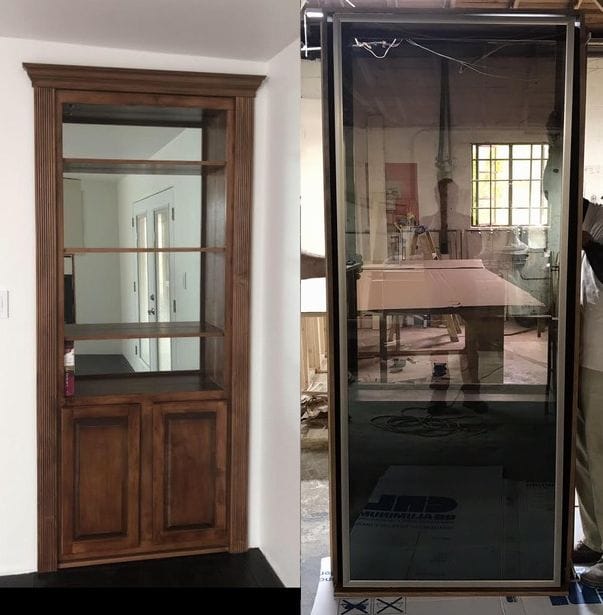
If lights are turned on behind the mirror while the front becomes darker, visibility can reverse. This glass should not be treated as guaranteed privacy or security independent of lighting.
One-way mirror glass is an expensive, made-to-fit component. The door unit must be constructed far enough to obtain accurate glass measurements before the mirror can be ordered.
The glass can take 14 days or longer to arrive from the glass manufacturer after it is ordered. Because that timing is outside normal production control, rush-order deadlines do not apply to one-way mirror glass.
The partially reflective layer requires gentler handling than ordinary household glass.
Do not use aggressive glass cleaners, solvents, abrasives, or other harsh chemicals on the mirror surface.
Do not attach tape, labels, decals, or stickers. Removing adhesive materials may pull the transparent reflective film from the glass.
Use a clean, soft, nonabrasive cloth and only a cleaning method approved for the supplied one-way mirror glass.
No. The effect is created by unequal lighting. The brighter side generally appears reflective, while the darker side can see through. If the lighting balance reverses, visibility may reverse as well.
The side intended to look like a mirror should be well lit. The viewing side behind the glass should remain dark or dim for best results.
The glass reflects approximately 80% of available light and transmits roughly 20%. Actual appearance depends on lighting, viewing angle, distance, and surrounding conditions.
One-way mirror backing is available as an option for many Hide-A-Way Doors products, but compatibility depends on the door design and configuration. Confirm availability with a hidden-door specialist before ordering.
It can. The unit must first be constructed for accurate glass measurements, and the special glass can take 14 days or longer to arrive after ordering. Rush deadlines do not apply to this glass option.
Do not use harsh chemicals, solvents, or abrasives. Do not apply tape or stickers. Use only a gentle cleaning method suitable for the supplied one-way mirror surface.
Tell our team about your opening, door type, and lighting conditions. We can help determine whether one-way mirror glass is the right option for your project.