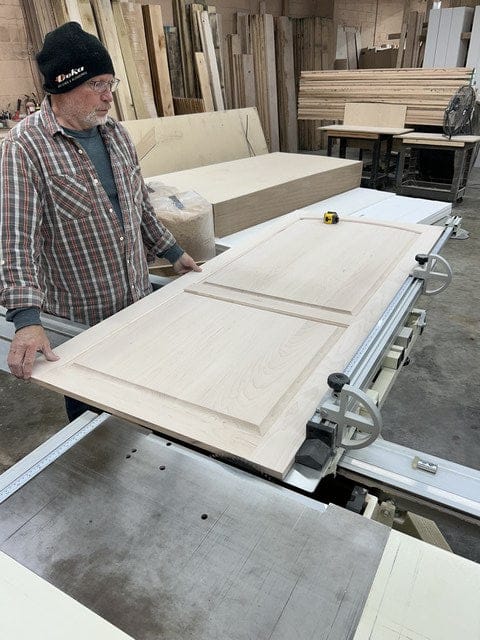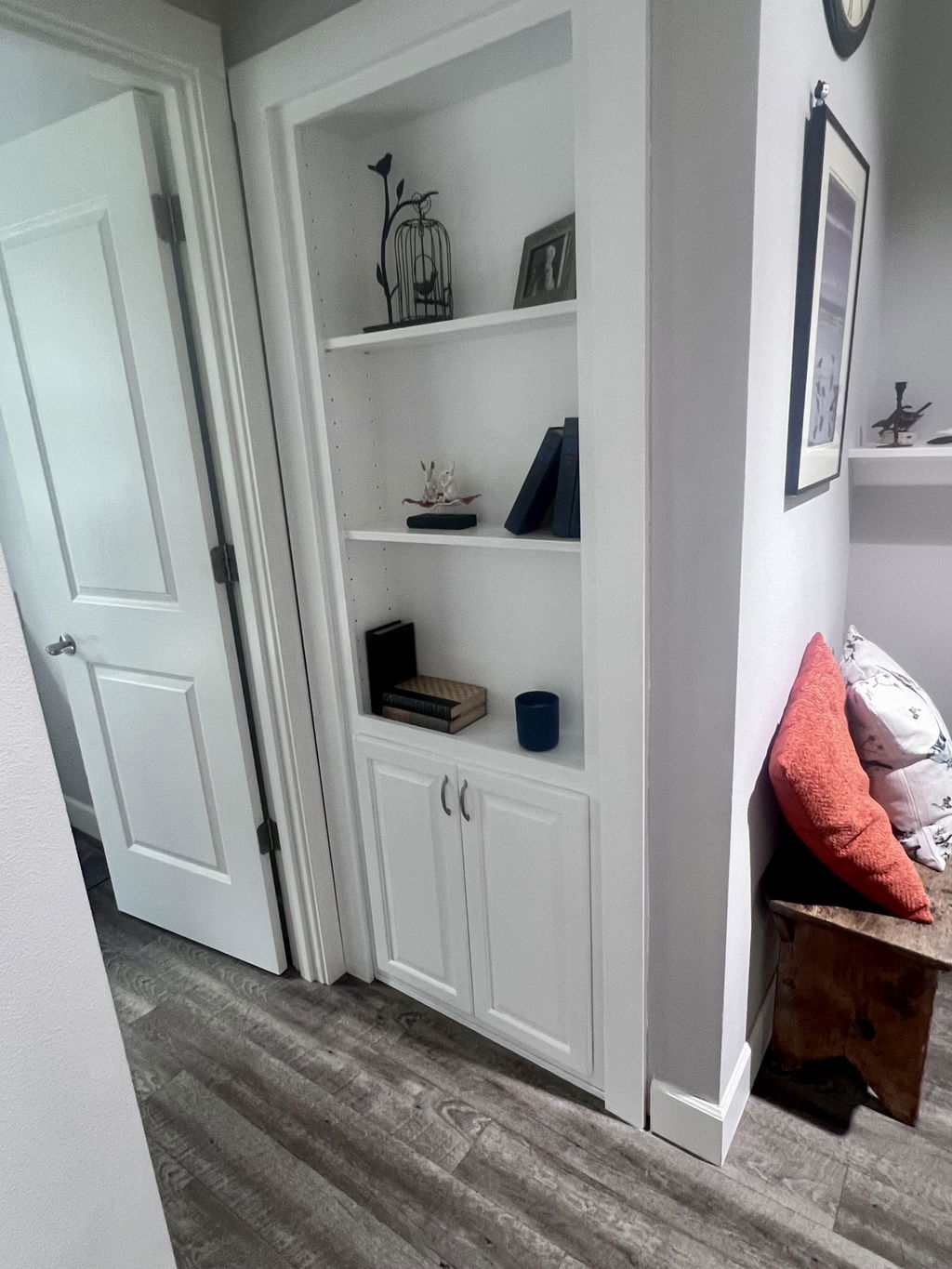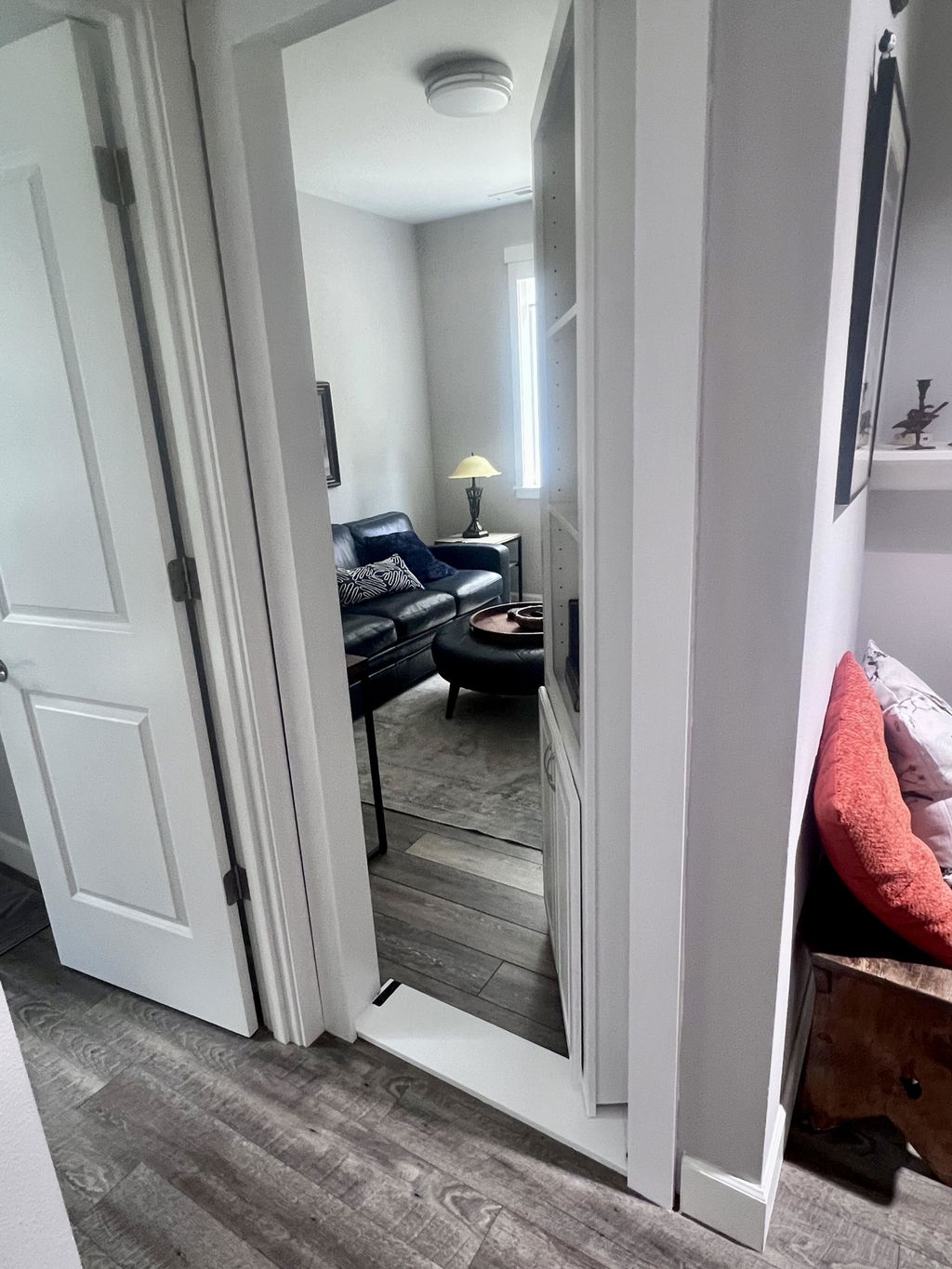
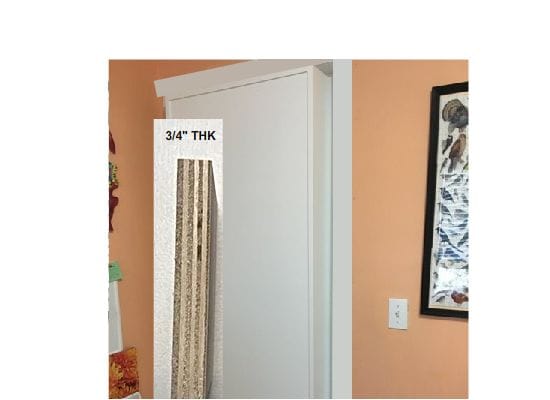
Three-quarter-inch plywood backing on a hidden bookcase door
More Than the Back of a Bookcase

Choose strength, appearance, or something unexpected.

Start with 1/4″ or 3/4″ structural backing, then explore specialty rear treatments including mirrors, architectural panels, and see-through mirror glass.

Standard quarter-inch bookcase backingUpgraded three-quarter-inch bookcase backing
An Overlooked Choice

The backing changes how the bookcase feels.

The back panel closes the bookcase and creates the surface seen behind books and displayed objects. Thickness determines whether that panel behaves like a thin enclosure or contributes meaningful rigidity to the bookcase assembly.

AppearancePainted or stained background behind shelving.
RigidityResistance to flex when the panel is pushed.
Rear viewWhat is seen from the room behind the door.
Structural Backing

Standard 1/4″ or upgraded 3/4″.

Both options close the rear of the bookcase and can be finished with paint or stain. The main difference is structural feel: 1/4″ backing can flex, while 3/4″ backing adds substantial rigidity.

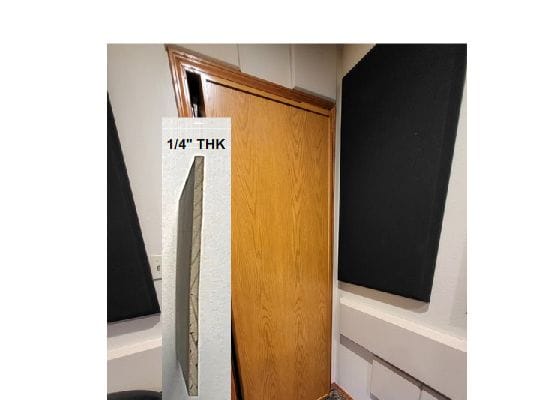
Quarter-inch plywood backing on hidden bookcase doorStandard option

1/4″ Plywood Backing

Best for: Standard enclosed bookcase construction

The standard backing offered on bookcase doors. It provides the finished rear surface of the shelving cavity but is thin enough to flex when pushed.

Thickness1/4 inch
FlexCan flex when pushed
FinishPaint or stain
AvailabilityStandard on bookcase doors
Important: This panel encloses the bookcase but is not intended to add meaningful structural strength.
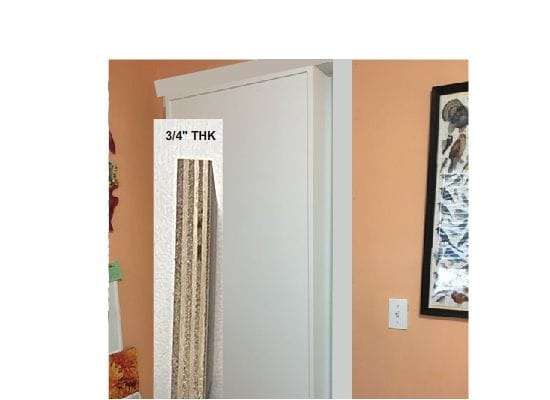
Three-quarter-inch plywood backing on hidden bookcase doorStrength upgrade

3/4″ Plywood Backing

Best for: Maximum bookcase rigidity

The upgraded backing adds strength and stability to the bookcase door and will not flex like the standard 1/4″ panel when pushed.

Thickness3/4 inch
FlexWill not flex when pushed
FinishPaint or stain
AvailabilityUpgrade where offered
Choose this when: The solid feel of the backing and added bookcase rigidity are important to the project.
At a Glance

Backing thickness comparison

The thicker option is a structural upgrade. It is not required simply to create a functional bookcase door.

Feature1/4″ Backing3/4″ Backing
Included statusStandardUpgrade
Closes rear of bookcaseYesYes
Can be painted or stainedYesYes
Resists flex when pushedLimitedYes
Adds bookcase rigidityMinimalSubstantial
Specialty & Decorative Options

Finish the room-facing side.

These options change what is seen from the room behind the bookcase. One-Way Mirror is a specialty backing system; Rear-Facing Mirror and panel choices are decorative treatments mounted to the back of the unit.

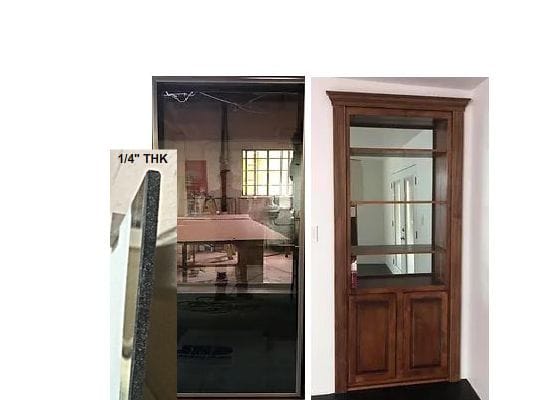
One-way see-through mirror backing on hidden bookcase door
Specialty backing

1/4″ One-Way Mirror

Tempered see-through mirror glass replaces a conventional opaque backing and creates a unique viewing effect when the required lighting conditions are maintained.

Lighting-dependent: One-way mirror performance has important limitations. Review the full information before ordering.
Read One-Way Mirror Details
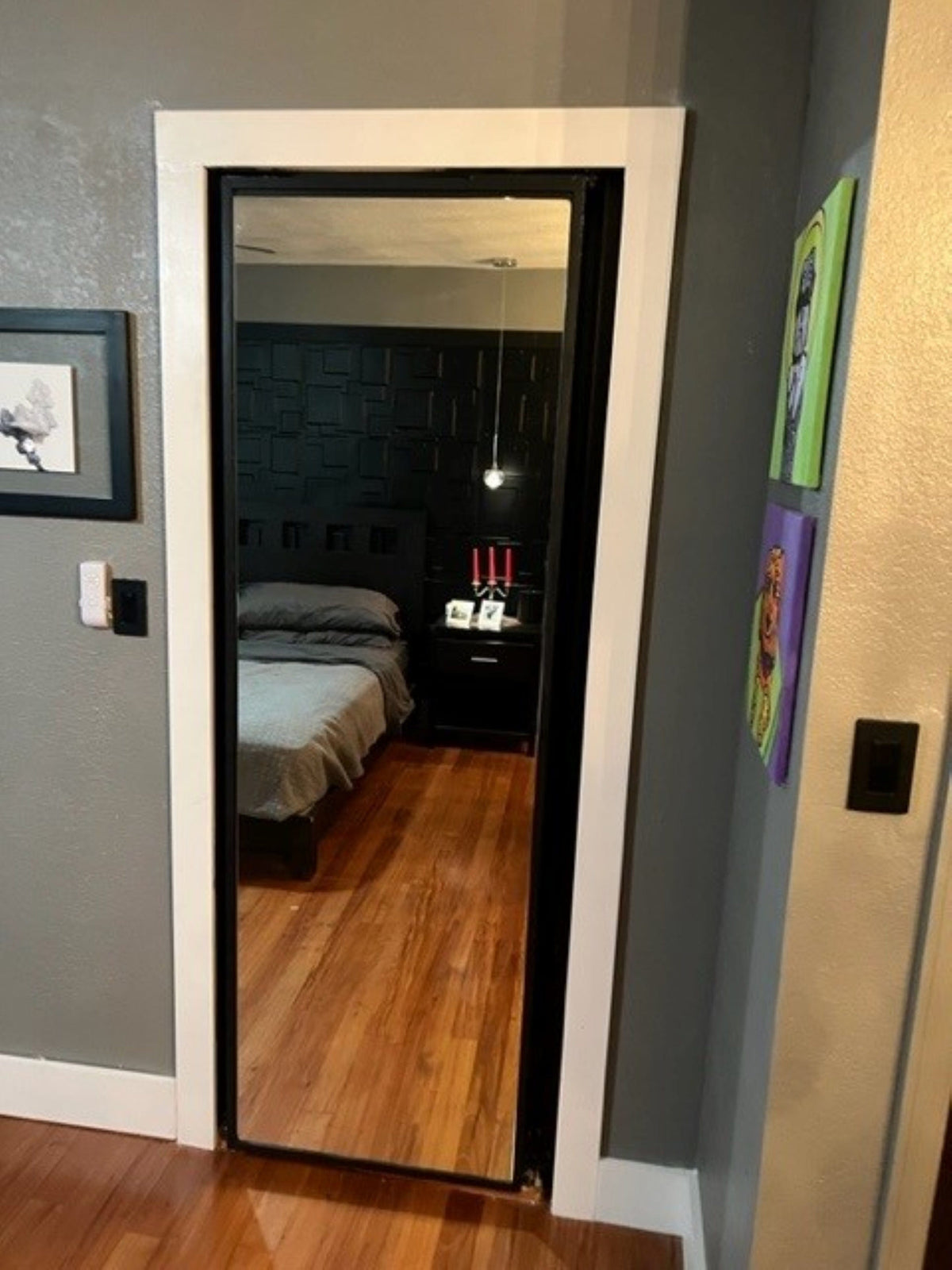
Rear-facing mirror installed on back of hidden bookcase door
Decorative rear treatment

Rear-Facing Mirror

A conventional mirror is professionally installed on the back of the bookcase during assembly and finished with surrounding wood trim.

Best for: Dressing rooms, closets, bedrooms, gyms, or any room that benefits from a full reflective rear surface.
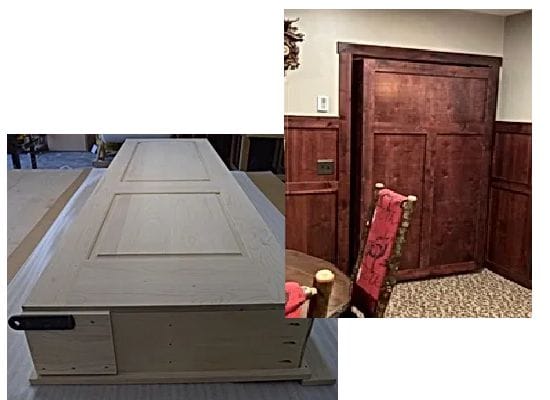
Decorative rear-facing panels on hidden bookcase door
Architectural rear treatment

Rear-Facing Panels

Decorative wood panels dress the back of the bookcase so it reads as finished millwork rather than the rear of a shelving unit.

Best for: Doors that remain visible from both adjoining rooms and need a furniture-style finished appearance on the rear.
Arched panel top mounted on rear of hidden bookcase
Decorative top treatment

Arch Panel Top

An arched architectural panel mounts to the back of the bookcase to add traditional shape and detail above the rear-facing panel treatment.

Planning note: Confirm availability and the complete rear-panel configuration on the specific product order form.
Choose by Priority

What matters most behind the shelves?

Start with function. Then decide whether the room-facing rear of the bookcase also needs a decorative or specialty treatment.

1

Standard function

Choose 1/4″ plywood when you need the normal enclosed bookcase appearance and do not need the backing to add rigidity.

2

Structural feel

Choose 3/4″ plywood when you want a firm rear panel that resists flex and strengthens the bookcase assembly.

3

Finished rear appearance

Choose a rear mirror or decorative panels when the back of the door will be visible and should look intentionally finished.

Common Questions

Before selecting the backing

Is 1/4″ backing included with bookcase doors?

Yes. Standard 1/4″ backing is offered on bookcase doors and may be painted or stained to coordinate with the rest of the unit.

Does the standard backing make the bookcase stronger?

Not meaningfully. Its main purpose is to close the rear of the shelving cavity. Because it is thin, it can flex when pushed.

Why would I upgrade to 3/4″ backing?

The thicker plywood creates a more rigid bookcase assembly and a firm rear surface that will not flex like the standard panel when pushed.

Is One-Way Mirror the same as a rear-facing mirror?

No. One-Way Mirror is tempered see-through mirror glass used as specialty backing and depends on controlled lighting. A Rear-Facing Mirror is a conventional reflective mirror mounted to the room-facing back of the bookcase.

Do rear-facing panels replace the structural backing?

They are presented as a decorative rear treatment. Confirm the full backing and panel configuration shown on the specific product order form before ordering.

Are all backing options available on every door?

No. Options depend on the door model and configuration. Use the selections offered on the specific order form or ask a specialist to confirm compatibility.

Not sure what the rear of your door needs?

Tell us how both adjoining rooms will be used and which side of the bookcase will remain visible.

Ask a Hidden-Door Specialist